
Sports Medicine & Injury Recovery
Restore Strength, Mobility, and Function — Naturally and Effectively
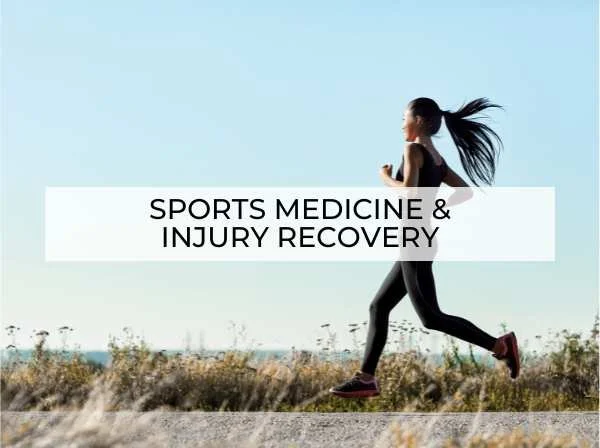
Whether you're an athlete, weekend warrior, or simply want to stay active without pain, you deserve care that looks beyond symptoms and identifies the root cause of your injury.
At Denver Sports & Holistic Medicine, we combine orthopedic acupuncture, functional movement assessment, regenerative therapies, and targeted manual techniques to help you heal faster and prevent re-injury — all while restoring optimal biomechanics, circulation, and tissue function.
We treat acute injuries, chronic pain, post-surgical recovery, and complex cases that haven’t responded to traditional care.
Conditions We Treat
We support a wide range of musculoskeletal and performance-related concerns:
Acute & Chronic Injuries
Sprains, strains, muscle tears
Tendonitis and tendinopathy
Ligament injuries
Rotator cuff injuries
IT band syndrome
Joint Pain
Knee pain
Hip impingement
Shoulder dysfunction
Elbow and wrist pain
Arthritis and degenerative changes
Back & Neck Pain
Low back strain
Sciatica & piriformis syndrome
Disc injury
Cervical stiffness
Postural dysfunction
Sports-Specific Injuries
Running injuries
Cycling-related pain
Weightlifting injuries
Overuse injuries
Repetitive strain
Post-Surgical Recovery
Joint replacements
Ligament reconstruction
Tendon repair
Fracture rehabilitation
For more complex systemic cases (mold, Lyme, chronic illness), see:
→ Chronic Illness & Complex Case Care
Our Integrative Approach to Injury Recovery
Healing is fastest when we support the entire system — not just the injured area. Your customized plan may include:
Orthopedic & Sports Acupuncture
A highly effective therapy for:
Reducing pain and inflammation
Accelerating tissue healing
Improving circulation and lymphatic flow
Releasing tight muscles and trigger points
Restoring neuromuscular communication
Acupuncture regulates the nervous system, increases blood flow to injured tissue, and improves biomechanics from the inside out.
Learn more:
→ Acupuncture
Electro-Acupuncture for Tissue Repair
We use precise electrical stimulation to:
Enhance microcirculation
Stimulate fibroblast activity
Improve tendon and ligament healing
Reduce nerve pain
Strengthen muscle activation
This is one of our most powerful tools for sports medicine and chronic injury recovery.
Myofascial Release & Manual Therapy
Targeted hands-on techniques address:
Fascial adhesions
Muscle knots and trigger points
Restricted movement patterns
Scar tissue
Compensatory imbalances
When indicated, we incorporate:
Tui Na
Gua Sha
Cupping
Cross-friction techniques
Corrective Exercise & Functional Movement Analysis
We analyze movement patterns to identify the true drivers of pain, such as poor mobility, muscle imbalance, or dysfunctional motor patterns.
Your plan may include:
Stability and mobility training
Core integration
Postural retraining
Eccentric strengthening
Injury-prevention strategies
This work ensures you don’t just feel better — you perform better.
Integrative Regenerative Therapies for Faster Recovery
To enhance healing, reduce pain, and restore optimal function, we integrate a wide range of regenerative and manual therapies. These modalities work synergistically with orthopedic acupuncture, corrective exercise, and movement retraining to accelerate recovery and prevent re-injury.
To accelerate recovery and reduce pain, we may integrate:
Cupping Therapy for Muscle Recovery & Circulation
Cupping increases microcirculation, improves lymphatic drainage, reduces muscle tension, and helps clear metabolic waste from overused or injured tissues.
It is especially effective for:
Back, neck, and shoulder tightness
Post-training recovery
Myofascial restrictions
Chronic muscle guarding
Repetitive strain injuries
Gua Sha for Myofascial Release & Tissue Repair
Gua sha breaks down adhesions, improves fascial glide, and increases blood flow to injured areas.
It is clinically effective for:
Tendonitis and tendinopathy
Chronic knots and trigger points
Scar tissue and restricted mobility
Acute sprains and strains
Gua sha pairs extremely well with electro-acupuncture for enhanced tissue regeneration.
Moxibustion for Pain, Circulation & Soft Tissue Healing
Moxa uses gentle therapeutic heat from the herb Artemisia (mugwort) to:
Boost circulation
Reduce inflammation
Relax tight muscles
Improve joint mobility
Support healing of chronic soft tissue injuries and scar tissue
It is particularly supportive for older injuries, scar tissue, cold-type pain, and slow-healing tissues.
Trigger Point Injections for Rapid Pain Relief
When clinically indicated, we may integrate trigger point injections, which help:
Release deep muscle knots
Reduce nerve irritation
Improve range of motion
Accelerate recovery in stubborn or chronic conditions
These injections can be combined with acupuncture and manual therapy for a more comprehensive release of dysfunctional tissue patterns.
Prolotherapy-Style Regenerative Injections
For patients needing deeper support, prolotherapy-style regenerative injections may be used to:
Strengthen weakened ligaments
Stimulate collagen production
Support joint stability
Address chronic tendon or ligament injuries
Encourage long-term tissue repair
This approach is ideal for injuries that have plateaued, chronic instability, or repeated strain patterns.
Red Light Therapy (Photobiomodulation)
Supports collagen repair, reduces inflammation, and enhances mitochondrial energy.
→ Red Light & Photobiomodulation
PEMF & Bioenergetic Therapies
Improve cellular voltage, oxygenation, and tissue recovery.
→ Bioenergetic & Nervous System Therapies
Ozone & Injection Therapies
(Applied when clinically indicated) — help modulate inflammation and support circulation.
→ Injection Therapy
Herbal & Nutraceutical Support
We use targeted formulas to reduce inflammation, support collagen synthesis, improve joint health, and speed tissue healing.
Why We Integrate These Therapies
Each therapy targets a different layer of tissue healing — circulation, fascia, inflammation, neuromuscular activation, or structural stability. When used together (based on your specific injury and recovery goals), they create a comprehensive healing environment that:
Reduces pain more quickly
Improves mobility and joint function
Enhances circulation and tissue oxygenation
Releases dysfunctional movement patterns
Accelerates collagen repair
Restores functional strength and stability
This multi-modality approach allows injuries to heal more completely and more efficiently, helping you return to activity with greater resilience and less risk of re-injury.
Athlete Support & Performance Optimization
Dr. Sturm’s background as a professional cyclist gives her unique insight into:
Endurance performance
Power production
Recovery strategies
Injury patterns
Training load and metabolic stress
Athletes benefit from:
Faster injury recovery
Improved biomechanics
Nervous system regulation
Optimized recovery and tissue oxygenation
Mitochondrial and metabolic support
→ Longevity & Mitochondrial Health
Post-Surgical Recovery
We support healing after:
ACL or meniscus repair
Rotator cuff surgery
Tendon or ligament reconstruction
Spinal procedures
Orthopedic fractures
Treatment is tailored to surgeon protocols and your healing stage.
Why Our Approach Works
Most injuries don’t heal because care is incomplete.
We address all layers of recovery:
Nervous system regulation
Inflammation control
Tissue perfusion & oxygenation
Biomechanics & movement patterns
Cellular energy production
Lymphatic drainage
Metabolic support
Healing becomes predictable when all systems are aligned.
Who This Program Is Ideal For
Athletes (competitive or recreational)
Active adults wanting to stay pain-free
Individuals with chronic or recurring injuries
Post-surgical patients
People with pain that hasn’t responded to other treatments
Anyone wanting to move better, feel better, and perform better
Get Back to Doing What You Love
Whether your goal is to compete, train consistently, or simply live without pain, your body can heal when given the right support.
Start your personalized Sports Medicine & Injury Recovery program.
Frequently Asked Questions — Sports Medicine & Injury Recovery
1. How is your sports medicine approach different from physical therapy or chiropractic?
Our approach integrates orthopedic acupuncture, functional movement analysis, myofascial release, corrective exercise, and regenerative therapies.
Instead of treating only the painful area, we identify the root biomechanical and neurological patterns that caused the injury. This leads to faster healing, fewer relapses, and better long-term performance.
2. Can acupuncture really help with sports injuries?
Yes. Orthopedic and electro-acupuncture stimulate tissue repair by:
Increasing circulation and oxygenation
Reducing inflammation and muscle spasm
Enhancing neuromuscular activation
Supporting tendon and ligament healing
Calming nerve pain and improving mobility
It is one of the most effective tools for acute injuries, chronic pain, and post-surgical recovery.
Learn more → Acupuncture
3. What types of injuries do you treat most often?
We commonly treat:
Muscle strains and sprains
Tendonitis / tendinopathy
Rotator cuff injuries
Knee, hip, and ankle pain
Low back pain & sciatica
Neck pain & headaches
Overuse injuries
Post-surgical healing
Sports-specific injuries (running, cycling, lifting, skiing, etc.)
For complex, multi-system cases, see → Chronic Illness & Complex Case Care
4. Do you work with athletes or just general patients?
Both. Dr. Sturm’s background as a professional cyclist gives her unique insight into:
Athletic biomechanics
Training load and recovery
Injury patterns
Performance physiology
We work with competitive athletes, recreational athletes, and active adults who want to feel strong, mobile, and pain-free.
5. What regenerative therapies do you use for injury recovery?
Depending on your condition, we may incorporate:
Electro-acupuncture
Red Light Therapy
PEMF/bioenergetic therapy
Cupping, Gua Sha, and Tui Na
Corrective exercise
Herbal + nutraceutical anti-inflammatory support
Ozone or vitamin injection therapy (when indicated)
Learn more:
→ Red Light & Photobiomodulation
→ Bioenergetic & Nervous System Therapies
→ Injection Therapy
6. Do I need imaging before starting treatment?
Not always. Many soft-tissue injuries, mobility restrictions, and pain patterns can be accurately assessed through functional examination.
If imaging is needed (X-ray, MRI, ultrasound), we refer you to the appropriate provider.
7. How many treatments will I need?
This varies based on severity and how long the injury has been present.
General guidelines:
Acute injuries: 3–6 sessions
Chronic injuries: 6–12 sessions or more
Post-surgical recovery: Ongoing support over several weeks or months
Our goal is to reduce pain quickly and restore functional movement as efficiently as possible.
8. Can sports medicine treatments be combined with acupuncture or red light therapy?
Yes — in fact, this is one of our most effective healing combinations.
Acupuncture improves circulation and neuromuscular activation, while Red Light Therapy accelerates collagen repair, reduces inflammation, and increases mitochondrial energy.
See → Red Light & Photobiomodulation
9. Do you offer telemedicine support for injury recovery?
Yes. While hands-on therapies require in-person visits, we provide telemedicine consultations for:
Exercise programming
Movement assessment review
Pain science & recovery strategies
Nutrition & anti-inflammatory support
Return-to-training guidance
Telemedicine is especially helpful for athletes training out of state.
10. Is this approach safe for older adults or people with chronic injuries?
Yes. Treatments are tailored to your age, mobility level, health history, and recovery capacity.
Our integrative approach is gentle, restorative, and effective for patients with:
Arthritis
Joint degeneration
Chronic pain
Old injuries that never fully healed
11. Do you coordinate care with surgeons, physical therapists, or trainers?
Absolutely. We often collaborate with your existing care team—orthopedic surgeons, PTs, chiropractors, athletic trainers, or coaches—to ensure comprehensive support and continuity of care.
12. How does cupping help with sports injuries and muscle pain?
Cupping increases circulation, reduces muscle tension, and improves lymphatic drainage — all of which help injured tissues recover faster. It is especially beneficial for tight backs, neck pain, IT band tension, hamstring strains, and overuse injuries. Many athletes experience immediate relief and improved range of motion after cupping.
13. What is gua sha, and how does it support tendon or ligament healing?
Gua sha breaks down adhesions, improves fascial glide, and increases microcirculation to injured areas. It is highly effective for chronic tendonitis, scar tissue, persistent knots, and mobility restrictions. When combined with acupuncture or electro-acupuncture, gua sha significantly accelerates soft tissue repair.
14. When is moxibustion (moxa) used in injury recovery?
Moxa is ideal for injuries involving chronic tightness, cold sensations, poor circulation, or slow tissue healing. Its gentle heat enhances blood flow, relaxes muscles, reduces inflammation, and boosts tissue regeneration. It is especially helpful for long-standing injuries or arthritic joints.
15. What are trigger point injections, and who benefits from them?
Trigger point injections release deep muscle knots that cause pain, nerve irritation, and restricted movement. They are recommended when:
Muscles are too tight to release manually
Pain radiates along nerve pathways
Acupuncture alone isn’t sufficient
Used with acupuncture and corrective therapies, these injections can dramatically shorten recovery time.
16. Do you offer regenerative or prolotherapy-style injections?
Yes. Regenerative injections may be recommended for chronic tendon or ligament injuries requiring additional stimulation to heal. These treatments strengthen compromised tissues, enhance joint stability, and help resolve recurring or treatment-resistant injuries.
17. How do you determine which therapies to include in my treatment plan?
Your plan is customized based on:
Injury type and severity
Tissue quality
Inflammation level
Movement patterns
Nervous system sensitivity
Your activity level and goals
Most patients benefit from a strategic blend of therapies — acupuncture, cupping, gua sha, laser or red light therapy, corrective exercise, or injections — depending on the phase of healing.
18. Can these therapies be combined with physical therapy or chiropractic care?
Absolutely. Many patients achieve superior results when we coordinate with their PT, chiropractor, surgeon, or athletic trainer. Our therapies decrease inflammation, improve circulation, activate neuromuscular pathways, and accelerate tissue repair — enhancing the progress you make in rehab or performance training.