

Ozone Therapy for Mold Toxicity in Denver
How Medical Ozone Therapy Supports Detoxification, Immune Modulation, and Cellular Recovery in Mold-Related Illness
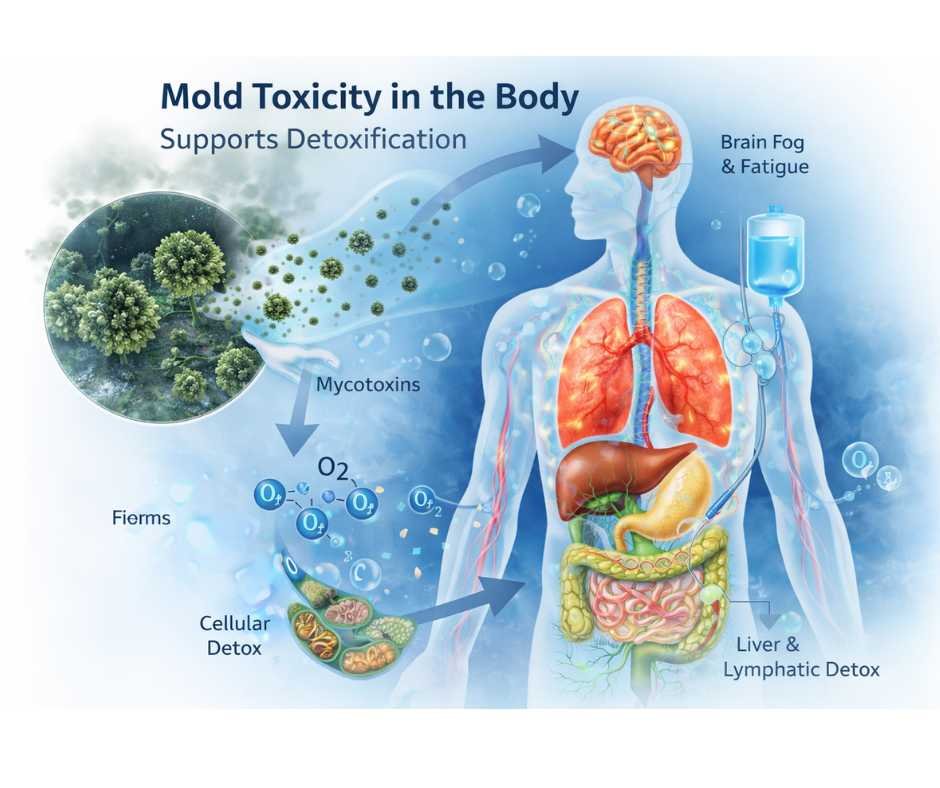
Mold illness is not a surface-level problem—and for many patients, it cannot be resolved by avoidance, binders, or supplements alone.
Chronic exposure to mold and mycotoxins can disrupt oxygen utilization, immune signaling, mitochondrial energy production, and detoxification capacity across multiple systems. Over time, this can contribute to persistent inflammation, fatigue, cognitive dysfunction, and heightened chemical sensitivity that conventional approaches often fail to fully address.
→ The Sneaky Ways Mold Toxicity Affects Your Health Over Time — and How to Take Charge
At Denver Sports & Holistic Medicine, ozone therapy may be used as an adjunctive medical support within comprehensive mold treatment protocols to help improve oxygen signaling, modulate immune responses, and support cellular resilience during detoxification.
This article explains how medical ozone therapy fits into a functional medicine approach to mold toxicity, who may benefit from it, and how it can be safely integrated alongside advanced testing, detoxification strategies, and personalized care plans.
What is Ozone Therapy for Mold Toxicity?
Ozone therapy for mold toxicity is a supportive medical treatment used within a broader mold recovery plan to help improve oxygen signaling, modulate immune and inflammatory responses, and support detoxification capacity in patients affected by mycotoxin-related illness. It is not a standalone treatment and is typically introduced alongside environmental control, drainage support, and personalized functional medicine care.
How Medical Ozone Therapy Works for Mold Toxicity and Mold Illness
Mold-related illness is frequently associated with impaired oxygen utilization, chronic inflammatory signaling, and reduced cellular energy production—particularly in patients with prolonged mycotoxin exposure (1,2).
Medical ozone therapy introduces controlled amounts of ozone (O₃), a highly reactive form of oxygen, to stimulate adaptive cellular responses rather than directly targeting pathogens. When administered appropriately, ozone acts as a biological signaling molecule that supports endogenous antioxidant systems, oxygen metabolism, and immune balance (1,3).
Oxygen Signaling and Cellular Energy Production in Ozone Therapy
Mycotoxins are known to increase oxidative stress and impair mitochondrial function, contributing to fatigue, cognitive dysfunction, and reduced tolerance to detoxification (4,5). By influencing oxygen signaling pathways and cellular metabolism, ozone therapy may help support mitochondrial activity and energy production during recovery from mold-related illness.
Redox Balance, Nrf2 Activation, and Antioxidant Defense
Ozone therapy has been shown to activate cellular defense pathways involved in redox regulation, including mechanisms associated with Nrf2 signaling, which plays a central role in antioxidant response and cellular resilience (6).
Immune Modulation and Inflammatory Signaling in Mold Illness
Rather than overstimulating the immune system, ozone appears to support immune modulation by influencing cytokine balance and inflammatory signaling—an important consideration for patients with mold toxicity who often experience immune exhaustion or inflammatory flares during detoxification (2,7).
At Denver Sports & Holistic Medicine, ozone therapy is not used as a standalone intervention. It is integrated within a comprehensive, systems-based mold care framework and carefully sequenced alongside drainage support, nutritional therapy, and individualized detox pacing to help reduce the risk of symptom exacerbation.
Why Ozone Therapy Must Be Sequenced Carefully in Mold Detox
Mold detoxification is rarely a linear process. As mycotoxins are mobilized, patients may experience temporary symptom flares such as fatigue, headaches, musculoskeletal pain, or cognitive fog—particularly when detoxification pathways become overwhelmed (3,8).
Ozone therapy should not be introduced too early or used aggressively. While it can support oxygen signaling and immune regulation, it may also increase metabolic demand and oxidative signaling. If foundational detox and drainage support are inadequate, this can contribute to temporary symptom exacerbation during treatment (3,9).
For this reason, ozone therapy is introduced only after environmental control and baseline detox capacity have been addressed. Careful dosing and pacing help reduce inflammatory reactions and support more sustainable progress in patients with mold toxicity (1,10).
Patients who have experienced symptom flares during previous detox attempts—often described as Herxheimer-type reactions—may benefit most from this measured and carefully sequenced approach.
The goal is not to push the body harder, but to support it intelligently—using ozone therapy as one tool within a larger, individualized treatment plan rather than as a standalone solution.
Who May Benefit Most from Ozone Therapy in Mold Illness
Ozone therapy is not intended to treat specific diseases but may support physiologic patterns commonly observed in mold-related illness, including chronic inflammation, impaired circulation, immune dysregulation, and reduced cellular energy production (1,7).
Patients who feel stalled despite environmental remediation and foundational detoxification support—particularly those with persistent fatigue, inflammatory pain, poor circulation, or recurrent infections—may experience benefit when ozone therapy is introduced at the appropriate stage of care (8,9).
Because mold-related illness often overlaps with additional inflammatory, metabolic, and neurologic stressors, careful clinical assessment is essential to determine whether ozone therapy is appropriate and how it should be integrated into a broader treatment plan (2,11).
Advanced functional testing is often used in this context to better understand toxin burden, inflammatory patterns, and metabolic capacity before introducing more intensive therapies.
→ Advanced Functional Lab Testing
The goal remains personalization—using ozone therapy where it supports physiologic resilience, and avoiding it where timing or patient response suggests a different approach is needed first.
How Ozone Therapy Is Integrated into Mold Treatment Plans
Ozone therapy is most effective when used as part of a broader, systems-based approach to mold-related illness—not when applied in isolation. Mold toxicity can simultaneously affect detoxification pathways, immune regulation, mitochondrial energy production, and nervous system signaling. Addressing only one layer rarely leads to sustained or stable improvement.
In clinically structured mold care, ozone therapy is introduced only after foundational priorities are addressed. These typically include:
Identifying and reducing ongoing mold exposure
Supporting drainage and detoxification pathways
Stabilizing blood sugar and stress physiology
Addressing gut and immune imbalances associated with mycotoxin illness
When introduced at the appropriate stage, ozone therapy may help improve tolerance to detoxification, support cellular energy production, and enhance the body’s adaptive capacity during treatment. It is typically combined with nutritional therapy, targeted supplementation, nervous system regulation, and environmental medicine strategies rather than positioned as a primary or standalone intervention.
The emphasis remains on supporting the body’s capacity to heal through sequencing, personalization, and careful pacing—using therapies like ozone to complement, not replace, foundational care.
What to Expect During an Ozone Therapy Session for Mold Illness
For many patients, ozone therapy is unfamiliar, which can naturally create some uncertainty. Understanding what a session involves can help reduce apprehension and allow care to begin from a place of clarity rather than anxiety.
Before ozone therapy is initiated, a thorough review of health history, current symptoms, and overall detoxification capacity is conducted to determine whether ozone therapy is appropriate and how it should be administered. The delivery method and dosing are selected based on patient physiology and may be adjusted over time as tolerance and resilience improve.
During a session, ozone is administered in controlled, medical-grade concentrations using techniques designed to support systemic oxygen signaling and cellular adaptation. Sessions are typically brief, well tolerated, and performed in a calm clinical environment with appropriate monitoring throughout.
Patients are guided before and after each session to help minimize potential reactions and support recovery. Most patients are able to resume normal activities the same day, although hydration, rest, and ongoing detoxification support are often encouraged to assist physiologic processing.
Ozone therapy is offered as part of a broader, medically supervised approach to environmental and mold-related illness:
→ Detoxification & Environmental Medicine
Safety Considerations and Side Effects of Ozone Therapy
When administered correctly and in appropriate clinical settings, medical ozone therapy is generally well tolerated (1,10). Like any supportive medical intervention, however, it must be used thoughtfully—particularly in patients with mold-related illness, who are often more sensitive to detoxification and immune shifts.
When side effects occur, they are typically mild and transient. These may include short-lived fatigue, headache, lightheadedness, or flu-like symptoms following treatment. In mold-sensitive patients, such reactions are more often related to detoxification mobilization rather than the ozone itself, especially if therapy is introduced too early, too aggressively, or before adequate foundational support is established (3,10).
For this reason, dosing, timing, and patient selection are critical. Ozone therapy should never be approached as a “more is better” intervention. Treatments are introduced gradually and adjusted based on patient response, symptom patterns, and overall physiologic resilience (1,12).
Some patients may require additional precautions or may not be appropriate candidates, underscoring the importance of thorough intake, ongoing monitoring, and careful clinical decision-making (10).
The goal is not to push the body through discomfort, but to support healing in a manner that is sustainable, measured, and responsive to each patient’s physiology.
Ozone Therapy for Mold Toxicity in Denver: Is It Right for You?
Ozone therapy can be a valuable supportive tool for some patients navigating mold-related illness, but it is not a universal solution. The decision to incorporate ozone therapy depends on multiple factors, including symptom patterns, detoxification capacity, immune stability, nervous system resilience, and overall health history.
For patients who feel stalled in their recovery, experience persistent fatigue or inflammation, or struggle to tolerate traditional detoxification approaches, ozone therapy may help support the body’s adaptive capacity—when used at the right time and within an appropriately sequenced care plan. For others, additional foundational work may be necessary before ozone therapy is considered.
At Denver Sports & Holistic Medicine, ozone therapy is used as part of a comprehensive mold-focused care strategy and is guided by careful clinical assessment and personalized treatment planning. The emphasis is never on doing more or moving faster, but on selecting therapies that align with each patient’s physiology and stage of healing.
If you’re unsure whether ozone therapy fits into your mold recovery plan, a personalized consultation can help clarify priorities and determine the most appropriate next steps.
→ Mold Illness & Environmental Toxicity
Clarifying Next Steps in Mold-Focused Care
If you are navigating mold-related symptoms and want clarity on whether additional support may be appropriate, a brief clinical conversation can help determine the most appropriate next steps.
Frequently Asked Questions About Ozone Therapy for Mold Toxicity
Does Ozone Therapy Help With Mold Toxicity?
Ozone therapy may support physiologic processes involved in mold recovery, including oxygen signaling, immune balance, and detoxification capacity. It is typically used as part of a broader mold treatment strategy that also addresses environmental exposure, detoxification pathways, and underlying inflammatory drivers.
Can Ozone Therapy Make Mold Symptoms Worse at First?
Some patients may experience temporary symptom flares if detoxification pathways become overwhelmed or if therapy is introduced too aggressively. Careful dosing, treatment sequencing, and foundational detox support help reduce the likelihood of these reactions.
Who Is a Good Candidate for Ozone Therapy for Mold Illness?
Patients who continue to experience fatigue, inflammation, cognitive symptoms, or poor detox tolerance despite environmental remediation and foundational treatment may benefit from ozone therapy when it is introduced at the appropriate stage of care.
Is Ozone Therapy Safe for Mold Toxicity?
When administered by trained clinicians using medical-grade equipment and appropriate protocols, ozone therapy is generally well tolerated. Safety depends on careful patient selection, proper dosing, and ongoing clinical monitoring.
How Many Ozone Therapy Sessions Are Needed for Mold Illness?
There is no universal protocol. The number of sessions depends on symptom severity, overall detoxification capacity, and how a patient responds to treatment over time. Some patients notice improvements within several sessions, while others require a more gradual approach.
Can Ozone Therapy Replace Other Mold Treatments?
No. Ozone therapy is used as an adjunctive therapy rather than a replacement for foundational mold treatment strategies such as environmental remediation, detoxification support, nutritional therapy, and nervous system regulation.
What Does Ozone Therapy Do for Mycotoxins?
Ozone therapy does not directly remove mycotoxins from the body. Instead, it may support physiologic processes involved in detoxification, immune regulation, and cellular energy production, which can help improve resilience during mold recovery.
Still Have Questions?
If the topics above reflect ongoing symptoms or unanswered concerns, a brief conversation can help clarify whether a root-cause approach is appropriate.
Resources
Journal of Natural Science, Biology, and Medicine – Ozone therapy: A clinical review
Medical Gas Research – Ozone therapy: An overview of pharmacodynamics, current research, and clinical utility
Ozone: Science & Engineering – Ozone in medicine: Clinical evaluation and evidence classification of systemic ozone applications
Antioxidants & Redox Signaling – Nrf2 activation as a target to implement therapeutic treatments
Evidence-Based Complementary and Alternative Medicine – Ozone therapy for tumor oxygenation: A pilot study
Integrative Cancer Therapies – Ozone therapy as an adjuvant for cancer treatment
Anticancer Research – Possible therapeutic effects of ozone mixture on hypoxia in tumor development
European Review for Medical and Pharmacological Sciences – Ozone therapy in patients with fibromyalgia: Clinical outcomes and implications
Journal of Clinical Medicine – Updated review on ozone therapy in pain medicine
Toxicology and Applied Pharmacology – Potential toxicity, side effects, and contraindications of ozone therapy
Frontiers in Physiology – Nrf2 signaling pathway: Regulation and role in oxidative stress and mitochondrial function
Free Radical Biology and Medicine – Redox signaling and the control of cellular antioxidant responses