

Red Light Therapy & Photobiomodulation in Denver
Medical-Grade Red Light Therapy for Mitochondrial Support, Pain Relief, Skin Health & Recovery
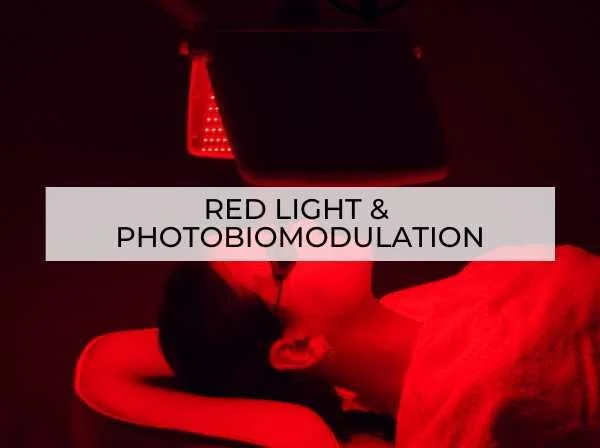
Red light and photobiomodulation therapy for patients seeking support for cellular energy, inflammation balance, pain relief, injury recovery, skin health, nervous system regulation, poor recovery, fatigue, and mitochondrial function — using targeted red, near-infrared, and therapeutic light wavelengths as part of a personalized care plan.
How Red Light Therapy & Photobiomodulation Support Cellular Energy
Red light therapy, also known as photobiomodulation, uses targeted red and near-infrared light wavelengths to support mitochondrial function, cellular energy production, circulation, inflammation regulation, and tissue recovery.
Mitochondria are highly responsive to light signaling. When red and near-infrared wavelengths reach the tissues, they support ATP production, oxidative stress balance, cellular repair signaling, and the body’s ability to recover from pain, injury, inflammation, fatigue, and poor resilience.
This makes photobiomodulation a useful therapy for patients whose symptoms involve low cellular energy, chronic inflammation, slow recovery, pain sensitivity, poor tissue repair, nervous system stress, skin changes, or mitochondrial dysfunction.
At Denver Sports & Holistic Medicine, red light therapy is used as part of a personalized care plan. Treatment is selected based on your symptoms, goals, sensitivity level, recovery needs, and whether red light, near-infrared light, or other therapeutic wavelengths are the best fit for your clinical picture.
Conditions Supported With Red Light Therapy & Photobiomodulation
Red light therapy and photobiomodulation support recovery, inflammation regulation, cellular energy, circulation, skin health, nervous system balance, and tissue repair signaling. This makes PBM useful across several care areas, especially when low mitochondrial function, inflammation, pain, poor recovery, or impaired cellular resilience are part of the clinical picture.
Common areas of support include:
Pain, Injury Recovery & Sports Medicine
Muscle strains, sprains, and soft-tissue injuries
Joint pain, stiffness, and arthritis-related discomfort
Tendon irritation, repetitive strain, and overuse injuries
Sports injuries and training-related recovery
Post-surgical tissue recovery and scar-tissue support
Fatigue, Mitochondrial Function & Chronic Inflammation
Chronic fatigue and low cellular energy
Mitochondrial dysfunction and poor recovery
Long COVID and post-viral recovery patterns
Mold-related inflammation and environmental burden
Autoimmune and inflammatory symptom patterns
Skin Health, Collagen Support & Tissue Repair
Fine lines, wrinkles, and skin texture changes
Collagen and elastin support
Acne-related inflammation and irritated skin
Scars, stretch marks, and post-procedure recovery
Redness, sensitivity, and inflammatory skin concerns
Brain, Mood & Nervous System Support
Brain fog and cognitive fatigue
Stress reactivity and nervous system dysregulation
Sleep disruption and circadian rhythm support
Post-concussion recovery support
Headaches, migraines, and sensory sensitivity when specific wavelengths are appropriate
Red, Near-Infrared, Yellow & Green Light Therapy
Different wavelengths of light affect different tissue depths and clinical goals. At Denver Sports & Holistic Medicine, therapeutic light is selected based on symptoms, sensitivity level, treatment goals, recovery needs, and whether the focus is pain, inflammation, mitochondrial support, skin health, nervous system regulation, or sensory sensitivity.
Red Light Therapy
Red light is often used for skin health, collagen support, surface-level tissue repair, inflammation regulation, wound healing support, and recovery from irritated or inflamed tissue. It can be useful for skin rejuvenation, acne-related inflammation, scars, post-procedure recovery, and tissue sensitivity.
Near-Infrared Light Therapy
Near-infrared light penetrates more deeply into muscles, joints, connective tissue, and larger treatment areas. It is commonly used for pain relief, injury recovery, inflammation regulation, circulation, mitochondrial support, joint stiffness, soft-tissue recovery, and deeper musculoskeletal concerns.
Yellow Light Therapy
Yellow light is a gentler wavelength often used for sensitive skin, redness, flushing, irritation, lymphatic support, and patients who are more reactive or easily overstimulated. It can be useful when the goal is calming, soothing, and supporting skin or nervous system tolerance.
Green Light Therapy
Green light may be used for migraine patterns, light sensitivity, sensory overload, pain sensitivity, nervous system reactivity, and selected pigmentation concerns. It is considered when the clinical picture involves photophobia, headaches, sensory sensitivity, or neuroinflammatory-type reactivity.
The goal is not to use every wavelength at once. The goal is to choose the wavelength or combination that best matches the tissue depth, symptom pattern, sensitivity level, and desired clinical effect.
Red Light Therapy as Part of an Integrative Care Plan
Red light therapy and photobiomodulation are most effective when used as part of a broader care strategy rather than as an isolated treatment. At Denver Sports & Holistic Medicine, PBM can be integrated with acupuncture, sports medicine, regenerative injection therapy, functional medicine, nervous system regulation, detoxification support, microneedling, and mitochondrial health protocols.
This allows red light therapy to support the systems involved in pain, inflammation, tissue recovery, skin health, cellular energy, nervous system regulation, and treatment tolerance while the broader care plan addresses the underlying drivers affecting recovery and resilience.
Red light therapy may be incorporated alongside:
Acupuncture for pain regulation, nervous system balance, sleep, stress, and recovery
Sports medicine and regenerative injection therapy for injury recovery, soft-tissue repair signaling, mobility, and pain relief
Functional medicine care for fatigue, mitochondrial dysfunction, inflammation, metabolic stress, hormone imbalance, and chronic illness patterns
Bioenergetic and nervous system therapies for autonomic regulation, sensitivity, poor sleep, stress physiology, and poor recovery
Microneedling and skin rejuvenation care for collagen support, skin texture, inflammation, scars, and post-procedure recovery
Detoxification and environmental medicine support when inflammation, toxic burden, mold-related illness, or poor drainage tolerance affects recovery
The goal is to use the right wavelength, dose, timing, and treatment combination so red light therapy supports the larger clinical plan instead of functioning as a generic wellness add-on.
Who Benefits From Red Light Therapy & Photobiomodulation
Red light therapy and photobiomodulation are a strong fit for patients who need additional support for cellular energy, pain relief, inflammation regulation, skin health, tissue recovery, nervous system regulation, or poor recovery.
This care is appropriate for those experiencing:
Chronic pain, joint stiffness, muscle tension, tendon irritation, or soft-tissue restriction
Sports injuries, overuse patterns, post-surgical recovery, or slow tissue healing
Fatigue, low cellular energy, mitochondrial dysfunction, or poor exercise recovery
Chronic inflammation, autoimmune patterns, mold-related inflammation, or post-viral recovery concerns
Brain fog, stress reactivity, poor sleep, circadian disruption, or nervous system dysregulation
Skin aging, acne-related inflammation, scars, stretch marks, redness, sensitivity, or post-procedure recovery needs
Headaches, migraines, light sensitivity, sensory overload, or pain sensitivity when specific wavelengths are appropriate
Sensitivity or chronic illness patterns that require gentle, non-invasive support for recovery and resilience
Red light therapy is especially useful when it strengthens a broader care plan for pain, injury recovery, inflammation, mitochondrial function, skin health, nervous system balance, or long-term resilience.
Not Sure If Poor Cellular Energy or Inflammation Is Affecting Recovery?
Pain, fatigue, poor recovery, skin changes, inflammation, sleep disruption, nervous system stress, and slow tissue repair can reflect more than a local problem. Mitochondrial dysfunction, oxidative stress, metabolic stress, hormone imbalance, toxic burden, poor circulation, chronic inflammation, and nervous system dysregulation can all affect how well the body responds to treatment.
Red light therapy can support cellular energy, inflammation regulation, tissue recovery, skin health, and nervous system resilience, but broader patterns may need to be addressed when symptoms are persistent, recurring, or slow to improve.
Take our complimentary Root-Cause Health Assessment to identify whether mitochondrial stress, inflammation, poor recovery, hormone imbalance, nervous system dysregulation, detoxification challenges, metabolic dysfunction, or chronic stress patterns may be contributing to your symptoms.
Begin Red Light Therapy in Denver
Red light therapy and photobiomodulation provide targeted support for cellular energy, pain relief, inflammation regulation, tissue recovery, skin health, nervous system balance, and mitochondrial function.
At Denver Sports & Holistic Medicine, PBM is used as part of a personalized care plan rather than a stand-alone wellness device. Your treatment may be integrated with acupuncture, sports medicine, regenerative injection therapy, functional medicine, nervous system regulation, detoxification support, microneedling, or mitochondrial health care depending on your symptoms, goals, sensitivity level, and recovery needs.
The goal is to use the right wavelength, dose, timing, and treatment combination to support better recovery, improved resilience, and stronger clinical outcomes.
Related Resources
→ Sports Medicine & Injury Recovery
→ Bioenergetic & Nervous System Therapies
→ Longevity & Mitochondrial Health
Frequently Asked Questions About Red Light Therapy & Photobiomodulation
What is red light therapy?
Red light therapy, also known as photobiomodulation, uses targeted red and near-infrared light wavelengths to support mitochondrial function, cellular energy production, circulation, inflammation regulation, tissue recovery, skin health, and nervous system balance.
How does photobiomodulation work?
Photobiomodulation works by exposing tissue to specific therapeutic light wavelengths. Red and near-infrared light interact with mitochondria and cellular signaling pathways that influence ATP production, oxidative stress balance, circulation, inflammation regulation, and tissue repair signaling.
What is the difference between red light therapy and near-infrared light therapy?
Red light is commonly used for more surface-level concerns such as skin health, collagen support, redness, scars, irritation, and post-procedure recovery. Near-infrared light penetrates deeper into muscles, joints, connective tissue, and larger treatment areas, making it useful for pain, injury recovery, inflammation, circulation, and mitochondrial support.
What conditions can red light therapy support?
Red light therapy can support pain, joint stiffness, muscle tension, tendon irritation, sports injuries, post-surgical recovery, chronic inflammation, fatigue, mitochondrial dysfunction, poor recovery, skin aging, scars, acne-related inflammation, nervous system dysregulation, brain fog, sleep disruption, and recovery from chronic stress patterns.
Can red light therapy help with pain and inflammation?
Yes. Red light therapy can support pain relief and inflammation regulation by improving circulation, mitochondrial function, tissue oxygenation, cellular repair signaling, and local recovery processes. It is often used alongside acupuncture, sports medicine, regenerative injection therapy, or functional medicine care for more complete support.
Can red light therapy support mitochondrial function and fatigue?
Yes. Red and near-infrared light therapy support mitochondrial function and ATP production, which can be useful when fatigue, low cellular energy, poor recovery, post-viral symptoms, chronic inflammation, or mitochondrial dysfunction are part of the clinical picture.
Does red light therapy help with skin health and collagen?
Yes. Red light therapy can support collagen production, elastin support, skin texture, redness, acne-related inflammation, scars, stretch marks, post-procedure recovery, and overall skin resilience. It can also be combined with microneedling or skin rejuvenation care when appropriate.
Can red light therapy support injury recovery or sports performance?
Red light therapy can support injury recovery, tissue repair signaling, circulation, inflammation regulation, pain relief, and muscle recovery. For athletes and active patients, it is most useful as part of a broader sports medicine plan that may include acupuncture, movement support, manual therapy, regenerative injection therapy, or recovery planning.
What is yellow light therapy used for?
Yellow light therapy is a gentler therapeutic wavelength often used for sensitive skin, redness, flushing, irritation, lymphatic support, and patients who are easily overstimulated. It can be useful when the goal is calming, soothing, and supporting skin or nervous system tolerance.
What is green light therapy used for?
Green light therapy may be used for migraine patterns, light sensitivity, sensory overload, pain sensitivity, nervous system reactivity, and selected pigmentation concerns. It is considered when the clinical picture involves photophobia, headaches, sensory sensitivity, or neuroinflammatory-type reactivity.
Is red light therapy safe for sensitive patients?
Red light therapy is non-invasive and generally well tolerated. Sensitive patients often do best with a more conservative starting dose, shorter sessions, adjusted distance, and careful wavelength selection to reduce the risk of overstimulation.
How many red light therapy sessions will I need?
The number of sessions depends on the concern being addressed, symptom duration, treatment goals, sensitivity level, and whether red light therapy is being used for pain, skin health, inflammation, fatigue, injury recovery, or mitochondrial support. Many patients benefit from a structured series rather than a single session.
Can red light therapy be combined with acupuncture, PEMF, or functional medicine?
Yes. Red light therapy integrates well with acupuncture, PEMF, sports medicine, regenerative injection therapy, functional medicine, nervous system regulation, detoxification support, microneedling, and mitochondrial health care. At Denver Sports & Holistic Medicine, it is typically used as part of a larger personalized care plan.
Is red light therapy the same as an infrared sauna?
No. Infrared sauna therapy uses heat to warm the body and promote sweating. Red light therapy and photobiomodulation use targeted red and near-infrared wavelengths to support cellular signaling, mitochondrial function, circulation, inflammation regulation, and tissue recovery without relying on whole-body heat.