

Why High-Quality Dietary Supplements Matter: How to Avoid Contaminated, Adulterated, and Ineffective Products
How to Identify Clean, Third-Party-Tested Supplements and Avoid Contaminants, Fillers, and Ineffective Formulas
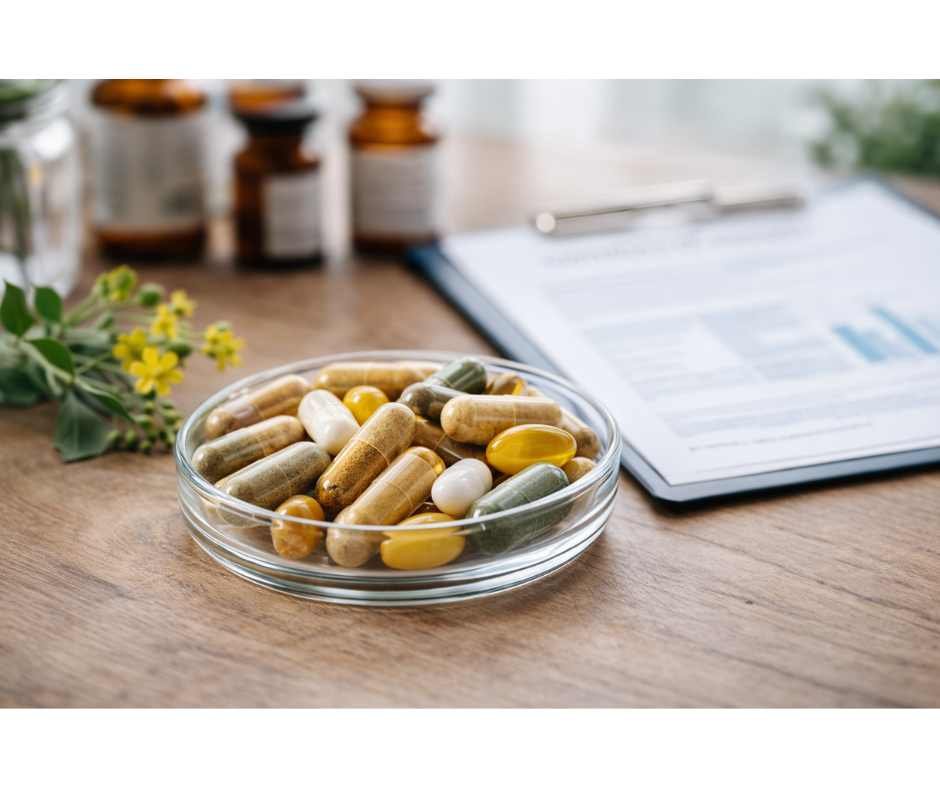
Most people assume that taking dietary supplements is a safe and proactive step toward better health. Supplements are widely available, marketed as natural, and commonly used to support energy, immune resilience, hormone balance, inflammation regulation, and longevity.
But few people stop to ask a critical question:
Are the supplements you’re taking actually helping—or could they be quietly undermining your health?
Unlike prescription medications, dietary supplements are regulated under the Dietary Supplement Health and Education Act (DSHEA) and are not required to undergo the same pre-market safety and efficacy testing. As a result, product quality varies significantly across brands, and regulatory investigations have identified ongoing concerns with contamination and adulteration (1).
Independent testing has identified products that:
Contain heavy metals such as lead, mercury, cadmium, or arsenic (2)
Include synthetic fillers, flow agents, and colorants that may interfere with absorption or irritate the gastrointestinal tract (3)
Are mislabeled or adulterated with pharmaceutical drugs not disclosed on the label (4)
This means that even well-intentioned consumers may unknowingly expose themselves to toxic metals, endocrine-disrupting chemicals, inflammatory additives, degraded nutrients, or hidden medications—all while believing they are supporting their health.
High-quality dietary supplements, when properly sourced, third-party tested, and manufactured under strict quality standards, can be powerful therapeutic tools. They may support:
Immune resilience
Mitochondrial energy production
Hormonal balance
Inflammation regulation
Correction of nutrient deficiencies
Low-quality supplements, however, often deliver little benefit and may contribute to cumulative toxic burden, gut irritation, immune dysregulation, hormonal disruption, and long-term health risks.
Understanding how to identify truly high-quality, third-party-tested supplements—and how to avoid the hidden risks associated with contaminated or adulterated products—is essential for anyone using supplementation as part of a health optimization or longevity strategy.
In this article, we’ll break down:
Why supplement quality varies so widely across the industry
The most common red flags that signal low-quality or contaminated products
How corporate ownership and cost-cutting impact formulations
Why third-party testing and manufacturing standards matter
How to make safer, more informed supplement choices
By the end, you’ll have a clearer framework for protecting your health and making supplement decisions that truly support long-term wellbeing.
→ Functional & Integrative Medicine
How to Identify Low-Quality Dietary Supplements and Manufacturing Red Flags
When evaluating dietary supplements, it is essential to understand that supplement quality varies widely across the industry. Not all products marketed as “natural” or “clinically formulated” meet high manufacturing or testing standards.
Low-quality dietary supplements are often the result of cost-driven decisions involving ingredient sourcing, corporate restructuring, and insufficient quality-control practices. Recognizing these red flags allows you to reduce the risk of contaminated supplements, inaccurate dosing, and ineffective formulations.
Several factors commonly distinguish high-quality supplements from inferior products:
Corporate ownership and acquisition history
Ingredient sourcing transparency
Manufacturing standards and cGMP compliance
Independent third-party testing practices
Label accuracy and excipient disclosure
Understanding these variables is foundational to making informed supplementation decisions.
How Corporate Ownership Can Quietly Impact Supplement Quality
Corporate consolidation within the dietary supplement industry has accelerated over the past decade. Many formerly independent supplement brands have been acquired by large multinational corporations, including private equity firms and pharmaceutical-backed entities that prioritize shareholder returns and margin optimization.
Industry analyses have documented how a relatively small number of parent corporations now control a significant portion of supplement brands available to consumers (5,6).
Following acquisition, formulations are frequently modified to improve profitability. These changes may include:
Substituting cheaper, less bioavailable ingredient forms
Reducing active ingredient dosages
Increasing reliance on fillers, flow agents, or artificial colorants
Streamlining or eliminating costly batch-level quality-control measures
These reformulations are often implemented without prominent disclosure to consumers.
Over time, this can significantly compromise the efficacy, safety, and therapeutic value of products relied upon for immune support, metabolic health, hormonal balance, and longevity.
When ownership structures shift, ingredient sourcing, manufacturing facilities, and testing protocols may also change. Evaluating a company’s ownership history and transparency practices is therefore an important part of identifying high-quality dietary supplements.
Common Harmful Additives in Dietary Supplements: What to Watch for on Labels
Low-quality dietary supplements often rely on excipients — so-called “inactive ingredients” — that improve manufacturing efficiency, extend shelf life, or enhance visual appeal. However, these additives may influence absorption, gut integrity, immune signaling, and overall supplement tolerability.
When evaluating supplement quality, review the full ingredient list — not just the active nutrients.
Common excipients of concern include:
Magnesium Stearate – A flow agent used during capsule production; may interfere with dissolution kinetics and has been debated for its potential impact on nutrient absorption and gut barrier dynamics (2)
Titanium Dioxide – A whitening agent historically used in capsules and tablets; research has linked nanoparticle forms to inflammatory responses and gastrointestinal irritation (3)
Artificial Colorants (e.g., FD&C dyes) – Synthetic additives associated in some studies with neurological effects and immune dysregulation (4)
Silicon Dioxide – An anti-caking agent used to prevent clumping; excessive exposure may irritate the gastrointestinal lining in sensitive individuals
Although classified as “inactive,” excipients can exert biological effects — particularly when consumed daily over long periods.
Independent analyses of inactive ingredients in pharmaceutical and nutraceutical formulations have documented variability in excipient composition and disclosure practices (5).
For this reason, high-quality supplements prioritize minimal excipients, transparent labeling, and manufacturing practices aligned with current Good Manufacturing Practices (cGMP).
The Hidden Dangers of Low-Quality Supplements: Contamination and Mislabeling
Some of the most concerning risks associated with low-quality dietary supplements are not disclosed on the label. Contamination and mislabeling can result from polluted raw materials, inadequate manufacturing oversight, or deliberate adulteration.
These risks are particularly concerning because consumers may be exposed to harmful substances without any awareness.
Heavy Metal Contamination in Dietary Supplements
Independent testing published in peer-reviewed medical journals has identified detectable levels of heavy metals in a significant percentage of dietary supplements sold in the United States. Reported contaminants include lead, mercury, cadmium, and arsenic (6,7,8).
Heavy metals are bioaccumulative. Even low-level exposure over time may contribute to:
Neurological dysfunction
Cardiovascular stress
Mitochondrial impairment
Increased oxidative burden
Documented examples include:
Collagen supplements exceeding California Proposition 65 thresholds for lead and cadmium (6)
Plant-based protein powders testing positive for measurable heavy metal contamination (7,8)
Chronic exposure to heavy metals increases cumulative toxic burden and may interfere with detoxification capacity, cellular energy production, and endocrine signaling.
In cases where symptoms are unexplained or persistent, laboratory evaluation may help clarify whether environmental exposures are contributing to systemic stress.
→ Advanced Functional Lab Testing
Plasticizers and PFAS in Dietary Supplements: Hidden Chemical Contamination
Beyond heavy metal contamination, low-quality dietary supplements may also contain industrial chemicals introduced during manufacturing, capsule production, or packaging.
Unlike nutrient degradation, these exposures are rarely disclosed on product labels.
Two categories of chemical contaminants raise particular concern:
Plasticizers (Phthalates) – Endocrine-disrupting compounds that may leach from plastic tubing, capsule coatings, or packaging materials. Phthalate exposure has been associated with reproductive toxicity, hepatic stress, and developmental effects in both animal and human studies (9).
Per- and Polyfluoroalkyl Substances (PFAS) – Often referred to as “forever chemicals,” PFAS are persistent environmental pollutants linked to thyroid dysfunction, immune dysregulation, and increased long-term cancer risk (10).
Independent testing has identified detectable PFAS levels in certain protein powders and electrolyte formulations, raising concern about cumulative exposure with chronic daily use (11,12).
Because PFAS are highly persistent and bioaccumulative, repeated low-dose exposure through contaminated supplements may contribute to overall environmental toxic burden.
Quality Risks in Herbal Dietary Supplements: Safety, Purity, and Contamination
Herbal dietary supplements require particularly rigorous quality control because they are derived from soil-grown plants rather than synthesized in controlled laboratory environments. Unlike isolated nutrients, botanicals are directly influenced by soil quality, water sources, agricultural practices, and post-harvest handling.
Risk increases when herbs are:
Sourced from polluted environments
Cultivated in contaminated or mineral-imbalanced soil
Improperly dried, processed, or stored
Because plants bioaccumulate environmental substances, herbal supplements may contain unintended contaminants if sourcing and screening standards are inadequate.
In addition to heavy metal contamination, herbal products may be vulnerable to:
Microbial contamination
Fungal overgrowth
Mycotoxin exposure, which has been associated with inflammatory and immunotoxic effects
Independent analyses have documented variability in botanical supplement identity, potency, and contaminant levels, underscoring the importance of rigorous batch-level testing (13,14).
High-quality manufacturers implement comprehensive screening protocols for:
Botanical identity verification
Standardized active compound concentration
Heavy metals, microbes, and mycotoxins
Pesticide residues
These safeguards are essential to ensure therapeutic consistency, safety, and clinical reliability when using herbal dietary supplements.
Supplement Adulteration and Mislabeling: Documented Consumer Safety Risks
Mislabeling and adulteration remain persistent concerns within the dietary supplement industry, particularly among products sold through large online marketplaces and third-party sellers.
Unlike formulation quality issues, adulteration involves the substitution, dilution, or undisclosed addition of ingredients that materially alter the product’s identity or safety profile.
Documented examples include:
Elderberry supplements containing black rice extract instead of authentic elderberry (15)
CBD products with concentrations deviating significantly from labeled potency (16)
Omega-3 supplements testing positive for oxidation and rancidity, which reduces efficacy and may increase oxidative stress (17)
More concerning, regulatory investigations have identified dietary supplements adulterated with undeclared pharmaceutical drugs — including weight-loss agents, erectile dysfunction medications, and stimulants — that were not disclosed on product labels (18,19).
The U.S. Food and Drug Administration maintains an ongoing Health Fraud Product Database documenting supplements found to contain hidden drug ingredients or other prohibited substances (18,19).
These findings highlight a critical point: label claims alone do not guarantee safety, identity, or therapeutic integrity.
Purchasing supplements from reputable manufacturers that implement rigorous third-party testing, transparent sourcing, and current Good Manufacturing Practices (cGMP) significantly reduces the risk of exposure to adulterated or misrepresented products.
How to Choose High-Quality, Third-Party Tested Dietary Supplements
Choosing high-quality dietary supplements is essential for protecting your health and ensuring you receive measurable, clinically meaningful benefits. In a crowded and inconsistently regulated marketplace, understanding how to evaluate supplement quality can determine whether a product provides therapeutic support—or introduces unnecessary risk.
The following criteria provide a practical framework for identifying high-quality supplements and avoiding contaminated, misrepresented, or poorly formulated products.
Third-Party Testing and cGMP Manufacturing: Non-Negotiable Standards
Reputable supplement manufacturers prioritize independent third-party testing to verify purity, potency, and safety.
Third-party testing helps confirm that dietary supplements:
Contain exactly what the label claims
Are screened for heavy metals, pesticides, microbial contamination, and other toxins
Meet identity, strength, and dosage specifications
Manufacturers operating under current Good Manufacturing Practices (cGMP) must follow documented standards for sourcing, production, testing, and labeling. cGMP compliance reduces the risk of contamination, mislabeling, and batch variability (18,19).
Ingredient Transparency and Responsible Sourcing
High-quality supplement companies are transparent about:
Raw material sourcing
Pre-manufacturing testing protocols
Finished-product verification procedures
Companies that rely on proprietary blends without disclosing exact dosages limit your ability to assess both safety and therapeutic relevance.
Transparency is particularly important for products derived from:
Herbal extracts
Marine sources
Animal-derived compounds
Fermented or bioactive nutrients
Clear labeling supports informed decision-making and reduces the risk of unintended exposure.
Minimizing Excipients and Artificial Additives
Even supplements containing high-quality active ingredients can be compromised by unnecessary excipients.
Fillers, binders, artificial colorants, and flow agents may:
Irritate the gastrointestinal lining
Alter dissolution and absorption
Contribute to cumulative inflammatory burden
Selecting supplements with minimal, clearly disclosed inactive ingredients helps reduce overall toxic exposure and supports digestive and metabolic integrity (2–5).
Dosage Accuracy and Bioavailable Forms
Formulation integrity extends beyond ingredient presence—it includes appropriate dosing and bioavailability.
Low-quality supplements may contain:
Underdosed ingredients that provide minimal therapeutic effect
Excessively high doses that strain metabolic or detoxification pathways
Nutrient forms that are poorly absorbed or utilized
High-quality manufacturers prioritize clinically relevant dosing strategies supported by research rather than marketing trends.
This is one reason many generic multivitamins or “all-in-one” powders fail to deliver consistent results.
Purchasing From Reputable and Authorized Sources
Where supplements are purchased directly impacts product integrity.
Products sold through:
Large online marketplaces
Unauthorized third-party sellers
Overseas distributors
carry higher risk of:
Improper storage conditions
Counterfeit substitution
Expired or degraded products
Adulteration with undeclared substances (15–19)
Purchasing directly from reputable manufacturers or through a qualified healthcare provider significantly reduces these risks.
When Supplementation Should Be Personalized
Even high-quality supplements may fail to deliver optimal results if they are not aligned with individual physiology.
Supplement needs vary based on:
Digestive function
Toxic burden
Genetic polymorphisms
Hormonal status
Inflammatory and oxidative stress patterns
Medication interactions
Without personalization, supplementation often becomes trial-and-error rather than strategic.
A Functional Medicine Approach to Strategic Supplementation
Rather than guessing, a systems-based approach allows supplementation to be:
Targeted
Efficient
Safer
Clinically appropriate
By combining clinical-grade supplements with functional testing and individualized guidance, supplementation can support metabolic, immune, and detoxification systems without adding unnecessary burden.
How to Choose Reputable High-Quality Dietary Supplements in Practice
Understanding supplement quality is one thing. Applying that knowledge when standing in front of a product—or shopping online—is another.
The following checklist translates quality principles into clear, practical decision steps when evaluating any dietary supplement brand.
Step 1: Verify Independent Third-Party Testing
Before purchasing a supplement, confirm that the company provides accessible documentation of independent testing.
Look for:
Certificates of Analysis (COAs)
Batch-specific testing disclosures
Explicit confirmation of screening for heavy metals, microbes, pesticides, and dosage accuracy
If testing claims are vague, generalized, or difficult to locate, treat that as a warning sign.
Step 2: Confirm cGMP Manufacturing Standards
Ensure the manufacturer operates under current Good Manufacturing Practices (cGMP).
This helps confirm the product is:
Produced in a regulated facility
Consistently manufactured from batch to batch
Properly documented and labeled
cGMP compliance is a baseline safety standard—not a premium feature.
Step 3: Purchase From Authorized and Controlled Channels
Where you purchase supplements directly affects product integrity.
Choose to buy:
Directly from the manufacturer
Through authorized distributors
From a qualified healthcare provider
Avoid purchasing from unknown third-party sellers or large online marketplaces where storage conditions, authenticity, and handling cannot be verified.
Step 4: Evaluate the Formulation—Not Just the Marketing
Marketing language does not guarantee formulation integrity.
Instead, assess whether the supplement:
Uses clinically supported nutrient forms
Avoids unnecessary fillers and artificial additives
Provides research-aligned dosing rather than trend-driven megadoses
More ingredients do not automatically equal better outcomes.
Step 5: Evaluate the Brand’s Transparency and Ownership
Long-term supplement use requires trust in the company behind the product.
Ask:
Who owns the company?
Has ownership changed recently?
Are sourcing and testing practices publicly disclosed?
Have formulations shifted over time?
Transparency at the brand level often reflects transparency in manufacturing standards.
Step 6: Re-Evaluate Periodically
Supplement formulations can change without prominent notice.
Re-check labels if:
A product feels less effective
Packaging or branding shifts
Corporate ownership changes
Small ingredient substitutions can meaningfully alter therapeutic impact.
Step 7: Know When Supplementation Should Be Personalized
Even high-quality dietary supplements may be ineffective—or counterproductive—if they are not aligned with individual physiology.
Professional guidance may be appropriate if you:
Take multiple supplements with minimal improvement
Experience digestive, hormonal, immune, or inflammatory concerns
Manage chronic symptoms
Want to avoid unnecessary or excessive supplementation
A personalized, systems-based approach reduces guesswork, improves safety, and ensures supplementation supports rather than burdens metabolic and detoxification pathways.
Take the Guesswork Out of Supplements with Personalized Functional Medicine
Selecting high-quality dietary supplements is foundational to optimizing health—but even with the right information, the process can become overwhelming.
After identifying reputable brands, important clinical questions remain:
Which supplements are appropriate for gut health, sleep regulation, anxiety, immune function, or inflammation?
Is detoxification support necessary—or could it be premature?
What dosage is appropriate for your physiology?
Should nutrients be taken with food, without food, or at specific times of day?
Are you correcting a documented deficiency—or simply guessing?
Without individualized evaluation, supplementation often becomes inconsistent, excessive, or ineffective.
At Denver Sports & Holistic Medicine, supplement decisions are guided by clinical assessment rather than trial-and-error. Through comprehensive evaluation and advanced functional lab testing, patterns such as nutrient deficiencies, toxic burden, digestive dysfunction, metabolic stress, and hormonal imbalance can be identified and addressed strategically.
This allows for:
Targeted dietary and lifestyle modification
Personalized, clinically appropriate supplementation
Safe and appropriately timed detoxification strategies when indicated
→ Detoxification & Environmental Medicine
Partnering directly with Dr. Martina Sturm ensures that supplementation is intentional, evidence-informed, and aligned with your physiology—not generic or marketing-driven.
Only clinical-grade supplements that are rigorously tested for purity, potency, and safety are recommended, minimizing unnecessary exposure to contaminants or ineffective formulations.
Personalized Functional Medicine Support for Safe, Effective Supplementation
Stop guessing which supplements to take—or why they aren’t delivering the results you expect.
You may request a free 15-minute consultation with Dr. Martina Sturm to review your health concerns and outline appropriate next steps within a root-cause, systems-based framework.
Frequently Asked Questions About Supplement Quality
How do I know if a supplement is high quality?
High-quality supplements are third-party tested, manufactured under current Good Manufacturing Practices (cGMP), and contain transparent ingredient labeling without unnecessary fillers or proprietary blends. Reputable brands provide batch-level testing documentation and disclose sourcing practices.
Can supplements contain heavy metals or hidden drugs?
Yes. Independent testing has identified some dietary supplements contaminated with heavy metals such as lead or cadmium. Regulatory investigations have also found products adulterated with undeclared pharmaceutical ingredients, particularly in weight-loss and performance supplements.
What does third-party tested mean for supplements?
Third-party testing means an independent laboratory verifies that a supplement contains the ingredients and dosages listed on the label and screens for contaminants such as heavy metals, microbes, or pesticides.
Are herbal supplements more likely to be contaminated?
Herbal supplements can carry higher contamination risk because plants absorb substances from soil and water. Without rigorous testing, products may contain heavy metals, microbes, or mycotoxins.
Why do some protein powders test positive for heavy metals?
Plants naturally absorb minerals from soil. If grown in contaminated soil or insufficiently screened during manufacturing, plant-based protein powders may contain detectable levels of heavy metals.
Should supplements be personalized?
Yes. Nutrient needs vary based on digestion, metabolism, toxic burden, genetics, and health status. Personalized evaluation helps prevent unnecessary supplementation and improves effectiveness.
Still Have Questions?
If the topics above reflect ongoing symptoms or unanswered concerns, a brief conversation can help clarify whether a root-cause approach is appropriate.
Resources
JAMA Network Open – Continued risk of dietary supplements adulterated with approved and unapproved drugs: assessment of the U.S. FDA tainted supplements database, 2007–2021
BMJ – Hidden pharmaceutical ingredients in dietary supplements and regulatory oversight challenges
Consumer Reports – FDA finds hidden drugs in dietary supplements sold through major online retailers
Food and Chemical Toxicology – Human health risk assessment of heavy metal ingestion among consumers of protein powder supplements
Natural Products Insider – Market consolidation in the dietary supplement industry
Holland & Knight – Consumer Product Safety Commission findings on third-party marketplace liability
Food Control – Heavy metals and contaminant variability in commercial protein and botanical supplements
Regulatory Toxicology and Pharmacology – Titanium dioxide exposure and safety evaluation in food and supplements
Frontiers in Pharmacology – Excipients and inactive ingredients in pharmaceutical and nutraceutical formulations: safety considerations
Journal of Dietary Supplements – Analysis of select dietary supplement products marketed to support immune health
Environmental Health Perspectives – Per- and polyfluoroalkyl substances (PFAS) exposure and human health effects
Endocrine Reviews – Endocrine-disrupting chemicals and human health implications
Toxicology Reports – Microbiological contamination and quality variability in herbal supplements
Journal of Agricultural and Food Chemistry – Pesticide and contaminant screening in plant-derived dietary supplements
Journal of Cannabis Research – Label accuracy of unregulated cannabidiol products: measured concentration versus label claim
Journal of the American Oil Chemists’ Society – Multi-year rancidity analysis of marine and microalgal omega-3 supplements
Consumer Reports – Arsenic and lead found in popular protein supplements
U.S. Food and Drug Administration (FDA) – Health Fraud Product Database
Clean Label Project – Independent testing of protein powders for pesticides, heavy metals, PFAS, and phthalates