

Brain Inflammation and ADHD: A Foundational, Overlooked Driver
How Neuroinflammation, Immune Activation, Oxidative Stress, and Nervous System Dysregulation May Affect Focus, Executive Function, and ADHD Symptoms
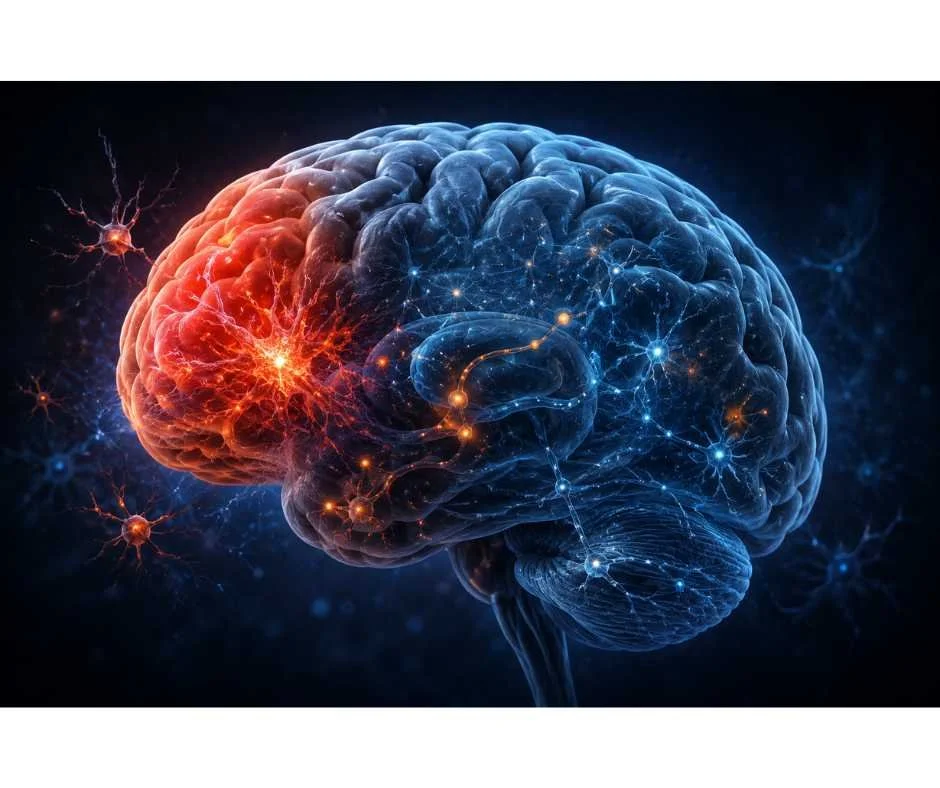
ADHD is commonly described as a dopamine disorder involving attention, impulsivity, and executive dysfunction. Dopamine signaling absolutely matters — but this explanation alone is incomplete.
Research increasingly suggests that neuroinflammation and immune dysregulation may influence many of the same brain networks involved in ADHD, including dopamine signaling, prefrontal cortex function, reward processing, emotional regulation, and cognitive endurance (1).
Executive function depends on more than neurotransmitters alone. Stable attention and cognitive regulation also rely on balanced inflammatory signaling, efficient brain energy production, restorative sleep, autonomic nervous system regulation, and coordinated stress responses (2).
When inflammatory burden rises, executive regulation may become less stable, contributing to:
Distractibility
Mental fatigue
Emotional reactivity
Reduced cognitive endurance
Difficulty sustaining focus and effort
This may help explain why ADHD symptoms often worsen during:
Poor sleep
Chronic stress
Burnout
Illness
Post-viral syndromes
Gut dysfunction
Hormonal shifts
Environmental toxic exposure
Periods of systemic inflammation
Rather than reflecting a fixed “attention deficit,” ADHD symptoms often fluctuate according to inflammatory burden, stress physiology, recovery capacity, sleep quality, and broader nervous system regulation (3).
This article examines how brain inflammation, oxidative stress, mitochondrial dysfunction, gut–brain signaling, and chronic stress may contribute to ADHD symptom intensity and executive dysfunction.
What Is Neuroinflammation in ADHD?
Neuroinflammation refers to activation of the brain’s immune system.
Unlike short-term inflammation that helps the body respond to injury or infection, chronic low-grade neuroinflammation may disrupt neurotransmitter signaling, synaptic communication, and executive network function within the brain (4).
One major driver of neuroinflammation involves immune cells within the brain called microglia. When inflammatory signaling remains elevated for prolonged periods, microglia may become overactivated and contribute to:
Oxidative stress
Inflammatory cytokine production
Neural excitability
Synaptic dysfunction
Increased metabolic demand within the brain
Over time, this may impair communication between brain regions involved in:
Attention regulation
Working memory
Emotional regulation
Cognitive flexibility
Inhibitory control
This is particularly relevant in ADHD because prefrontal cortical networks involved in executive function appear especially vulnerable to inflammatory and metabolic stress (5).
When inflammatory signaling interferes with these networks, symptoms involving focus, emotional regulation, impulsivity, and cognitive endurance may become more pronounced.
How Brain Inflammation Affects ADHD Symptoms and Executive Function
Research increasingly suggests that inflammatory signaling may directly affect several neural systems involved in ADHD, including:
Dopamine signaling pathways
Prefrontal cortical function
Reward processing circuits
Working memory networks
Emotional regulation systems
Inflammatory cytokines such as IL-6, TNF-α, and CRP-associated inflammatory pathways have been associated with impaired executive function, altered neurotransmitter signaling, and reduced cognitive flexibility (6).
How Inflammation Affects Dopamine Signaling in ADHD
Dopamine helps regulate:
Motivation
Reward anticipation
Task initiation
Attention filtering
Sustained cognitive effort
Inflammatory cytokines may alter dopamine synthesis, transport, receptor sensitivity, and signaling efficiency (7).
Rather than simply reflecting “low dopamine,” ADHD symptoms may partly worsen when inflammatory signaling interferes with efficient dopamine regulation under stress or metabolic load.
This may contribute to:
Reduced motivation
Mental fatigue
Difficulty initiating tasks
Reduced reward sensitivity
Increased distractibility
ADHD symptoms often intensify during:
Illness
Poor sleep
Chronic stress
Burnout
Periods of systemic inflammation
Neuroinflammation, Executive Dysfunction, and the Prefrontal Cortex
The prefrontal cortex is highly metabolically demanding and particularly vulnerable to inflammatory stress.
This region helps regulate:
Impulse control
Planning
Working memory
Attention regulation
Emotional inhibition
Inflammatory signaling may reduce prefrontal cortical efficiency while increasing limbic and amygdala reactivity (8).
This may contribute to:
Increased impulsivity
Lower frustration tolerance
Reduced task persistence
Greater emotional reactivity
Difficulty sustaining cognitive effort
Inflammatory burden, sleep quality, stress load, and recovery capacity may all influence ADHD symptom severity over time.
Oxidative Stress, Mitochondrial Dysfunction, and Brain Fog in ADHD
Inflammation and oxidative stress are closely connected.
Oxidative stress occurs when reactive oxygen species exceed the body’s antioxidant defense capacity. The brain is particularly vulnerable because of its high oxygen demand and intense metabolic activity (9).
Several studies have identified elevated oxidative stress markers in people with ADHD (10).
This is important because executive function is energetically demanding.
Sustained focus, emotional regulation, working memory, and inhibitory control all require significant ATP production from mitochondria.
When mitochondrial efficiency declines, cognitive endurance and mental stamina decline as well.
Mitochondrial Dysfunction, Brain Energy, and ADHD Fatigue
The ADHD brain often appears highly sensitive to energy instability.
Mental fatigue may worsen during:
Poor sleep
Blood sugar swings
Overstimulation
Chronic stress
Illness
Inflammation
Environmental toxic exposure
When mitochondrial ATP production becomes less efficient, the brain may prioritize short-term reward-seeking over sustained executive effort (11).
This may contribute to:
Task avoidance
Mental exhaustion
Difficulty sustaining low-reward activities
Inconsistent focus
Reduced cognitive stamina
Reduced cognitive endurance in ADHD may partly reflect impaired energetic efficiency under chronic inflammatory or metabolic stress.
→ Longevity & Mitochondrial Health
The Gut–Brain Axis and ADHD Symptoms
The gut and brain communicate continuously through immune, neurologic, endocrine, and metabolic pathways.
The gut microbiome influences:
Neurotransmitter production
Inflammatory signaling
Blood–brain barrier integrity
Short-chain fatty acid production
Stress-axis regulation
Immune modulation
Disruptions in gut integrity or microbial diversity may increase inflammatory signaling and contribute to neuroimmune dysregulation (12).
Several studies have identified microbiome differences in people with ADHD compared to controls (13).
This does not mean gut dysfunction independently “causes” ADHD.
But gut inflammation and microbiome disruption may amplify symptom expression in susceptible individuals.
Gut Inflammation, Leaky Gut, and Neural Noise in ADHD
Increased intestinal permeability (“leaky gut”) may allow greater immune activation and inflammatory signaling throughout the body.
This may increase:
Microglial activation
Oxidative stress
Cytokine signaling
Neural excitability
Brain fog
Executive instability
The result may be greater “neural noise,” where attentional filtering and cognitive regulation become less efficient (14).
ADHD symptoms often worsen alongside:
Digestive dysfunction
Food sensitivities
Post-antibiotic changes
Chronic bloating
Inflammatory dietary patterns
Blood sugar instability
This does not prove direct causation.
But it reflects the integrated nature of the gut–brain axis.
→ Gut Health & Digestive Restoration
Chronic Stress, Cortisol, and Neuroinflammation in ADHD
Chronic stress is one of the most powerful amplifiers of neuroinflammation.
Sustained activation of the hypothalamic–pituitary–adrenal (HPA) axis alters:
Cortisol rhythms
Microglial activation
Prefrontal cortical function
Autonomic nervous system balance
Mitochondrial efficiency
Inflammatory cytokine signaling
Under chronic stress, the brain shifts away from long-term executive regulation and toward short-term survival prioritization (15).
This often worsens:
Impulsivity
Emotional reactivity
Mental fatigue
Distractibility
Task avoidance
Executive dysfunction
ADHD Burnout and Nervous System Dysregulation
Many adults with ADHD operate in chronic sympathetic overdrive.
The nervous system becomes increasingly reactive while recovery capacity decreases.
Over time, this may create:
Burnout
Sleep disruption
Inflammatory amplification
Reduced cognitive resilience
Emotional exhaustion
Worsening executive instability
This helps explain why ADHD symptoms often worsen during periods of prolonged stress rather than remaining static over time.
Over time, chronic nervous system activation may reduce cognitive resilience, worsen sleep quality, amplify inflammatory signaling, and increase executive dysfunction during periods of prolonged stress or burnout.
→ Acupuncture & Nervous System Regulation
Environmental Triggers That May Increase Brain Inflammation in ADHD
Modern environments continuously expose the brain to inflammatory stressors.
Potential contributors include:
Ultra-processed foods
Refined sugar excess
Chronic sleep deprivation
Environmental toxins
Air pollution
Mold exposure
Heavy metals
Sedentary behavior
Circadian rhythm disruption
Constant digital overstimulation
These factors may increase inflammatory burden and reduce cognitive resilience in susceptible people (16).
This may be particularly relevant for people already vulnerable to ADHD-related executive dysfunction.
Why ADHD Symptoms Often Get Worse During Illness, Burnout, and Sleep Deprivation
Many people with ADHD report major symptom worsening during:
Viral illness
Post-viral recovery
Sleep deprivation
Hormonal shifts
High stress
Burnout
Periods of systemic inflammation
Inflammation and sleep loss both reduce prefrontal cortical efficiency while increasing limbic activation and neural fatigue (17).
Even temporary inflammatory stress may significantly impair executive regulation in vulnerable individuals.
This explains why symptoms may suddenly feel dramatically worse during periods of physiologic strain.
The brain is functioning under increased inflammatory load and reduced recovery capacity simultaneously.
A Root-Cause Perspective on Brain Inflammation and ADHD
ADHD should not be reduced to inflammation alone.
Nor should inflammation be ignored.
A systems-based framework recognizes that ADHD symptoms emerge from interaction between:
Neurotransmitter signaling
Brain energy production
Inflammatory tone
Stress physiology
Sleep quality
Autonomic nervous system regulation
Hormonal status
Environmental load
Recovery capacity
This model explains why symptom severity fluctuates rather than remaining fixed.
It also explains why medication response varies between individuals and across different physiologic states.
Why “Normal” Labs May Miss Functional ADHD Contributors
Many people are told their laboratory testing is “normal” despite persistent symptoms.
However, executive function depends on optimal physiologic regulation — not simply the absence of disease.
Subtle dysregulation involving:
Stress-axis signaling
Circadian rhythm integrity
Mitochondrial function
Glucose stability
Inflammatory load
Autonomic balance
…may still impair cognitive resilience even when conventional labs remain within reference range (18).
ADHD Treatment Through a Root-Cause and Regulatory Framework
A systems-based framework does not reject medication or conventional treatment.
Instead, it broadens the clinical lens.
A systems-based evaluation may consider:
Sleep architecture
Circadian rhythm integrity
Stress-axis regulation
Blood sugar stability
Inflammatory burden
Gut health
Environmental exposures
Autonomic nervous system tone
Mitochondrial support
Medication may remain appropriate and helpful for many patients.
But stabilizing underlying physiologic systems may improve resilience, reduce symptom variability, and support more consistent executive function over time.
→ Functional & Integrative Medicine
Understanding the Connection Between Brain Inflammation and ADHD
ADHD is often discussed through the lens of neurotransmitters, particularly dopamine. However, emerging research suggests that inflammation, oxidative stress, mitochondrial function, stress physiology, and gut-brain signaling may also influence symptom severity in some people.
Brain inflammation is unlikely to explain every case of ADHD, but it may help explain why symptoms fluctuate, why cognitive fatigue develops, and why focus and emotional regulation often worsen during periods of illness, stress, poor sleep, or increased inflammatory burden.
Understanding these connections creates a broader framework for evaluating ADHD and supporting long-term cognitive resilience.
When to Seek a Root-Cause Evaluation for ADHD Symptoms
If ADHD symptoms worsen significantly with:
Stress
Burnout
Poor sleep
Illness
Hormonal changes
Inflammatory conditions
Digestive dysfunction
Environmental exposures
…it may be worth evaluating broader physiologic contributors affecting nervous system regulation.
A systems-based evaluation may help identify patterns involving:
Neuroinflammatory load
Stress-axis dysregulation
Sleep and circadian disruption
Blood sugar instability
Gut dysfunction
Autonomic imbalance
Mitochondrial stress
Environmental toxic burden
The goal is not simply temporary focus enhancement.
The goal is improved regulatory resilience and more stable executive function over time.
You may request a free 15-minute consultation with Dr. Martina Sturm to review your health concerns and outline appropriate next steps within a root-cause, systems-based framework.
Frequently Asked Questions About Brain Inflammation and ADHD
Can inflammation make ADHD symptoms worse?
Yes. Research suggests inflammatory signaling may impair dopamine regulation, executive function, and prefrontal cortical efficiency. Increased inflammatory burden may worsen distractibility, impulsivity, emotional reactivity, and mental fatigue.
What is neuroinflammation?
Neuroinflammation refers to activation of the brain’s immune system. Chronic low-grade neuroinflammation may interfere with neurotransmitter signaling, synaptic function, and executive regulation.
Does ADHD involve the immune system?
Research increasingly suggests immune signaling and inflammatory pathways may influence ADHD symptom severity. Cytokines, microglial activation, and oxidative stress may affect cognitive regulation and attention networks.
Can gut health affect ADHD symptoms?
Potentially. The gut microbiome influences immune signaling, neurotransmitter metabolism, inflammation, and brain function through the gut–brain axis. Gut dysfunction may amplify ADHD symptoms in some people.
Why do ADHD symptoms get worse during stress?
Chronic stress elevates cortisol, increases inflammatory signaling, impairs prefrontal cortical regulation, and reduces cognitive resilience. This may worsen focus, emotional regulation, and mental endurance.
Does sleep affect brain inflammation and ADHD?
Yes. Sleep deprivation increases inflammatory signaling, impairs dopamine regulation, reduces prefrontal cortical efficiency, and worsens executive dysfunction.
What is the connection between mitochondria and ADHD?
Mitochondria produce ATP required for brain energy and executive function. Reduced mitochondrial efficiency may contribute to mental fatigue, reduced cognitive endurance, and inconsistent attention regulation.
Can environmental toxins worsen ADHD symptoms?
Environmental toxic exposures such as mold, heavy metals, air pollution, and endocrine disruptors may increase oxidative stress and inflammatory burden, potentially worsening executive dysfunction in susceptible people.
Is ADHD only caused by dopamine problems?
No. Dopamine signaling is important, but ADHD also involves broader systems including sleep regulation, stress physiology, inflammation, metabolism, autonomic balance, and brain energy production.
Can reducing inflammation cure ADHD?
There is no evidence that reducing inflammation alone “cures” ADHD. However, improving sleep, stress regulation, metabolic stability, gut health, and inflammatory burden may help improve symptom stability and overall executive resilience.
Still Have Questions?
If the topics above reflect ongoing symptoms or unanswered concerns, a brief conversation can help clarify whether a root-cause approach is appropriate.
Resources
Nature Reviews Neuroscience – Neuroinflammation and Cognitive Function
Brain, Behavior, and Immunity – Immune Dysregulation in ADHD
Frontiers in Psychiatry – Neuroinflammation in Attention-Deficit/Hyperactivity Disorder
Nature Reviews Immunology – Microglia and Neuroinflammation
Molecular Psychiatry – Cytokines and Executive Dysfunction
Neuropsychopharmacology – Inflammation and Dopamine Signaling
Nature Neuroscience – Stress, Inflammation, and Prefrontal Cortex Function
Cell Metabolism – Oxidative Stress and Brain Energy Metabolism
Free Radical Biology & Medicine – Oxidative Stress Biomarkers in ADHD
Frontiers in Neuroscience – Mitochondrial Dysfunction and Cognitive Regulation
Gut Microbes – The Gut–Brain Axis and Neuroinflammation
Nutrients – Gut Microbiota Alterations in ADHD
Brain, Behavior, and Immunity – Intestinal Permeability and Neuroimmune Activation
Psychoneuroendocrinology – Chronic Stress and Neuroinflammation
Environmental Health Perspectives – Environmental Toxicants and Neurodevelopment
Sleep Medicine Reviews – Sleep Loss and Executive Dysfunction
Frontiers in Psychology – Functional Capacity Versus Reference Ranges in Cognition
Integrative Medicine Research – Systems-Based Approaches to Cognitive Regulation