

Microneedling for Acne and Acne Scars: How Collagen Remodeling Improves Skin Texture and Reduces Scar Depth
How Controlled Dermal Injury Stimulates Collagen Remodeling, Reduces Acne Scar Depth, and Improves Skin Texture Without Damaging the Skin Barrier
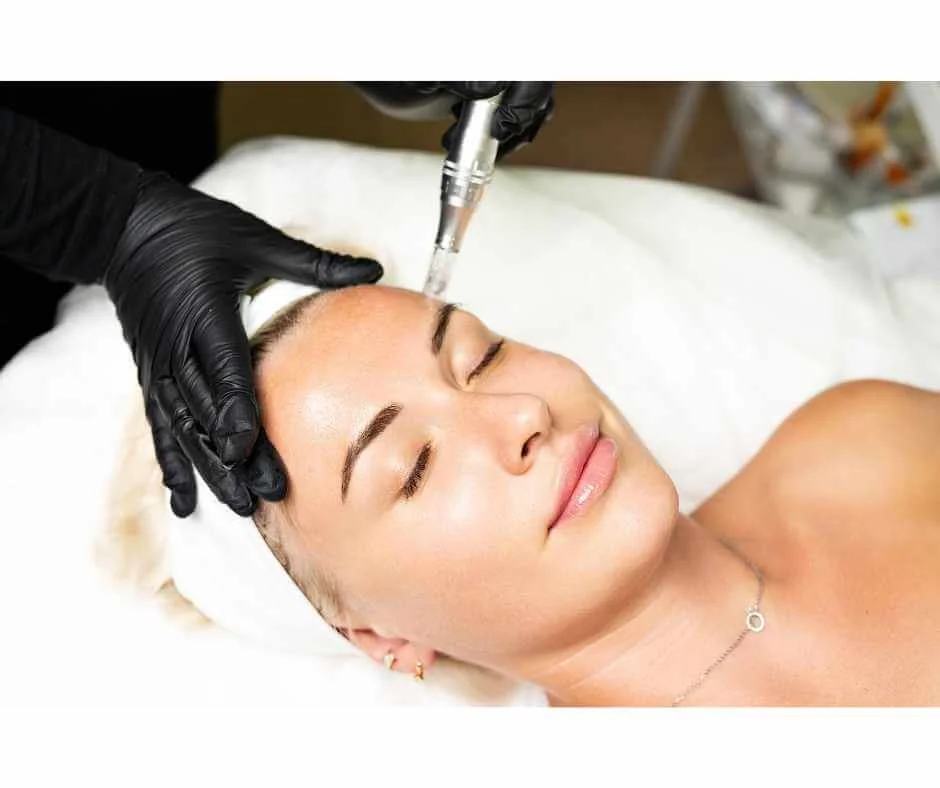
Acne often resolves long before its effects on the skin do. For many adults, lingering scars, uneven texture, enlarged pores, and post-inflammatory pigmentation become the more persistent challenge—impacting confidence and long-term skin integrity.
Microneedling, also known as collagen induction therapy, is used as a regenerative approach for acne scarring because it activates the skin’s intrinsic repair pathways rather than removing or suppressing tissue (1). By stimulating controlled dermal injury, it promotes structural remodeling within the skin rather than surface-level correction alone.
At Denver Sports & Holistic Medicine, microneedling is applied as a condition-specific therapy within a broader skin-health strategy—particularly when acne scarring or post-inflammatory changes persist after internal drivers such as inflammation, hormonal signaling, or barrier dysfunction are being addressed.
→ Microneedling in Denver: Benefits, Safety, and What to Expect
Does Microneedling Help Acne Scars?
Microneedling improves acne scars by inducing controlled dermal micro-injury, which activates fibroblast signaling, increases collagen and elastin production, and initiates extracellular matrix remodeling (1,2). This process supports the transition from disorganized scar tissue toward more structured collagen architecture, gradually reducing scar depth and improving skin texture without damaging the epidermis.
Why Microneedling Is Effective for Acne & Acne Scars
Acne scarring is not a surface-level condition. It reflects disrupted collagen architecture, inflammation-driven tissue degradation, and impaired dermal repair following repeated inflammatory lesions (2).
Microneedling targets these underlying abnormalities by inducing controlled dermal micro-injury, which activates a coordinated wound-healing cascade involving fibroblast proliferation, growth factor signaling, and extracellular matrix remodeling (3).
Collagen Remodeling in Acne Scar Tissue
Microneedling stimulates fibroblast activity and the release of signaling molecules such as transforming growth factor beta (TGF-β) and platelet-derived growth factor (PDGF). This initiates new collagen synthesis—beginning with type III collagen and gradually remodeling into stronger type I collagen—helping restore structural integrity within scarred tissue (4).
Inflammatory Signaling in Acne Scar Formation and Repair
Chronic acne alters inflammatory signaling pathways, impairing normal tissue repair and contributing to disorganized scar formation. Controlled micro-injury helps recalibrate aspects of this response, promoting more organized healing and reducing the persistence of abnormal extracellular matrix patterns (5).
Epidermal Preservation Compared to Ablative Treatments
Unlike ablative procedures such as laser resurfacing or aggressive chemical peels, microneedling preserves the epidermis while stimulating repair within the dermis. This reduces the risk of post-inflammatory hyperpigmentation and makes it more appropriate for individuals with sensitive or melanin-rich skin (6).
How Microneedling Supports Acne-Prone Skin
Microneedling is not used to treat active inflammatory or cystic acne. Instead, it is applied after breakouts are controlled to support visible structural improvement and functional recovery of post-acne skin.
Structural Improvement in Atrophic Acne Scars
Repeated inflammatory acne disrupts dermal structure, leading to atrophic (depressed) scars. Through progressive collagen remodeling and tissue reorganization, microneedling improves scar depth, surface irregularity, and overall skin texture over time (4).
Skin Barrier Restoration and Reduced Reactivity
Post-acne skin often exhibits impaired barrier function, characterized by increased transepidermal water loss (TEWL) and heightened sensitivity. Controlled micro-injury has been shown to support barrier repair and improve dermal resilience when appropriately timed, helping stabilize skin that remains reactive after inflammation has resolved (5).
Post-Inflammatory Hyperpigmentation (PIH) Reduction
Post-inflammatory hyperpigmentation results from dysregulated melanocyte activity following inflammation. By increasing epidermal turnover and modulating inflammatory signaling, microneedling supports gradual pigment normalization and a more even skin tone without triggering additional pigment disruption (6).
Types of Acne Scars That Respond Best to Microneedling
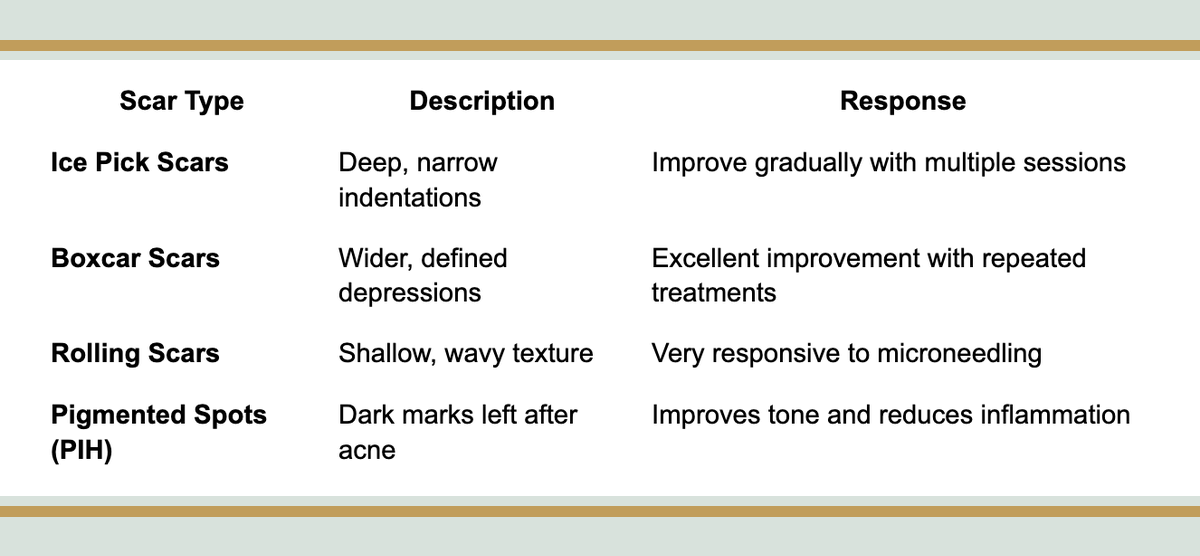
Microneedling is most effective for rolling and boxcar acne scars, offers partial improvement for ice pick scars, and can help reduce post-inflammatory hyperpigmentation. Treatment outcomes depend on scar depth, structure, and the degree of underlying collagen disruption.
Rolling Acne Scars (Most Responsive)
Rolling scars are shallow, wave-like depressions caused by fibrous bands tethering the skin. These scars respond particularly well to microneedling because collagen remodeling and dermal restructuring help release these irregularities and smooth overall skin texture.
Boxcar Acne Scars (Good Response with Repeated Treatments)
Boxcar scars appear as wider, well-defined depressions with sharp edges. Microneedling improves these scars by stimulating collagen deposition within the dermis, gradually reducing depth and improving contour over a series of treatments.
Ice Pick Acne Scars (Limited Response)
Ice pick scars are deep, narrow, and extend vertically into the dermis. Due to their depth, they respond less effectively to microneedling alone and often require combination therapies. Microneedling may still improve surrounding skin quality and overall texture but is not typically sufficient as a standalone treatment.
Post-Inflammatory Hyperpigmentation (PIH)
Post-inflammatory hyperpigmentation is not a true scar but a pigment alteration following inflammation. Microneedling supports improvement by increasing epidermal turnover and helping regulate melanocyte activity, leading to more even skin tone over time.
Microneedling vs. Other Acne Scar Treatments
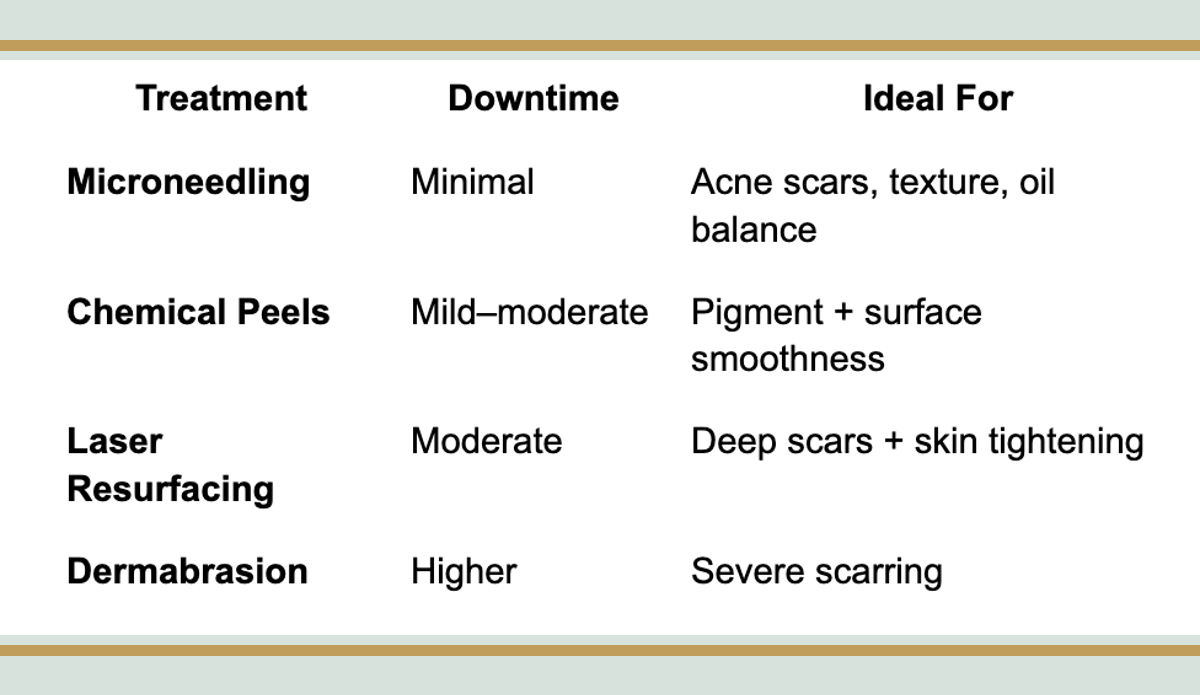
Multiple treatment options exist for acne scarring, but they differ significantly in mechanism, depth of action, downtime, and risk profile. Microneedling is often selected as a first-line approach because it stimulates dermal remodeling while preserving the epidermis, resulting in lower risk and minimal recovery time compared to more aggressive resurfacing procedures.
Microneedling vs Laser Resurfacing
Laser resurfacing removes layers of skin to stimulate regeneration, making it more aggressive but also associated with increased downtime and a higher risk of post-inflammatory hyperpigmentation—particularly in darker skin tones. Microneedling, by contrast, preserves the epidermis while stimulating collagen production within the dermis, offering a lower-risk option with minimal recovery time.
Microneedling vs Chemical Peels
Chemical peels primarily target the superficial layers of the skin and are most effective for pigment irregularities and mild textural concerns. While they can improve overall skin tone, they do not stimulate deeper collagen remodeling to the same extent as microneedling, making them less effective for structural acne scars.
Microneedling vs Dermabrasion
Dermabrasion is a mechanical resurfacing technique that removes the outer layers of skin and requires significant recovery time. It may be appropriate for more severe scarring but carries increased risk of irritation, prolonged erythema, and pigment changes. Microneedling offers a more controlled, non-ablative approach with a more favorable recovery profile.
Is Microneedling or Laser Better for Acne Scars?
Microneedling is often preferred for acne scars because it stimulates collagen without removing the outer layer of skin, resulting in less downtime and a lower risk of post-inflammatory hyperpigmentation. Laser treatments may provide more aggressive resurfacing but carry higher risk and longer recovery, particularly in sensitive or darker skin types.
Microneedling is often selected over ablative resurfacing procedures for acne scarring because it supports dermal remodeling while preserving the epidermis, resulting in structural improvement with a lower risk profile (8,9).
Key advantages include:
Minimal downtime compared to ablative laser resurfacing
Safe across all Fitzpatrick skin types, including melanin-rich skin
Reduced risk of post-inflammatory hyperpigmentation due to epidermal preservation
Gradual collagen remodeling without thermal or chemical tissue injury
These characteristics make microneedling particularly appropriate for patients with a history of inflammation, pigment sensitivity, or those seeking a more controlled, progressive approach to acne scar treatment.
Treatment Timeline and Expected Results
Microneedling results develop progressively as collagen remodeling occurs over time. While some changes in skin texture and tone may be visible within the first few weeks, deeper structural improvements continue to evolve over several months following treatment.
Most patients experience gradual improvement in:
Skin texture and surface smoothness
Reduction in acne scar depth
Refinement of pore appearance
More even skin tone and reduction in post-inflammatory discoloration
For acne scarring, a series of 3–6 treatments spaced 4–6 weeks apart is typically recommended to allow for adequate collagen synthesis and remodeling between sessions (10). Continued improvement often occurs for several months after the final treatment as dermal repair processes stabilize.
Recovery and Aftercare Considerations
Following microneedling, patients commonly experience transient erythema, mild edema, and skin tightness for approximately 24–48 hours as part of the normal inflammatory and repair response.
Post-treatment care is designed to support barrier recovery and optimize collagen remodeling, and typically includes:
Avoiding makeup, excessive sweating, and active topical products for the first 24 hours
Using gentle, non-irritating moisturizers and barrier-supportive serums
Avoiding direct sun exposure, heat, and saunas for several days
Supporting collagen synthesis through adequate hydration and key nutrients such as vitamin C and zinc
Appropriate aftercare plays a critical role in both short-term recovery and long-term treatment outcomes, particularly in individuals with sensitive or acne-prone skin.
Microneedling for Acne Scars Within a Whole-Skin Health Model
Microneedling restores structural integrity within the skin but does not address the internal drivers that contribute to acne development and post-inflammatory changes. Persistent acne and scarring are influenced by factors such as hormonal signaling, inflammatory pathways, gut–skin axis disruption, and nervous system regulation.
Because these internal processes affect collagen integrity, tissue repair, and inflammatory responses, long-term outcomes are more durable when microneedling is integrated into a broader clinical strategy that supports both local skin repair and systemic balance.
In some cases, this may include integrative therapies such as acupuncture, targeted herbal medicine, and personalized nutritional strategies to support underlying regulation alongside tissue-level regeneration.
At Denver Sports & Holistic Medicine, microneedling for acne scarring is provided within an integrative care model rather than as a standalone cosmetic intervention.
→ Microneedling & Skin Rejuvenation
Light Therapy to Support Microneedling Recovery and Skin Repair
Photobiomodulation therapies, including red and yellow light, may be used alongside microneedling to support post-treatment recovery and tissue repair. These wavelengths influence mitochondrial function through cytochrome c oxidase activation, increasing ATP production and modulating oxidative stress and inflammatory signaling (11).
Red light supports collagen remodeling, circulation, and cellular energy production, while yellow light helps reduce post-procedural erythema and inflammatory reactivity. When applied appropriately, light therapy enhances recovery following microneedling without adding irritation to sensitive or acne-prone skin (12).
Importantly, photobiomodulation is supportive rather than corrective. It does not replace microneedling or internal system care but helps optimize the tissue repair environment.
→ Red Light & Photobiomodulation
When Microneedling Is Appropriate for Acne Scars
Microneedling may be appropriate for:
Residual acne scarring after active breakouts have resolved
Uneven skin texture or surface irregularities
Enlarged pores and post-inflammatory skin changes
Post-inflammatory hyperpigmentation
Skin that has not responded to topical or superficial treatments alone
Active cystic acne, certain dermatologic conditions, or recent use of specific medications may require postponing treatment until the skin is stable and inflammation is controlled.
Considering Treatment for Acne Scars
Acne scarring reflects underlying structural and inflammatory changes within the skin. Addressing these changes requires a targeted, regenerative approach that supports both dermal repair and overall skin function.
You may request a free 15-minute consultation with Dr. Martina Sturm to review your health concerns and outline appropriate next steps within a root-cause, systems-based framework.
This conversation is an opportunity to discuss your skin concerns, review options, and determine whether microneedling should be part of a personalized plan for long-term skin health.
→ Microneedling & Skin Rejuvenation
Frequently Asked Questions About Microneedling for Acne & Acne Scars
Does microneedling help acne scars?
Microneedling improves acne scars by stimulating collagen production and remodeling scar tissue within the dermis. Over time, this process helps reduce scar depth, improve skin texture, and restore more uniform skin structure.
How many microneedling sessions are needed for acne scars?
Most treatment plans for acne scarring involve a series of 3–6 sessions spaced approximately 4–6 weeks apart. The exact number depends on scar depth, skin response, and overall treatment goals.
How long does it take to see results from microneedling?
Some improvement in skin texture may be noticeable within a few weeks, but deeper changes in acne scars develop gradually over several months as collagen remodeling progresses.
Is microneedling safe for all skin types?
Microneedling is considered safe for all Fitzpatrick skin types, including darker skin tones. Because it does not remove the epidermis, it carries a lower risk of post-inflammatory hyperpigmentation compared to more aggressive resurfacing treatments.
Can microneedling make acne scars worse?
When performed appropriately, microneedling does not worsen acne scars. It is designed to stimulate controlled repair within the skin. However, improper technique or treating active inflammation may increase the risk of irritation or delayed healing.
Does microneedling help with acne or only acne scars?
Microneedling is primarily used to improve acne scars and post-inflammatory skin changes. It is not typically performed on active inflammatory or cystic acne and is generally introduced after breakouts are controlled.
What is the downtime after microneedling?
Downtime is usually minimal. Most individuals experience temporary redness, mild swelling, and skin sensitivity for 24–48 hours, followed by gradual improvement in skin texture over the following days.
How does microneedling compare to laser treatments for acne scars?
Microneedling stimulates collagen without removing the outer layer of skin, resulting in less downtime and a lower risk of pigment changes compared to laser resurfacing. Laser treatments may be more aggressive but are associated with higher recovery demands and risk in certain skin types.
Are microneedling results permanent?
Microneedling produces long-lasting structural improvements by stimulating collagen and elastin production. However, ongoing skin aging and environmental factors can influence results over time, and periodic maintenance treatments may be beneficial.
Who is not a good candidate for microneedling?
Microneedling may not be appropriate for individuals with active cystic acne, skin infections, uncontrolled inflammatory skin conditions, or certain medical contraindications. Suitability is determined based on individual skin condition and clinical assessment.
Resources
PubMed – Microneedling: A comprehensive review
PubMed – Percutaneous collagen induction therapy: an alternative treatment for scars, wrinkles, and skin laxity
PMC – Microneedling in dermatology: applications, techniques, and outcomes
PMC – Microneedling therapy for atrophic acne scars: an objective evaluation
PMC – A comparison of microneedling versus glycolic acid chemical peel for acne scarring
PMC – Efficacy of microneedling and CO₂ laser for acne scar remodelling
PubMed – Collagen remodeling and wound healing following microneedling
PubMed – Photobiomodulation: mechanisms and therapeutic applications
PubMed – Red light therapy and mitochondrial function in tissue repair
PubMed – Anti-inflammatory effects of photobiomodulation in skin healing
PubMed – Low-level light therapy in dermatology: clinical applications and outcomes
PMC – Photobiomodulation for wound healing and inflammation modulation