

Why You’re Not Seeing Results from Your Supplements: Bioavailability Explained
How Absorption, Delivery Method, and Digestive Health Determine Whether Supplements Actually Work
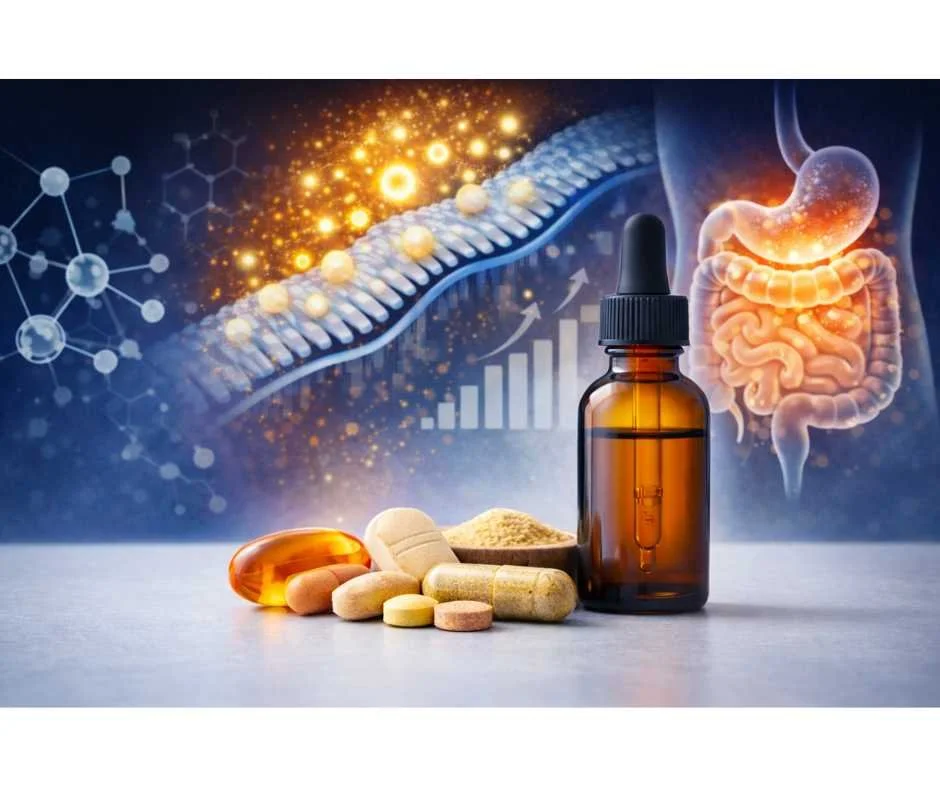
Many people assume that if a supplement is high quality and taken consistently, it should produce results. When it doesn’t, the default response is often to increase the dose, switch brands, or add more products.
If you’re wondering why your supplements aren’t working despite consistent use, the answer often lies in poor bioavailability, impaired digestion, or incorrect supplement form—not product quality alone.
In reality, lack of results is rarely a supplement problem—it is most often an absorption and utilization problem.
This concept is known as bioavailability, and it determines whether nutrients actually reach your cells in a usable form. Even clinical-grade supplements can fall short when digestive function, delivery method, nutrient form, or timing are misaligned.
This article explains how bioavailability works, why digestive health and formulation matter more than dose, and how a functional medicine framework identifies and corrects the barriers that prevent supplements from working.
What Is Supplement Bioavailability and Why It Matters
How Bioavailability Determines Whether Supplements Actually Work
Bioavailability refers to the amount of a nutrient your body actually absorbs and uses after ingestion—not simply the amount listed on the label. A supplement may contain 200 mg of magnesium, but only a fraction of that dose may reach your cells in a usable form.
Absorption and utilization are influenced by multiple factors, including nutrient form, delivery method, digestive function, and timing. When bioavailability is low, even high-quality supplements may fail to produce meaningful clinical results.
True bioavailability depends not only on intestinal absorption, but also on hepatic metabolism, cellular transport mechanisms, and mitochondrial utilization efficiency.
Understanding bioavailability helps explain why some people take supplements consistently yet experience little to no improvement—and why optimizing absorption is often just as important as choosing the right product.
→ Functional & Integrative Medicine
Key Factors That Influence Supplement Absorption
Best Absorbed Supplement Forms: Why Nutrient Form Determines Bioavailability
The chemical form of a nutrient plays a major role in how efficiently it is absorbed and utilized by the body. Different forms can vary dramatically in bioavailability, tolerability, and clinical effectiveness.
Key examples include:
Magnesium: Magnesium glycinate is significantly more bioavailable and better tolerated than magnesium oxide, which is poorly absorbed and more likely to cause gastrointestinal side effects (1).
Vitamin B6: Pyridoxine hydrochloride (PNH), the most common form, must be converted to its active form—pyridoxal-5-phosphate (P5P). Many individuals struggle with this conversion, particularly those with genetic variants or impaired liver function, making P5P the more effective option (2).
Iron: Heme iron (from animal sources) is far more bioavailable than non-heme iron (from plant sources), which often requires vitamin C and optimal digestive conditions to be absorbed efficiently (3).
Calcium: Calcium citrate is absorbed more reliably than calcium carbonate, especially in individuals with low stomach acid—a common issue with aging and chronic stress (4).
Curcumin: Curcumin, the active compound in turmeric, is poorly absorbed on its own and requires either black pepper extract (piperine) or advanced delivery systems such as liposomal formulations to enhance absorption (5).
Folate: Individuals with MTHFR gene variants often cannot effectively convert synthetic folic acid into its active form. Methylfolate bypasses this conversion step and offers superior bioavailability (6).
Liposomal and Advanced Delivery Methods for Improved Supplement Absorption
How a supplement is delivered can be just as important as the ingredient itself.
Certain nutrients—including CBD, glutathione, and fat-soluble vitamins (A, D, E, K)—are inherently difficult to absorb due to their molecular structure (7).
Vitamin C, while water-soluble, is rapidly excreted by the kidneys. Absorption efficiency decreases significantly at doses above 1 gram, limiting its therapeutic impact when taken in standard oral forms (8).
Liposomal delivery systems encapsulate nutrients in tiny fat-based vesicles, allowing them to bypass digestive breakdown and improve cellular uptake. This approach is particularly useful for nutrients such as curcumin, glutathione, and vitamin C (9).
Probiotics are another example where delivery matters. Many traditional probiotic strains are destroyed by stomach acid before reaching the intestines. Spore-based probiotics have a protective outer shell that allows them to survive digestion and colonize the gut more effectively (10).
How Poor Gut Health Causes Supplement Absorption Problems
Even the best-formulated supplements will fall short when digestion and absorption are impaired.
Common factors that reduce nutrient uptake include:
Low stomach acid
Gut dysbiosis
Increased intestinal permeability (leaky gut)
Malabsorption conditions such as SIBO or celiac disease
Supporting digestive function with targeted strategies—such as digestive enzymes, bitters, probiotics, or stomach acid support—can significantly improve nutrient absorption and overall supplement effectiveness (11).
Timing, Interactions, and Circadian Effects on Absorption
When and how supplements are taken can significantly influence their effectiveness.
Fat-soluble vitamins (A, D, E, K) should be taken with meals that contain fat to improve absorption.
Mineral competition: Certain minerals compete for absorption. Calcium can interfere with magnesium uptake, and zinc can compete with copper when taken together.
Synergistic nutrients: Vitamin D functions optimally when paired with magnesium and vitamin K2. Vitamin B12 absorption depends on adequate stomach acid.
Circadian timing: Magnesium is calming and often best taken in the evening, while B vitamins are more stimulating and generally better tolerated earlier in the day (12).
How Fillers and Additives Reduce Supplement Bioavailability
Many store-bought supplements contain fillers, binders, artificial colors, and coatings that can interfere with absorption or irritate the gastrointestinal tract (13).
Choosing clean, third-party-tested, additive-free formulations helps protect gut integrity and maximize bioavailability—particularly for individuals with digestive sensitivity or chronic inflammation.
Signs Your Supplements May Not Be Absorbing Properly
If you’re wondering how to tell whether supplements are actually working, lack of visible improvement is not always a dosage issue. In many cases, the problem is poor supplement bioavailability or impaired nutrient absorption.
Possible signs your supplements may not be absorbing effectively include:
No measurable symptom improvement after 8–12 weeks of consistent use
Persistent fatigue despite B vitamin, iron, or magnesium supplementation
Ongoing hair thinning, brittle nails, or slow recovery despite micronutrient support
Digestive discomfort, bloating, or nausea after taking minerals or multivitamins
Laboratory values that fail to improve despite documented supplementation
Needing progressively higher doses to feel the same effect
When these patterns occur, the issue is often not deficiency alone. Poor stomach acid production, gut dysbiosis, intestinal inflammation, mineral competition, impaired methylation, or detoxification bottlenecks may be limiting cellular uptake.
Before increasing dose or adding more products, it is often more effective to assess digestive integrity, metabolic conversion capacity, and delivery method. Restoring absorption frequently produces better outcomes than escalating supplementation.
Why One-Size-Fits-All Supplements Don’t Work
Generic Dosing Ignores Individual Absorption Differences
Most supplements are formulated using generic dosing recommendations that assume everyone absorbs, metabolizes, and utilizes nutrients in the same way. In clinical practice, this assumption rarely holds true.
Absorption efficiency varies widely based on factors such as:
Digestive function and stomach acid levels
Gut microbiome balance
Genetic variants affecting nutrient metabolism
Liver and bile function
Inflammatory burden and toxic load
As a result, two people taking the same supplement at the same dose may experience very different outcomes. One may see meaningful improvement, while the other notices little benefit—or develops side effects.
Standard multivitamins and “one-size-fits-all” formulas often compound this issue by:
Providing doses that are too low to correct deficiencies
Using forms that require metabolic conversion some individuals cannot perform efficiently
Ignoring interactions between nutrients, medications, and timing
Without accounting for these individual variables, supplementation becomes a trial-and-error process rather than a targeted therapeutic strategy.
This is why lack of results does not necessarily mean supplements “don’t work”—it often means the dose, form, or delivery is mismatched to the individual’s physiology.
Personalized Supplement Protocols Based on Absorption and Metabolism
Why Personalized Supplement Protocols Improve Outcomes
Supplement needs vary significantly from person to person because absorption, metabolism, and tolerance are not uniform. What works well for one individual may be ineffective—or poorly tolerated—for another.
For example:
One person may respond well to 600 mg of magnesium citrate, while another experiences digestive discomfort and requires magnesium glycinate for better absorption and tolerance.
Two individuals with the same MTHFR gene variant may still differ in their ability to absorb and utilize folate, depending on cofactor status, gut health, and liver function.
Someone experiencing oxidative stress may assume antioxidants are needed, when in reality detoxification pathways are impaired, making additional antioxidants ineffective or counterproductive without first addressing clearance mechanisms.
These differences highlight why standardized supplement protocols often fall short. Without understanding why a nutrient is needed—or whether the body can properly absorb and use it—supplementation becomes symptom-focused rather than corrective.
A personalized approach allows supplementation to address root causes, such as impaired absorption, metabolic bottlenecks, inflammatory burden, or detoxification challenges, rather than simply layering products on top of unresolved dysfunction.
→ Advanced Functional Lab Testing
Personalized Supplementation Based on Bioavailability and Absorption
At Denver Sports and Holistic Medicine, supplementation is approached through a root-cause, physiology-based framework rather than generic product stacking. When supplements fail to produce results, the issue is often not quality—it is absorption capacity, metabolic conversion, or impaired utilization.
Through comprehensive clinical evaluation and advanced functional lab testing, underlying barriers to bioavailability are identified, including:
Impaired digestive function or low stomach acid
Gut dysbiosis or increased intestinal permeability
Mineral competition and nutrient imbalances
Genetic variants affecting methylation or detoxification
Inflammatory burden and toxic load
This allows supplement protocols to be designed around how the body actually absorbs and processes nutrients—not simply what appears beneficial on paper. Delivery method, chemical form, dosing strategy, and timing are selected based on physiology, ensuring nutrients reach target tissues effectively.
When digestive and metabolic bottlenecks are addressed, supplementation becomes efficient and measurable rather than trial-and-error.
→ Gut Health & Digestive Restoration
When Supplements Are Matched to Physiology, They Work
Low energy, hormone imbalances, immune dysregulation, persistent inflammation, and chronic digestive symptoms often reflect impaired absorption or utilization—not a lack of supplementation.
Correcting these barriers restores responsiveness. Instead of increasing dose or adding more products, the focus shifts to improving bioavailability and removing obstacles to cellular uptake.
You may request a free 15-minute consultation with Dr. Martina Sturm to review your health concerns and outline appropriate next steps within a root-cause, systems-based framework.
When supplements are aligned with your physiology, they become a precise therapeutic tool—rather than an ongoing source of frustration.
Frequently Asked Questions About Supplement Bioavailability
What Is Supplement Bioavailability?
Supplement bioavailability refers to the percentage of a nutrient that is absorbed, metabolized, and made available for cellular use after ingestion. The amount listed on a supplement label does not reflect how much your body actually utilizes. Digestive function, nutrient form, delivery method, liver metabolism, and cellular transport mechanisms all influence true bioavailability.
How Do I Know If My Supplements Are Working?
Supplements should produce measurable improvements within 8–12 weeks, depending on the nutrient and condition. Signs they are working may include improved energy, better digestion, improved lab values, stronger hair or nails, improved recovery, or more stable mood. If no meaningful changes occur, poor absorption, incorrect form, mineral competition, or impaired metabolic conversion may be limiting effectiveness.
Why Don’t Supplements Work for Some People?
Supplements may fail to produce results when digestion is impaired, stomach acid is low, gut inflammation is present, or metabolic pathways are compromised. Genetic variants, detoxification bottlenecks, mineral competition, and poor delivery methods can also prevent nutrients from reaching target tissues. In these cases, increasing the dose does not solve the underlying absorption issue.
Which Supplement Forms Are Best Absorbed?
Highly bioavailable forms generally include magnesium glycinate, methylfolate instead of synthetic folic acid, calcium citrate, heme iron, and liposomal formulations for certain nutrients. These forms are typically better absorbed and better tolerated than less expensive alternatives such as magnesium oxide or standard curcumin powder.
How Does Gut Health Affect Supplement Absorption?
Digestive health plays a central role in nutrient uptake. Low stomach acid, gut dysbiosis, intestinal inflammation, increased intestinal permeability, and conditions such as SIBO or celiac disease can significantly reduce absorption. Restoring gut integrity often improves supplement effectiveness without increasing dosage.
What Are Liposomal Supplements and Do They Work?
Liposomal supplements use fat-based carriers called liposomes to protect nutrients during digestion and enhance cellular uptake. This delivery system can improve absorption for nutrients that are otherwise difficult to absorb, such as glutathione, curcumin, and vitamin C. Their effectiveness depends on formulation quality and the individual’s metabolic capacity.
What Is the Best Time of Day to Take Supplements?
Timing can influence effectiveness. Fat-soluble vitamins (A, D, E, and K) are best taken with meals containing fat. Magnesium is often better tolerated in the evening due to its calming effects, while B vitamins are typically more energizing and taken earlier in the day. Certain minerals compete for absorption and should not be taken together.
Why Don’t Multivitamins Work for Everyone?
Most multivitamins use standardized doses that assume uniform absorption and metabolism. However, individual differences in digestion, nutrient conversion, inflammatory burden, and genetic factors can limit effectiveness. In some cases, multivitamins provide doses that are too low to correct deficiencies or use forms that require metabolic conversion not everyone performs efficiently.
Can You Take Too Many Supplements?
Yes. Excess supplementation can create nutrient imbalances, mineral competition, oxidative stress, or increased liver burden. More is not always better, particularly when absorption or detoxification pathways are impaired. Strategic dosing based on physiology is generally more effective than stacking multiple products.
Why Should Fillers and Additives in Supplements Be Avoided?
Some supplements contain binders, artificial colors, coatings, or excipients that may irritate the gastrointestinal tract or alter dissolution rates. In sensitive individuals, these additives can indirectly impair absorption or contribute to digestive discomfort. Choosing clean, third-party-tested formulations reduces this risk.
Still Have Questions?
If the topics above reflect ongoing symptoms or unanswered concerns, a brief conversation can help clarify whether a root-cause approach is appropriate.
Resources
Magnesium Research – Bioavailability of different magnesium salts and clinical implications
Nutrients – Pyridoxal 5′-phosphate (active vitamin B6) metabolism and bioavailability
The American Journal of Clinical Nutrition – Dietary iron absorption and regulation
Osteoporosis International – Meta-analysis comparing bioavailability of calcium citrate and calcium carbonate
Journal of Controlled Release – Improving curcumin bioavailability: current strategies and future perspectives
Advances in Nutrition – Active folate (5-methyltetrahydrofolate) versus folic acid in human health
Physiological Reviews – Fat-soluble vitamin absorption, transport, and metabolism
Nutrients – Vitamin C absorption, pharmacokinetics, and clinical considerations
International Journal of Pharmaceutics – Liposomal delivery systems for vitamin bioavailability
Frontiers in Microbiology – Bacillus probiotic spore germination and gastrointestinal survival
Gastroenterology – Mechanisms of small and large intestinal malabsorption
Chronobiology International – Nutrient timing and circadian influences on absorption and metabolism
Frontiers in Pharmacology – Excipients and inactive ingredients in nutraceutical formulations: safety and absorption considerations