

How Alcohol Disrupts Sleep: A Functional Medicine Perspective on Restorative Rest
Why Alcohol-Induced Sedation Undermines Restorative Sleep and Nervous System Recovery
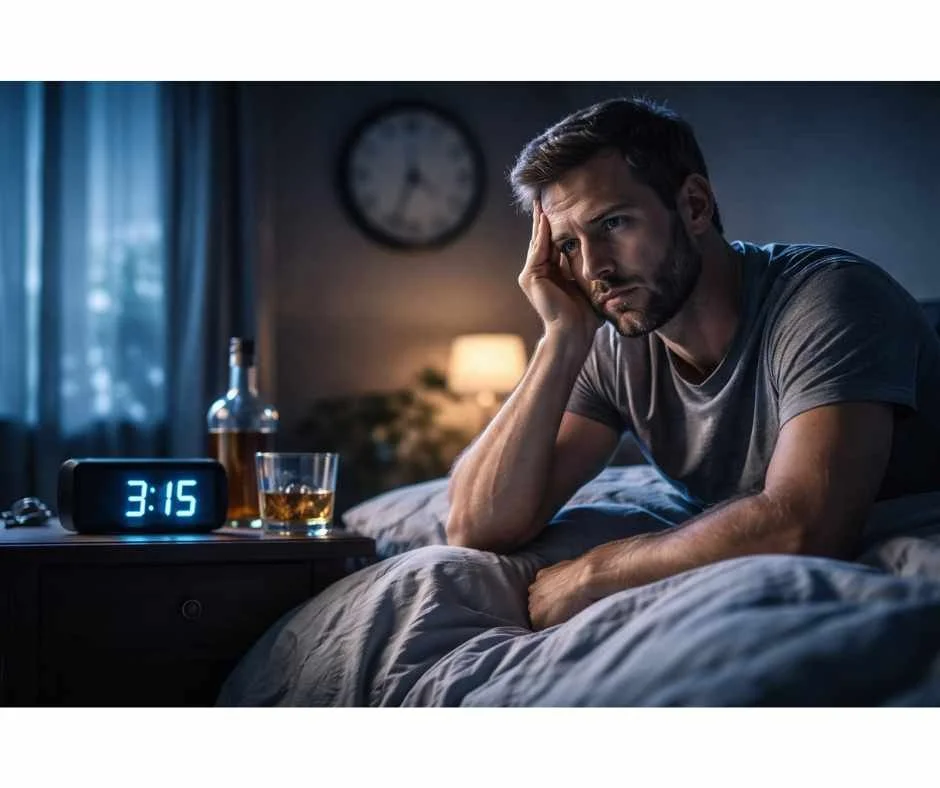
Alcohol is commonly used to unwind at the end of the day, and many people believe it helps them fall asleep more easily. From a physiological standpoint, however, alcohol-induced drowsiness is not the same as restorative sleep.
Sleep is a tightly regulated biological process governed by circadian rhythm signaling, neurotransmitter balance, autonomic nervous system regulation, and hormonal coordination. Alcohol interferes with each of these systems. While it may shorten sleep onset, it disrupts sleep architecture, suppresses REM sleep, fragments deep sleep stages, and increases nighttime awakenings as it is metabolized.
→ Functional & Integrative Medicine
These effects are not limited to heavy drinking. Even moderate alcohol intake—particularly in the evening—can impair sleep quality, cognitive recovery, emotional regulation, and next-day resilience. Over time, repeated disruption contributes to chronic fatigue, anxiety, metabolic dysregulation, and increased reliance on alcohol to initiate sleep.
In this article, we examine how alcohol alters sleep physiology, including its effects on sleep architecture, circadian rhythm regulation, neurotransmitter balance, and nervous system stress responses—and why addressing these mechanisms is essential for achieving truly restorative sleep.
Why Alcohol-Induced Sedation Is Not the Same as Restorative Sleep
Alcohol’s ability to induce drowsiness is often mistaken for improved sleep quality. In reality, sedation and sleep are physiologically distinct states. Sedation reflects pharmacologic suppression of neural activity, whereas restorative sleep is an organized, cyclical process essential for neurological recovery, metabolic regulation, and emotional processing. (1)
How Alcohol Creates Sedation Instead of Restorative Sleep
Alcohol alters neurotransmitter signaling in ways that temporarily quiet the nervous system:
Enhances gamma-aminobutyric acid (GABA) activity
Suppresses glutamate signaling
Dampens central nervous system arousal
This shift can shorten sleep onset latency and create a calming sensation, which is why alcohol is often perceived as a sleep aid. (2)
What Are GABA and Glutamate — and Why Do They Matter for Sleep?
GABA (gamma-aminobutyric acid) and glutamate are two of the brain’s primary neurotransmitters, and they function in balance with one another.
GABA is the brain’s primary inhibitory neurotransmitter. It slows neural firing, reduces excitability, and promotes relaxation. Healthy GABA signaling supports the ability to fall asleep, remain calm, and transition into deeper sleep stages.
Glutamate is the brain’s primary excitatory neurotransmitter. It increases neural activity, promotes alertness, supports learning, and drives cognitive processing during waking hours.
Under normal conditions, these systems operate in coordinated balance:
GABA increases at night to support sleep onset.
Glutamate activity decreases to allow restorative sleep cycles.
Alcohol artificially enhances GABA signaling while suppressing glutamate. This produces sedation. However, as alcohol is metabolized, the brain compensates by increasing glutamate activity and reducing inhibitory tone.
This rebound effect contributes to:
Nighttime awakenings
Increased heart rate
Anxiety or restlessness
Vivid dreams
Early-morning arousal
From a physiological standpoint, the brain shifts from chemically induced inhibition to reactive excitation. This is why alcohol-induced drowsiness is followed by fragmented sleep and next-day irritability.
What Happens to the Brain as Alcohol Is Metabolized Overnight
As blood alcohol levels decline during the night, the neurochemical balance reverses (3):
Glutamate activity increases
Sympathetic nervous system tone rises
Cortical arousal becomes more likely
The result is fragmented sleep, characterized by:
Frequent micro-awakenings
Lighter sleep stages
Difficulty maintaining sleep in the second half of the night
Why Alcohol-Induced Sedation Does Not Restore the Nervous System
Alcohol-induced sedation overrides the brain’s normal sleep control systems. Instead of progressing through organized sleep cycles, the brain is temporarily suppressed.
This suppression does not allow:
Stable non-REM sleep
Adequate REM sleep
Full nervous system recovery
As a result, falling asleep quickly after drinking does not translate into restorative sleep. Many people wake feeling foggy, tense, or unrested because the brain was chemically quieted—not biologically restored. (4)
How Alcohol Disrupts REM Sleep and Impairs Cognitive Recovery
Rapid eye movement (REM) sleep plays a central role in memory consolidation, emotional processing, learning, and stress resilience. Adequate REM sleep allows the brain to integrate information, regulate mood, and recalibrate stress responses following daily cognitive and emotional demands. (5)
How Alcohol Suppresses REM Sleep
Alcohol significantly suppresses REM sleep, particularly when consumed in the evening. While total sleep time may appear unchanged, REM quantity and quality are reduced. This suppression is dose-dependent and can occur even with moderate alcohol intake (6).
REM sleep stability depends in part on balanced inhibitory and excitatory neurotransmitter signaling; alcohol-induced GABA enhancement followed by glutamate rebound destabilizes this regulation.
REM Rebound, Vivid Dreams, and Sleep Fragmentation
As alcohol is metabolized, REM rebound may occur later in the night. However, this rebound is often unstable due to concurrent nervous system activation, leading to:
Vivid or disturbing dreams
Frequent awakenings
Non-restorative sleep patterns
Rather than restoring cognitive function, this disrupted REM architecture compounds neurological stress. (7)
What Happens When REM Sleep Is Suppressed
Reduced or fragmented REM sleep is associated with:
Impaired memory and concentration
Increased emotional reactivity
Reduced stress tolerance
Heightened anxiety and irritability the following day
Over time, repeated REM disruption interferes with the brain’s ability to process stress and regulate emotions effectively. This helps explain why regular evening alcohol use often worsens anxiety, mood instability, and cognitive fog despite initial calming effects. (8)
From a functional medicine perspective, protecting REM sleep is essential for long-term neurological health, emotional regulation, and resilience. Alcohol-related REM suppression represents a primary mechanism through which sleep quality—and overall brain function—declines even in the absence of overt insomnia. (6)
How Alcohol Disrupts Circadian Rhythm, Melatonin, and Cortisol Signaling
Sleep timing and quality are governed by circadian rhythms—endogenous biological clocks that regulate sleep–wake cycles, hormone release, body temperature, and metabolic activity (9). Alcohol interferes with this system at multiple levels, disrupting both sleep timing and sleep quality (10).
How Alcohol Disrupts the Body’s Internal Clock
Alcohol alters circadian rhythm regulation by interfering with signals originating in the suprachiasmatic nucleus (SCN), the brain’s central clock. This disruption affects the coordination between light exposure, hormone release, and sleep drive. (9)
Alcohol exposure has been shown to:
Delay circadian phase timing
Alter clock gene expression
Reduce sensitivity to normal light–dark cues
These effects make it harder for the body to initiate and maintain sleep at appropriate times, even when total sleep opportunity is adequate. (10)
How Alcohol Suppresses Melatonin at Night
Melatonin plays a critical role in signaling the onset of sleep. Alcohol suppresses melatonin production and delays its release, particularly when consumed in the evening.
Consequences of alcohol-related melatonin disruption include (11):
Difficulty falling asleep at the intended bedtime
Delayed sleep onset despite fatigue
Reduced coordination between sleep pressure and circadian signaling
Over time, this contributes to inconsistent sleep schedules and circadian misalignment. (10)
How Alcohol Raises Nighttime Cortisol
Alcohol also disrupts hypothalamic–pituitary–adrenal (HPA) axis regulation, altering normal cortisol rhythms. Rather than declining appropriately at night, cortisol levels may remain elevated or rebound prematurely in the early morning hours. (12)
This pattern contributes to:
Early-morning awakenings
Non-restorative sleep
Heightened morning anxiety or agitation
From a clinical standpoint, this helps explain why individuals may wake feeling “wired,” tense, or unrested despite sufficient time in bed. (10)
How Circadian Disruption Affects Metabolism, Immunity, and Mood
When circadian rhythm signaling is disrupted, downstream systems are affected, including:
Glucose regulation and insulin sensitivity (13)
Immune function (14)
Mood stability and stress tolerance (8)
Alcohol-induced circadian disruption therefore extends beyond sleep quality alone, contributing to broader metabolic and neurological stress over time. (10)
For a broader, systems-based overview of how alcohol affects detoxification, nutrient status, gut integrity, and nervous system regulation across the body, review
→ The Hidden Effects of Alcohol on Whole-Body Health
Why Alcohol Causes Nighttime Awakenings and Sleep Fragmentation
One of the most consistent effects of alcohol on sleep is increased sleep fragmentation. Even when total sleep time appears adequate, alcohol disrupts sleep continuity by increasing the frequency of nighttime arousals (15).
Why Alcohol Causes 2–4 A.M. Awakenings
As alcohol is metabolized during the night, its sedative effects diminish while excitatory processes increase. This shift leads to heightened nervous system activation during the second half of the sleep period, making sustained sleep more difficult (16).
Key contributors include:
Rebound sympathetic nervous system activation
Increased glutamate signaling
Fluctuations in blood glucose
Rising cortisol levels
Together, these physiological changes promote repeated awakenings and lighter sleep stages (16).
How Alcohol Triggers Micro-Arousals and Light Sleep
Alcohol increases the likelihood of micro-arousals—brief interruptions in sleep that may not be consciously remembered but still disrupt sleep architecture. These repeated arousals interfere with deep non-REM sleep and prevent completion of full sleep cycles, reducing overall sleep efficiency and restorative capacity (15).
How Alcohol Causes Nighttime Blood Sugar Drops
Alcohol alters glucose metabolism and can contribute to nocturnal blood sugar drops, particularly in the early morning hours. Hypoglycemia triggers counter-regulatory hormone release, including cortisol and adrenaline, which further disrupt sleep and promote early awakening (17).
Clinically, this pattern often presents as waking between 2–4 a.m., difficulty returning to sleep, and a sense of internal restlessness despite physical fatigue (17).
Why Fragmented Sleep Feels Worse Than Short Sleep
Fragmented sleep places greater physiological stress on the nervous system than slightly reduced but continuous sleep. Repeated interruptions prevent the brain from completing restorative sleep cycles, leading to morning fatigue, impaired concentration, and heightened stress sensitivity the following day (15).
From a functional medicine perspective, sleep continuity is as important as sleep duration. Alcohol’s tendency to fragment sleep represents a primary mechanism through which it undermines restorative rest.
How Alcohol Contributes to Sleep-Disordered Breathing and Snoring
Alcohol has significant effects on airway stability, respiratory control, and oxygen regulation during sleep. These effects increase the risk of sleep-disordered breathing, even in individuals without a prior diagnosis of obstructive sleep apnea (18).
How Alcohol Relaxes Airway Muscles During Sleep
Alcohol relaxes skeletal muscle tone throughout the body, including the muscles that support the upper airway. During sleep, this relaxation increases airway collapsibility and resistance to airflow (18).
As a result:
Snoring becomes more frequent or severe
Partial airway obstruction is more likely
Breathing becomes less stable during sleep
These changes reduce airflow and impair oxygen delivery, particularly during deeper sleep stages.
How Alcohol Impairs Breathing Reflexes at Night
In addition to mechanical effects on the airway, alcohol blunts the brain’s ability to respond appropriately to drops in oxygen and rises in carbon dioxide. Normal protective arousal responses are delayed or suppressed, prolonging breathing disturbances (19).
This impairment contributes to:
Longer hypoxic episodes
Reduced oxygen saturation
Increased cardiovascular and neurological stress
Why Alcohol Increases Airway Inflammation and Congestion
Alcohol also promotes upper airway inflammation and fluid redistribution during sleep. Nasal congestion, pharyngeal tissue swelling, and inflammatory changes further narrow the airway and worsen breathing disturbances (18).
These effects are cumulative and more pronounced with evening alcohol consumption.
What Happens When Alcohol Worsens Sleep Apnea
Sleep-disordered breathing fragments sleep architecture and increases sympathetic nervous system activation. Over time, this contributes to:
Non-restorative sleep despite adequate sleep duration
Morning headaches or grogginess
Increased blood pressure variability
Heightened cardiometabolic risk (19)
From a clinical perspective, alcohol-related sleep-disordered breathing represents a critical mechanism linking poor sleep quality to long-term cardiovascular and metabolic consequences—often without obvious daytime symptoms.
How Poor Sleep Increases Reliance on Alcohol
Sleep disruption does not occur in isolation. When sleep quality declines, multiple regulatory systems are affected simultaneously, increasing physiological vulnerability and altering coping behavior.
How Sleep Loss Disrupts the Nervous System
Chronic sleep disruption shifts autonomic balance toward sympathetic dominance. Stress hormone output increases, parasympathetic recovery is impaired, and baseline nervous system arousal remains elevated.
As a result:
Stress tolerance declines
Emotional reactivity increases
The ability to self-regulate diminishes
In this state, alcohol may feel subjectively calming because it temporarily suppresses nervous system arousal, reinforcing its use as a coping mechanism (20).
How Alcohol and Sleep Loss Disrupt GABA and Dopamine
Repeated sleep disruption alters neurotransmitter balance, including reduced GABA tone and impaired dopamine signaling. These changes contribute to anxiety, irritability, low motivation, and diminished reward sensitivity during the day.
Alcohol temporarily compensates for these deficits by enhancing inhibitory signaling. However, this relief is short-lived and followed by rebound excitation, worsening sleep quality the following night and perpetuating the cycle (21).
How Poor Sleep Disrupts Blood Sugar and Hormones
Poor sleep disrupts glucose regulation, appetite hormones, and insulin sensitivity. This increases evening cravings, lowers impulse control, and weakens stress resilience.
A reinforcing cycle develops:
Poor sleep increases reliance on alcohol
Alcohol further degrades sleep architecture
Physiological stress accumulates
Without intervention, this cycle intensifies over time.
Why Breaking the Alcohol–Sleep Cycle Requires Physiological Repair
From a functional medicine perspective, addressing sleep physiology is essential for breaking alcohol-related feedback loops. Without restoring sleep architecture, circadian regulation, and nervous system balance, attempts to reduce alcohol intake often feel disproportionately difficult.
Improving sleep quality reduces physiological reliance on external sedatives and restores the body’s capacity for self-regulation.
When Alcohol-Related Sleep Problems Require Clinical Evaluation
Occasional poor sleep after alcohol exposure is common. However, when sleep disruption becomes persistent, recurrent, or progressively worse, it often reflects underlying physiological stress rather than isolated lifestyle habits.
Alcohol-related sleep disruption warrants clinical evaluation when symptoms such as difficulty staying asleep, early-morning awakenings, non-restorative sleep, daytime fatigue, anxiety, or cognitive fog persist despite adequate time in bed and reasonable sleep hygiene (22).
Signs Alcohol-Related Sleep Problems Need Medical Evaluation
Patterns that suggest deeper dysregulation include:
Repeated nighttime awakenings, particularly in the early morning hours
Feeling unrefreshed despite sufficient sleep duration
Worsening anxiety, irritability, or stress intolerance
Increasing reliance on alcohol to initiate sleep
Daytime fatigue that does not improve with rest
These patterns often reflect combined disturbances in circadian rhythm signaling, autonomic nervous system regulation, metabolic stability, and detoxification capacity.
Why Conventional Approaches Often Miss the Cause
Standard sleep evaluations frequently focus on sleep duration, sleep hygiene, or symptom suppression. While these factors matter, they do not address the physiological mechanisms through which alcohol disrupts sleep architecture, neurotransmitter balance, and hormonal regulation.
Without evaluating nutrient status, metabolic stress, nervous system tone, and circadian signaling, the root contributors to alcohol-related sleep disruption may remain unaddressed.
How a Systems-Based Evaluation Identifies Root Causes
From a functional medicine perspective, assessment considers how alcohol interacts with:
Nervous system regulation and stress physiology
Circadian rhythm signaling and hormonal patterns
Metabolic stability and blood sugar regulation
Inflammatory burden and oxidative stress
This systems-based view helps distinguish situational sleep disturbance from ongoing physiological imbalance and guides more effective, sustainable intervention.
How to Restore Healthy Sleep Without Relying on Alcohol
Restoring healthy sleep after alcohol-related disruption requires supporting the physiological systems that regulate sleep rather than substituting one sedative for another. From a clinical standpoint, sustainable sleep recovery depends on improving nervous system regulation, circadian signaling, metabolic stability, and detoxification capacity.
How to Calm the Nervous System at Night
Sleep quality is closely tied to autonomic balance. When sympathetic nervous system activity remains elevated, the body struggles to transition into and maintain restorative sleep states.
Supporting parasympathetic activity and stress recovery helps:
Reduce nighttime arousal
Improve sleep continuity
Lower reliance on external sedatives
Interventions that calm the nervous system address the underlying drivers of sleep disruption rather than masking symptoms.
→ Acupuncture & Nervous System Regulation
How to Reset Circadian Rhythm After Alcohol Use
Consistent circadian signaling is essential for reliable sleep onset and maintenance. Alcohol-related circadian disruption often persists even after intake is reduced unless rhythm stability is actively supported.
Stabilizing circadian timing improves:
Melatonin release patterns
Sleep–wake predictability
Hormonal coordination overnight
This restores alignment between sleep pressure and biological timing.
How to Stabilize Blood Sugar for Better Sleep
Nocturnal blood sugar instability is a common contributor to early-morning awakenings. Improving metabolic resilience reduces counter-regulatory stress hormone release that fragments sleep.
When glucose regulation stabilizes:
Nighttime awakenings decrease
Sleep becomes more continuous
Morning fatigue improves
How to Fall Asleep Without Alcohol
As sleep architecture, nervous system regulation, and metabolic balance improve, the perceived need for alcohol to initiate sleep often diminishes. Sleep becomes more self-regulated rather than chemically induced.
From a functional medicine perspective, this shift reflects improved physiological resilience rather than behavioral control alone.
Key Takeaways
Alcohol-induced drowsiness is not equivalent to restorative sleep and disrupts normal sleep architecture.
Alcohol suppresses REM sleep, fragments deep sleep stages, and increases nighttime awakenings as it is metabolized.
Circadian rhythm disruption, melatonin suppression, and cortisol dysregulation are central mechanisms underlying alcohol-related sleep impairment.
Alcohol increases the risk of sleep-disordered breathing by relaxing airway muscles and impairing respiratory reflexes.
Repeated sleep disruption increases physiological reliance on alcohol by worsening nervous system dysregulation, stress tolerance, and metabolic stability.
Sustainable sleep recovery requires supporting nervous system regulation, circadian signaling, metabolic balance, and detoxification capacity rather than relying on sedation.
Why Alcohol and Restorative Sleep Are Incompatible
Alcohol’s impact on sleep is not a minor side effect—it is a direct consequence of how alcohol interacts with the nervous system, circadian signaling, and metabolic recovery processes.
By suppressing REM sleep, fragmenting deep sleep stages, disrupting melatonin and cortisol rhythms, and increasing nighttime autonomic activation, alcohol interferes with the body’s ability to complete the restorative functions that sleep is designed to perform.
This explains why individuals may fall asleep quickly after drinking yet wake feeling unrefreshed, mentally foggy, or anxious—and why sleep quality often deteriorates over time despite using alcohol to unwind.
From a functional medicine perspective, improving sleep requires restoring physiological regulation rather than masking dysregulation with sedation. When the nervous system, circadian rhythms, and metabolic systems are supported appropriately, restorative sleep becomes possible without reliance on alcohol.
→ Detoxification & Environmental Medicine
Next Steps Toward Restorative, Alcohol-Free Sleep
If you are experiencing persistent sleep disruption, early-morning awakenings, anxiety, or fatigue that may be related to alcohol use—even at moderate levels—a systems-based evaluation can help clarify contributing factors.
You may request a free 15-minute consultation with Dr. Martina Sturm to review your health concerns and outline appropriate next steps within a root-cause, systems-based framework.
This approach focuses on identifying and addressing the underlying drivers of sleep disruption—including nervous system regulation, circadian signaling, nutrient status, and metabolic balance—so that restorative sleep becomes sustainable rather than dependent on short-term solutions.
Frequently Asked Questions About Alcohol and Sleep
Does alcohol help you sleep or just make you drowsy?
Alcohol may help you fall asleep faster, but it does not improve sleep quality. It causes sedation rather than restorative sleep and disrupts normal sleep architecture, leading to fragmented sleep, reduced REM sleep, and frequent nighttime awakenings.
Why do I wake up in the middle of the night after drinking alcohol?
As alcohol is metabolized, nervous system stimulation increases. This rebound effect raises glutamate activity and sympathetic nervous system tone, making early-morning awakenings and light sleep more likely in the second half of the night.
How does alcohol affect REM sleep?
Alcohol suppresses REM sleep, particularly during the first half of the night. REM sleep is essential for memory consolidation, emotional processing, and nervous system recovery. Reduced REM sleep is associated with brain fog, mood instability, and poor stress tolerance.
Can moderate drinking still disrupt sleep?
Yes. Even one to two drinks, especially when consumed in the evening, can disrupt sleep cycles, suppress melatonin, and fragment sleep. Sleep disruption is influenced by individual metabolism, nervous system regulation, and detoxification capacity—not just quantity.
Why does alcohol make sleep worse over time?
Repeated alcohol exposure disrupts circadian rhythm signaling, increases nighttime cortisol activity, and impairs nervous system regulation. Over time, this leads to worsening sleep quality, increased anxiety, and greater reliance on alcohol to initiate sleep.
How does alcohol affect circadian rhythms?
Alcohol interferes with the body’s internal clock by altering melatonin release, disrupting clock gene expression, and reducing sensitivity to normal light–dark cues. This contributes to delayed sleep timing, inconsistent sleep schedules, and non-restorative sleep.
Can alcohol worsen sleep apnea or snoring?
Yes. Alcohol relaxes airway muscles and impairs respiratory reflexes, increasing the risk of snoring and sleep-disordered breathing. This can worsen oxygen deprivation during sleep and increase cardiovascular and metabolic risk.
Will sleep improve if I reduce or stop drinking alcohol?
Many people notice improvements in sleep quality, depth, and consistency within days to weeks of reducing or eliminating alcohol—particularly when combined with nervous system regulation, nutrient repletion, and circadian support.
Still Have Questions?
If the topics above reflect ongoing symptoms or unanswered concerns, a brief conversation can help clarify whether a root-cause approach is appropriate.
Resources
Sleep – The epidemiology and diagnosis of insomnia
StatPearls Publishing – Physiology of sleep stages
Alcohol Research: Current Reviews – Disturbed sleep and its relationship to alcohol use
Nature Reviews Neuroscience – Alcohol and the sleeping brain
Journal of Clinical Sleep Medicine – Alcohol metabolism and sleep fragmentation across the night
American Journal of Respiratory and Critical Care Medicine – Alcohol consumption and sleep-disordered breathing
BMJ Open – Effects of short-term alcohol abstinence on sleep, energy, and metabolic health
Journal of Neurochemistry – Neurotransmitter imbalance and rebound excitability following alcohol exposure
Neurology – Alcohol-related neurotoxicity, cognitive impairment, and sleep disruption
Sleep Medicine Reviews – Neurochemical regulation of sleep and circadian rhythms
Journal of Pineal Research – Alcohol-induced melatonin suppression and circadian rhythm disruption
Endocrine Reviews – Cortisol rhythm dysregulation and sleep disturbance
Frontiers in Neuroscience – Circadian misalignment and metabolic dysfunction
Physiology & Behavior – Autonomic nervous system regulation during sleep
Diabetes Care – Nocturnal hypoglycemia, counter-regulatory stress hormones, and sleep disruption
Frontiers in Psychiatry – Effectiveness and safety of acupuncture for insomnia
Journal of Neuroendocrinology – Effects of acupuncture on the hypothalamic-pituitary-adrenal axis
Substance Abuse Treatment, Prevention, and Policy – Acupuncture as an intervention for alcohol dependence
Alcohol Research: Current Reviews – Alcohol-related oxidative stress and systemic inflammation
Hepatology – Alcohol metabolism, acetaldehyde toxicity, and detoxification burden
Journal of Translational Medicine – Metabolic resilience, stress physiology, and sleep regulation
Sleep Medicine – Clinical indicators for evaluation of persistent sleep disturbance