

The Ugly Truth About Seed Oils: Which Ones to Avoid and What to Use Instead
How Industrial Seed Oils Took Over the Modern Food Supply, Where They Hide, and Which Fats Are Better for Everyday Cooking
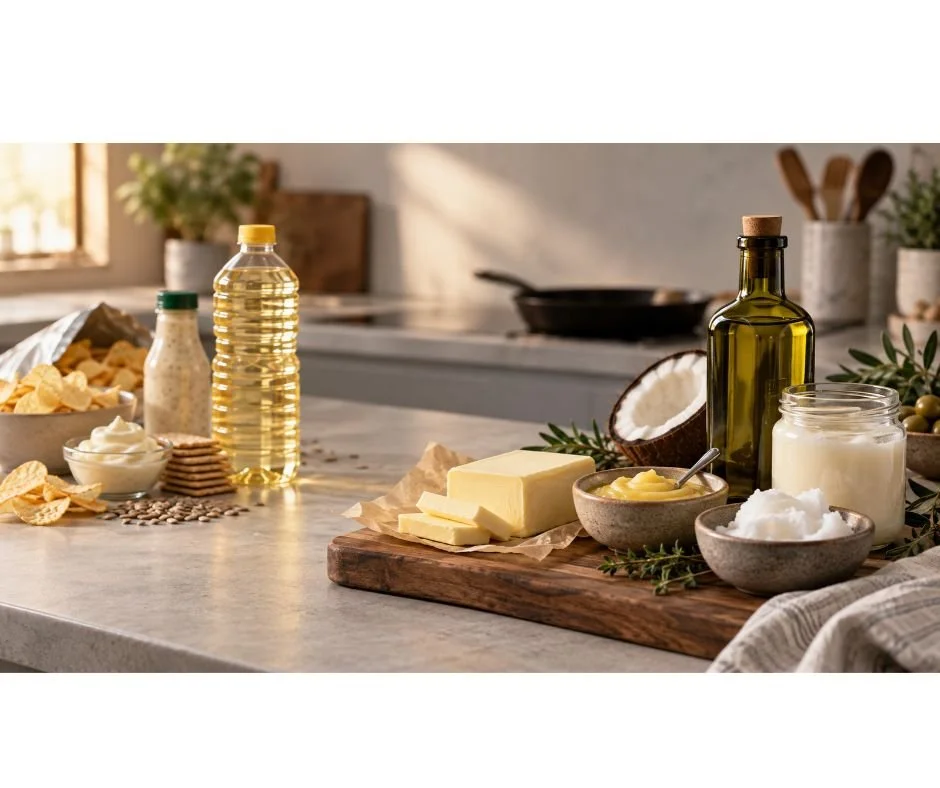
Seed oils are now so embedded in the modern food supply that most people consume them every day without deliberately choosing them. Soybean, canola, corn, sunflower, and safflower oils are used throughout restaurant cooking and appear in salad dressings, sauces, snack foods, baked goods, packaged meals, and many products marketed as “heart-healthy” or “plant-based.”
The scale of that shift is striking. In the United States, estimated per-capita soybean oil consumption increased more than 1,000-fold between 1909 and 1999, while linoleic acid availability rose from 2.79% to 7.21% of total energy over the same period. (1) What was once a negligible source of dietary fat became a major contributor to the American food supply.
Seed oils have also become deeply tied to the rise of ultra-processed foods. U.S. adults now get about 53% of their calories from ultra-processed foods, where refined vegetable oils are commonly used because they are inexpensive, neutral in flavor, and easy to manufacture with at scale. (2)
Quantity is only part of the concern. These oils are extensively processed before they reach the plate, and their high polyunsaturated-fat content makes them more susceptible to oxidation than fats higher in saturated and monounsaturated fatty acids. Heat, oxygen, light, prolonged storage, and repeated cooking increase that vulnerability further.
Seed oils are easy to overlook because they show up across the diet rather than in one obvious food. You may be cooking at home, watching your sugar intake, choosing high-protein foods, and trying to eat well, yet still getting seed oils from restaurant meals, dressings, sauces, protein bars, and packaged snacks throughout the week.
What Are Seed Oils?
Seed oils are vegetable oils extracted from the seeds of plants rather than from whole fruits or animal sources. The most common include soybean, canola (rapeseed), corn, sunflower, safflower, grapeseed, cottonseed, peanut, and rice bran oil.
Most are high in polyunsaturated fatty acids, particularly linoleic acid, an omega-6 fatty acid. Polyunsaturated fats contain multiple double bonds, which makes them more susceptible to oxidation than fats that are higher in saturated or monounsaturated fatty acids. The greater the degree of unsaturation, the easier the fat is to oxidize—especially with heat, oxygen, light, and prolonged storage. (3)
Their fatty-acid profile is only part of the picture. Most commercial seed oils undergo extensive industrial processing before they reach the food supply, including extraction, refining, bleaching, and deodorization. Those steps are designed to improve yield, remove color and odor, and create a uniform commercial product, but they also expose already oxidation-prone fats to additional heat, oxygen, and processing stress. (4)
Olive oil and avocado oil are different. They are pressed from fruit rather than seeds and contain a much higher proportion of monounsaturated fat. Butter, ghee, tallow, and coconut oil are higher in saturated fat and are chemically stable under heat.
So when people refer to “seed oils,” they are usually talking about a group of refined vegetable oils that combine high polyunsaturated-fat content with extensive industrial processing and widespread use in restaurant and packaged foods.
Why Are Seed Oils Used in So Many Foods?
Seed oils became widespread because they are inexpensive, neutral in flavor, easy to manufacture at scale, and practical for packaged foods and commercial kitchens. Those characteristics made them highly attractive to food manufacturers as industrial food production expanded through the 20th century.
Refined vegetable oils could be standardized, stored, transported, and used across an enormous range of foods, from crackers and baked goods to salad dressings, sauces, frozen meals, and restaurant fryers. They gave manufacturers a cheap, consistent fat source that worked well in mass production and extended shelf life.
Decades of flawed dietary guidance accelerated their adoption. Beginning in the mid-20th century, saturated fat and cholesterol were increasingly blamed for cardiovascular disease, while polyunsaturated vegetable oils were promoted as the healthier replacement for butter, lard, and tallow. By the 1980s, major cardiovascular guidelines were explicitly recommending reductions in saturated fat and greater use of polyunsaturated and monounsaturated fats. (5,6)
That misguidance fundamentally changed the American food supply. Refined vegetable oils were no longer simply inexpensive industrial ingredients; they acquired a health halo. Foods made with soybean, canola, corn, and other seed oils could be marketed as “heart-healthy,” “cholesterol-free,” or “plant-based,” even when the finished product was highly processed and relied heavily on oxidation-prone fats. Oxidative stress, lipid peroxidation, endothelial dysfunction, and chronic inflammation are central to the development and progression of atherosclerosis and cardiovascular disease, which directly challenges the idea that these products deserve an automatic “heart-healthy” label. (7,8)
The result is a food environment in which avoiding seed oils requires considerably more than choosing a different bottle of cooking oil. They are used routinely in restaurant meals, salad dressings, condiments, sauces, protein bars, packaged snacks, baked goods, and foods specifically marketed to health-conscious consumers. You can be making a genuine effort to eat well and still consume them several times in the same day without realizing it.
Which Seed Oils Should You Avoid?
The seed oils most commonly found in packaged foods and restaurant cooking include:
Soybean oil
Canola oil
Corn oil
Sunflower oil
Safflower oil
Cottonseed oil
Grapeseed oil
Peanut oil
Rice bran oil
These oils show up repeatedly on ingredient labels and across restaurant menus. Most are heavily refined, many are high in polyunsaturated linoleic acid, and they are frequently exposed to heat, oxygen, prolonged storage, or repeated cooking before they are eaten.
Linoleic acid is an essential omega-6 fatty acid, but modern intake is far higher than it was historically. Seed oils make it easy to consume large amounts of linoleic acid across the day without ever intentionally adding these oils to your food. Combined with industrial refining and their susceptibility to oxidation, that creates a very different exposure than getting smaller amounts of omega-6 fats from whole foods.
Restaurants are one of the easiest places to underestimate intake. Meat, fish, vegetables, and even foods that look relatively simple may be cooked in canola or soybean oil, prepared on surfaces coated with them, or served with dressings and sauces containing additional refined oils.
“Vegetable oil” on a label is also not one specific oil. It can mean soybean, canola, corn, sunflower, safflower, or a blend. And even labels that sound reassuring can be misleading. A product may advertise “heart-healthy,” “plant-based,” or “made with avocado oil” on the front while containing refined seed oils in the ingredient list—or, in the case of avocado-oil products, oils that have been adulterated with cheaper vegetable oils.
Where Are Seed Oils Hiding in Your Diet?
Seed oils are not limited to fried food or obvious junk food. They are common in foods that look relatively healthy, including salad dressings, sauces, mayonnaise, protein bars, granola, crackers, packaged snacks, frozen meals, plant-based products, and restaurant dishes that appear simple on the surface.
Restaurant meals are one of the biggest sources. A piece of grilled fish, sautéed vegetables, or a salad can still come with several exposures from the cooking oil, grill surface, marinade, dressing, or sauce. The meal may look clean, but the fat used to prepare it is often anything but.
The same problem shows up in packaged foods. Organic, gluten-free, high-protein, keto, and plant-based labels say nothing about the type of oil used. Many products marketed specifically to health-conscious consumers still rely on canola, sunflower, safflower, soybean, or other refined oils.
Avocado Oil Adulteration: Is It Really Seed-Oil Free?
Avocado oil is not a seed oil. It comes from the fruit and is naturally high in monounsaturated fat. In theory, it is an excellent cooking oil: relatively stable, rich in oleic acid, and well suited to higher-heat use.
The problem is that products sold as avocado oil have repeatedly failed independent purity testing. In some cases, laboratory analysis has found oxidation, rancidity, or substantial amounts of cheaper oils such as soybean, sunflower, safflower, and canola.
A 2026 UC Davis study tested 54 chips, mayonnaise products, and salad dressings labeled as being made with avocado oil. Forty-eight of the 54 products—89%—showed evidence of other oils. Among the chips tested, 93% did not meet the researchers’ criteria for pure avocado oil. (9)
Earlier UC Davis testing of bottled avocado oils found similar problems, including rancidity, oxidation, and adulteration with cheaper oils such as soybean, sunflower, safflower, and canola. (10)
This goes beyond clever front-of-package marketing. When a product is labeled as containing avocado oil but laboratory testing identifies undeclared cheaper oils, the consumer cannot solve the problem by reading the ingredient list—the label itself may not accurately represent what is in the product.
That makes avocado-oil adulteration particularly concerning for people deliberately paying more to avoid refined seed oils. A product can be purchased specifically because it appears to offer a better fat source and still deliver the very oils the buyer intended to avoid.
What Are the Best Cooking Fats to Use Instead of Seed Oils?
Replacing seed oils does not require a long list of specialty products. A few well-chosen fats can cover nearly every type of cooking.
Butter and Ghee
Butter and ghee are rich in saturated fat, which makes them chemically stable during cooking. Ghee has the milk solids removed, giving it a higher heat tolerance and making it useful for sautéing, roasting, and other higher-temperature cooking.
Grass-fed butter works well for lower- to moderate-heat cooking and provides naturally occurring fat-soluble nutrients. For people who tolerate dairy, butter and ghee are practical everyday replacements for refined vegetable oils.
Tallow
Tallow is rendered beef fat and is highly stable under heat because of its fatty-acid composition. It works particularly well for roasting, pan cooking, frying, and other higher-temperature applications.
Before industrial vegetable oils became dominant, animal fats such as tallow and lard were routinely used for cooking. Their return is less about following a dietary trend and more about using fats that remain stable under heat without the same degree of oxidative breakdown seen with highly polyunsaturated oils.
Coconut Oil
Coconut oil is predominantly saturated fat and remains stable at cooking temperatures. It works well for sautéing, baking, and recipes where its flavor fits naturally.
Refined coconut oil has a more neutral flavor, while virgin coconut oil retains more of the characteristic coconut taste.
Extra Virgin Olive Oil
Extra virgin olive oil is a fruit oil, not a seed oil. It is rich in monounsaturated oleic acid and naturally occurring polyphenols, and a high-quality cold-pressed extra virgin olive oil is an excellent choice for salad dressings, dips, drizzling, and other raw uses.
I do not recommend using extra virgin olive oil as a cooking fat. If you are specifically buying a cold-pressed oil for its polyphenols and minimal processing, repeatedly heating it works against that purpose. Grass-fed butter, ghee, tallow, and coconut oil are better choices for cooking.
The complication with olive oil is authenticity. Products sold as “extra virgin” do not always meet extra-virgin sensory and chemical standards, and oxidation, poor storage, and mislabeling remain well-documented problems. UC Davis testing has repeatedly found imported oils labeled as extra virgin that failed to meet those standards. (11)
Look for a single-origin extra virgin olive oil from a producer that identifies the harvest date and where the olives were grown and milled. Dark glass or tins help protect the oil from light, and fresher oil is preferable to a bottle that has been sitting for years.
There is also no reliable home test for authenticity. The popular refrigerator test—putting olive oil in the fridge to see whether it solidifies—does not work. UC Davis found that pure extra virgin olive oil and adulterated oil cannot be reliably distinguished this way. Confirming authenticity requires laboratory testing. (12)
Avocado Oil
Pure avocado oil is high in monounsaturated fat and is well suited to cooking. The limitation is sourcing. Because commercial avocado oil has repeatedly failed purity and quality testing, I would only use it from a manufacturer with strong quality control and transparent testing. (9,10)
Grass-fed butter, ghee, tallow, and coconut oil work well for cooking. Use extra virgin olive oil raw, and avocado oil only when the source is trustworthy.
How to Reduce Seed Oils in Your Diet
The easiest way to reduce seed oils is to shift more of your diet toward single-ingredient foods and away from packaged foods. Meat, fish, eggs, vegetables, fruit, potatoes, rice, and other minimally processed foods do not come with hidden cooking oils, emulsifiers, or long ingredient lists. You decide what fat is added and how the food is prepared.
At home, replace canola, soybean, corn, sunflower, safflower, and generic vegetable oils with grass-fed butter, ghee, tallow, or coconut oil. Use high-quality extra virgin olive oil raw rather than as a cooking oil.
Packaged foods deserve a closer look. Seed oils are common in salad dressings, mayonnaise, crackers, chips, protein bars, granola, sauces, frozen foods, and many products marketed as gluten-free, organic, keto, high-protein, or plant-based. Choosing foods with one ingredient—or a short list of recognizable ingredients—removes much of this exposure automatically.
Restaurants require a little more effort, but you can ask how your food is prepared. If the kitchen normally uses canola or another vegetable oil, ask whether your meal can be cooked in butter, ghee, tallow, or coconut oil instead. Some restaurants have one of these available even when it is not listed on the menu. For salads, ask for olive oil and vinegar or bring your own dressing when practical.
Fried foods are especially difficult because restaurant fryers almost always use commercial vegetable oils, often heated repeatedly throughout the day. Choosing grilled, roasted, or simply prepared foods gives you more control—but it is still worth asking what goes on the grill or pan.
An occasional restaurant meal is not where most of the exposure comes from. The bigger difference comes from what you eat repeatedly: the fats you cook with at home, the packaged foods you buy every week, and the restaurants you return to regularly.
→ Functional & Integrative Medicine
Do You Need to Avoid Seed Oils Completely?
Seed oils became a major part of the diet because the food supply changed—not because most people consciously decided to eat more soybean, canola, or sunflower oil. Reversing that exposure works much the same way: change the fats you keep at home, choose more single-ingredient foods, and pay attention to what restaurants and packaged foods are actually using.
You do not need a complicated diet to do this. Grass-fed butter, ghee, tallow, and coconut oil work well for cooking, while a high-quality extra virgin olive oil can be used raw. The biggest shift comes from replacing the oils you are exposed to repeatedly rather than trying to eliminate every possible trace.
Frequently Asked Questions About Seed Oils
What are seed oils?
Seed oils are vegetable oils extracted from the seeds of plants. Common examples include soybean, canola, corn, sunflower, safflower, grapeseed, cottonseed, peanut, and rice bran oil. Most are heavily refined before they reach the food supply, and many are high in polyunsaturated linoleic acid.
Which seed oils should you avoid?
The main seed oils to watch for are soybean, canola, corn, sunflower, safflower, cottonseed, grapeseed, peanut, and rice bran oil. They are widely used in packaged foods, salad dressings, sauces, restaurant cooking, and commercial fryers.
Why are seed oils used in so many processed foods?
Seed oils are inexpensive, neutral in flavor, easy to manufacture at scale, and useful for creating consistent texture and shelf life. Decades of dietary guidance promoting vegetable oils as healthier replacements for butter, lard, and tallow also helped make them the default fat in much of the processed food supply.
What foods contain the most seed oils?
Common sources include salad dressings, mayonnaise, sauces, chips, crackers, protein bars, granola, baked goods, frozen meals, fried foods, restaurant meals, and many packaged products marketed as “heart-healthy,” plant-based, organic, gluten-free, or high-protein.
Is avocado oil really seed-oil free?
Pure avocado oil is not a seed oil. It comes from the fruit and is naturally high in monounsaturated fat. The problem is adulteration. Independent testing has repeatedly found avocado oils and avocado-oil products containing cheaper oils, including soybean, sunflower, safflower, and canola oil.
What are the best cooking fats to use instead of seed oils?
Grass-fed butter, ghee, tallow, and coconut oil are stable choices for cooking. Extra virgin olive oil is better used raw. Pure avocado oil can also be used when the source is trustworthy and the product has strong quality control.
Do you need to avoid seed oils completely?
Complete avoidance is difficult because seed oils are so common in restaurants and packaged foods. The biggest reduction comes from changing the fats you use at home, choosing more single-ingredient foods, reducing packaged foods, and asking restaurants what they cook with. Those changes remove the repeated sources that make up most day-to-day exposure.
Still Have Questions?
If the topics above reflect ongoing symptoms or unanswered concerns, a brief conversation can help clarify whether a root-cause approach is appropriate.
Resources
The American Journal of Clinical Nutrition - Changes in Consumption of Omega-3 and Omega-6 Fatty Acids in the United States During the 20th Century
National Center for Health Statistics - Ultra-processed Food Consumption in Youth and Adults: United States, August 2021–August 2023
Food Science & Nutrition - Functional Roles and Novel Tools for Improving Oxidative Stability of Polyunsaturated Fatty Acids: A Comprehensive Review
International Journal of Food Science & Technology - Refining of Edible Oils: A Critical Appraisal of Current and Potential Technologies
Circulation - Dietary Guidelines for Healthy American Adults: A Statement for Physicians and Health Professionals by the Nutrition Committee, American Heart Association
Circulation - Dietary Fats and Cardiovascular Disease: A Presidential Advisory From the American Heart Association
Frontiers in Nutrition - Lipid Oxidation Products on Inflammation-Mediated Hypertension and Atherosclerosis: A Mini Review
Vascular Pharmacology - Heated Vegetable Oils and Cardiovascular Disease Risk Factors
Applied Food Research - Authenticity of Avocado and Olive Oils Used as Ingredients in Commercially Processed Foods
Food Control - First Report on Quality and Purity Evaluations of Avocado Oil Sold in the US
UC Davis Olive Center - Evaluation of Extra Virgin Olive Oil Sold in California
UC Davis Olive Center - Refrigeration Is Not Reliable in Detecting Olive Oil Adulteration