

Why Weight Loss Becomes Resistant in Hypothyroidism
How Thyroid Hormones Affect Metabolism, Mitochondria, Insulin, Fat Burning, and Weight Loss
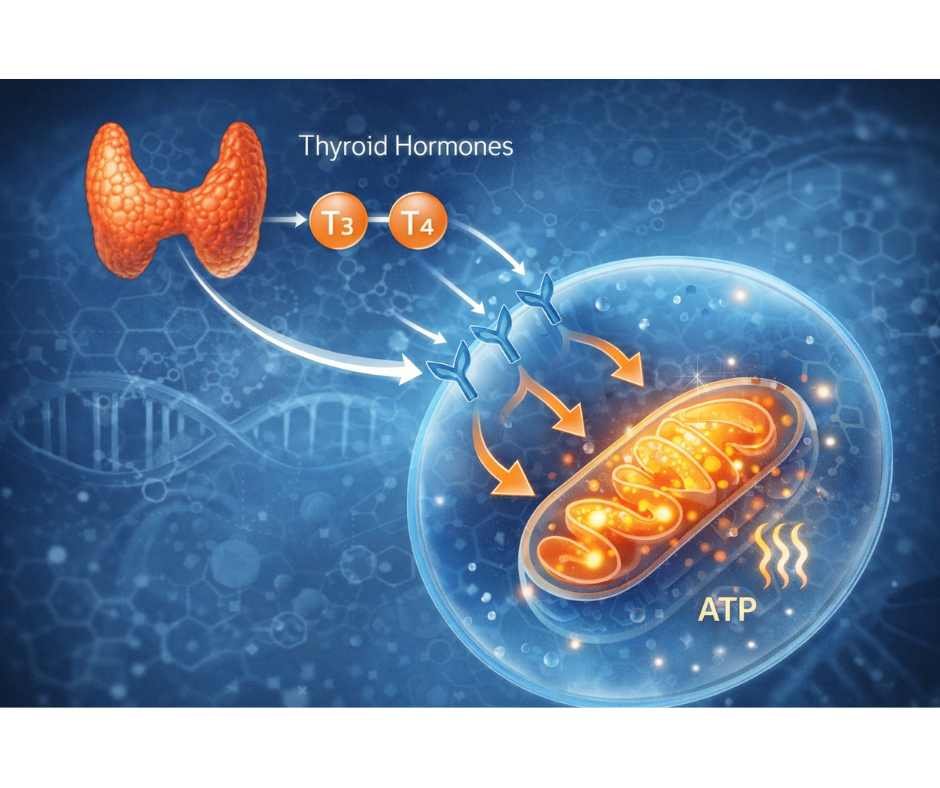
Hypothyroidism can make weight loss unusually difficult even when diet and exercise are consistent. The problem is not always excess calorie intake. Thyroid hormones influence resting metabolic rate, heat production, mitochondrial energy production, fat and carbohydrate metabolism, muscle function, and overall energy expenditure (1,2).
When thyroid hormone production, conversion, or signaling is impaired, metabolism slows across several pathways. Resting energy expenditure declines, mitochondrial output decreases, fat oxidation becomes less efficient, and fatigue reduces spontaneous movement and exercise capacity. Together, these changes lower total energy use and make stored fat more difficult to mobilize (1,2).
Repeated calorie restriction can exacerbate the issue. As food intake drops, the body adapts by reducing energy expenditure and altering appetite and hormonal signaling. These adaptations occur with sustained energy restriction, adding another metabolic constraint when thyroid-driven energy expenditure is already reduced (3,4).
Weight loss resistance in hypothyroidism cannot always be explained by calories alone. The real question is whether low thyroid signaling, impaired mitochondrial output, insulin resistance, gut dysfunction, other hormonal dysregulation, or a combination of these factors is preventing fat loss.
Why Is It So Hard to Lose Weight With Hypothyroidism?
Hypothyroidism makes weight loss harder because thyroid hormones regulate resting metabolic rate, thermogenesis, mitochondrial energy production, and fat metabolism. When thyroid hormone activity is reduced, the body uses less energy at rest and becomes less efficient at mobilizing and oxidizing stored fat (1,2).
Thyroid dysfunction also affects skeletal muscle, glucose handling, insulin sensitivity, exercise tolerance, and total daily energy expenditure. Fatigue often means less spontaneous movement and lower exercise capacity, further reducing energy use.
Weight can remain stubborn even after thyroid treatment begins. A normalized TSH does not necessarily mean that every metabolic problem has resolved. Insulin resistance, loss of muscle mass, poor sleep, chronic stress, hormonal changes during perimenopause or menopause, inflammation, nutrient deficiencies, certain medications, gut dysfunction, and years of restrictive dieting can all keep fat loss resistant.
Simply creating a larger calorie deficit does not correct those mechanisms. As a matter of fact, repeated restriction can backfire by lowering energy expenditure further and worsening fatigue, hunger signaling, and loss of lean mass (3,4).
The real question is whether low thyroid signaling, impaired mitochondrial output, insulin resistance, gut dysfunction, other hormonal dysregulation, or a combination of these factors is preventing fat loss.
How Does Hypothyroidism Slow Metabolism and Cause Weight Gain?
Basal metabolic rate (BMR) is the energy the body uses at rest to maintain circulation, breathing, tissue repair, cellular activity, and other basic functions. Thyroid hormones have a major influence on BMR through mitochondrial respiration, ATP turnover, oxygen consumption, ion transport, thermogenesis, and metabolic activity in tissues such as skeletal muscle, liver, and brown adipose tissue (1,5).
As thyroid hormone activity falls, resting energy expenditure declines. The body uses less energy at baseline, so the same food intake and activity level can produce a very different weight response after thyroid function changes (1).
How Thyroid Hormones Affect Mitochondria and Cellular Energy
Thyroid hormones regulate mitochondrial biogenesis, oxidative phosphorylation, ATP production and turnover, and mitochondrial uncoupling—the release of some cellular energy as heat rather than storing all of it as ATP. They also stimulate energy-consuming processes such as Na⁺/K⁺-ATPase activity, which contributes to basal energy expenditure and heat production (5).
With hypothyroidism, mitochondrial respiration slows, thermogenesis drops, and cellular energy turnover decreases (5).
Common metabolic consequences include:
Lower resting energy expenditure
Reduced thermogenesis and greater cold intolerance
Lower mitochondrial energy turnover
Reduced metabolic flexibility
Greater fatigue and lower exercise tolerance
Less spontaneous physical activity
The body now requires less energy than it did before thyroid function declined. Food intake does not have to increase for weight to rise or fat loss to stall. The amount of energy being used has changed.
How Hypothyroidism Reduces Resting and Daily Energy Expenditure
Resting metabolism accounts for only part of total daily energy expenditure. Energy is also used for physical activity, spontaneous movement, exercise, digestion, and processing food (1).
Hypothyroidism lowers several of these components at the same time. Muscle weakness and fatigue reduce exercise capacity, while low energy and cold intolerance often reduce spontaneous movement. Poor sleep and other physiological stressors can further disrupt glucose regulation, appetite signaling, recovery, and daily activity, adding another metabolic burden when thyroid function is already impaired.
Total daily energy expenditure can therefore fall well beyond the reduction in BMR alone.
In hypothyroidism and weight loss resistance, calorie intake is only part of the picture. Someone may be eating essentially the same amount while using less energy at rest, producing less heat, moving less throughout the day, recovering poorly, and tolerating less exercise. The metabolic demand has changed even though the diet has not.
Why Can Calorie Restriction Make Weight Loss Harder With Hypothyroidism?
Calorie restriction does more than reduce energy intake. As body weight falls, resting energy expenditure decreases, thermogenesis declines, appetite signals change, and the body becomes more efficient with the energy available (3).
Part of that slowdown is expected because a smaller body requires less energy. But energy expenditure can also fall beyond what would be predicted from changes in body size and composition alone. This is known as adaptive thermogenesis (3).
How Calorie Restriction Affects T3 and Thyroid Metabolism
Sustained energy restriction alters several hormonal signals involved in metabolic regulation. Circulating T3 can decline, and peripheral conversion of T4 to T3 can decrease during weight loss (4).
Because T3 has strong effects on mitochondrial activity, thermogenesis, and energy expenditure, lower T3 adds to the metabolic slowdown that occurs during dieting. In someone who already has reduced thyroid function, further suppression of thyroid-mediated metabolism can make continued fat loss more difficult (1,4).
Does Adaptive Thermogenesis Make Hypothyroid Weight Loss Harder?
Adaptive thermogenesis varies considerably between individuals. It is not accurate to assume that every person with hypothyroidism develops an exaggerated response to dieting (3).
With hypothyroidism, calorie restriction is added to an already lower level of thyroid-driven energy expenditure. As metabolism adapts further, the same calorie deficit produces less fat loss and repeated dieting becomes progressively less effective (1,3,4).
How Muscle Loss Further Slows Metabolism
Weight lost during calorie restriction is not exclusively body fat. Lean muscle is also lost, particularly with inadequate protein, insufficient resistance training, and larger energy deficits.
Skeletal muscle is metabolically active tissue and a major site of:
Glucose disposal
Insulin signaling
Mitochondrial energy production
Fatty-acid oxidation
Resting and activity-related energy expenditure
Loss of muscle reduces total energy expenditure, glucose disposal, and insulin sensitivity while also reducing the amount of metabolically active tissue available for mitochondrial energy production (5,7).
How Repeated Dieting Can Affect Body Composition
Repeated dieting can change body composition, especially when weight loss includes loss of lean muscle rather than primarily body fat (10).
The goal during weight loss should be to preserve lean muscle while reducing body fat. When muscle is lost, metabolically active tissue decreases, which can reduce glucose disposal, insulin sensitivity, and total energy expenditure.
For hypothyroid patients who have dieted repeatedly, preserving lean muscle should be a priority. Protein intake, resistance training, insulin sensitivity, thyroid signaling, and recovery all influence whether weight loss comes primarily from fat or includes unnecessary loss of muscle. the number on the scale.
The type of weight being lost matters—is it fat or muscle—not just the number on the scale.
How Thyroid Hormones Affect Mitochondria and Fat Burning
Weight loss depends on more than calorie intake. Stored fat has to be mobilized, transported into mitochondria, and oxidized to produce energy. Thyroid hormones regulate each of these processes, linking thyroid function directly to mitochondrial activity, fatty-acid metabolism, and energy expenditure (5,6).
T3 increases mitochondrial respiration, oxygen consumption, ATP turnover, and mitochondrial biogenesis. It also regulates pathways involved in fatty-acid oxidation, including mitochondrial β-oxidation. When thyroid signaling is reduced, these processes slow and the capacity to generate energy from stored fuel declines (5,6).
How Hypothyroidism Changes Fat Oxidation
Fat oxidation is the process of breaking down fatty acids and using them to generate energy. Thyroid hormones influence lipolysis, fatty-acid transport, mitochondrial β-oxidation, and hepatic lipid metabolism (6).
In hypothyroidism, reduced thyroid signaling alters several of these pathways:
Mitochondrial respiration decreases
Fatty-acid β-oxidation declines
Lipid turnover slows
Triglyceride and cholesterol metabolism become less efficient
Metabolic flexibility decreases
Stored fat is still available, but it is not being handled as efficiently. Fat mobilization and oxidation slow at the same time that overall energy expenditure is already reduced. If insulin resistance, low muscle mass, fatigue, or repeated calorie restriction are also present, fat loss becomes even more difficult.
T3, Mitochondrial Function, and Metabolic Flexibility
T3 acts at both the nuclear and mitochondrial level. It influences gene expression involved in energy metabolism and also affects mitochondrial respiration directly. These effects help determine how efficiently cells switch between carbohydrate and fat as fuel and how much energy is released as ATP or heat (5).
When T3 availability or signaling is low, metabolic flexibility declines. Skeletal muscle and liver become less responsive to changing energy demands, mitochondrial output falls, and fatty-acid utilization becomes less efficient (5,6).
If thyroid signaling is low, mitochondrial output and fat oxidation are also affected. Cutting calories further does not correct that physiology.
How Hypothyroidism Affects Insulin Resistance and Blood Sugar
Thyroid hormones influence glucose handling in skeletal muscle, liver, adipose tissue, and the pancreas. They affect glucose uptake, insulin signaling, glucose oxidation, glycogen synthesis, and insulin clearance. When thyroid activity is low, those processes can become less efficient even before fasting glucose or A1c becomes abnormal (7).
Skeletal muscle is especially important because it is a major site of insulin-stimulated glucose disposal. In hypothyroidism, muscle takes up glucose less efficiently, glucose oxidation slows, and insulin may remain elevated longer. Some patients maintain normal glucose only because the pancreas is producing more insulin to keep it there (7).
How Thyroid Hormones Affect Insulin and Glucose Uptake
Thyroid hormones influence GLUT4 activity, mitochondrial glucose oxidation, and glycogen synthesis in muscle (7).
Changes seen with hypothyroidism include:
Reduced insulin-stimulated glucose uptake
Impaired GLUT4 translocation
Lower glucose oxidation
Reduced glycogen synthesis
Higher circulating insulin
Reduced insulin clearance
A normal fasting glucose can therefore be misleading. Fasting insulin, glucose, and A1c together give a much better picture of how hard the body is working to maintain glucose control.
Why Insulin Resistance Makes Fat Loss Harder
Insulin suppresses lipolysis and promotes fuel storage after meals. When insulin stays elevated for longer periods, the shift from glucose use to stored fat becomes slower and less efficient (7).
In hypothyroidism, this occurs on top of already reduced energy expenditure and impaired fat oxidation. The combination of low thyroid signaling, insulin resistance, and reduced mitochondrial output makes it harder to switch between carbohydrate and fat as fuel (5–7).
Fat burning is not completely shut off, but it becomes less efficient, especially when insulin remains elevated throughout the day.
Hypothyroidism, Insulin Resistance, and Metabolic Flexibility
Metabolic flexibility refers to the ability to switch between glucose and fat depending on food intake, fasting, and energy demand.
Low thyroid signaling reduces mitochondrial energy turnover and fatty-acid oxidation. Insulin resistance reduces glucose uptake and keeps insulin elevated longer. When both are present, fuel switching becomes less efficient in both directions (5–7).
This pattern can easily be missed if testing stops at fasting glucose. Fasting insulin, glucose, hemoglobin A1c, triglycerides, HDL, body composition, and thyroid markers give a more complete metabolic picture.
How Stress and Cortisol Affect Thyroid Metabolism and Weight Loss
Thyroid function and the stress response are closely connected through the hypothalamic-pituitary-thyroid (HPT) axis and the hypothalamic-pituitary-adrenal (HPA) axis. Sleep deprivation, under-eating, excessive exercise, illness, psychological stress, and other physiological stressors can disrupt this signaling network (8).
Cortisol itself is not the problem. Normal cortisol production is essential for blood sugar regulation, blood pressure, immune function, and the circadian stress response. Problems develop when cortisol signaling becomes chronically elevated, flattened, mistimed, or otherwise dysregulated.
Thyroid physiology can be affected at several levels, including TSH secretion, thyroid hormone transport, and the deiodinase enzymes that regulate thyroid hormone activation and inactivation (8).
How Chronic Stress Can Affect T4-to-T3 Conversion
T4 is primarily a prohormone. Much of its metabolic effect depends on conversion to T3, the more biologically active thyroid hormone.
Deiodinase enzymes control that conversion. Under sustained physiological stress, deiodinase activity can shift in ways that reduce T3 availability and increase inactive thyroid hormone metabolites such as reverse T3. Stress signaling can also suppress hypothalamic TRH and pituitary TSH output and disrupt their normal circadian rhythm (8).
Hypothyroidism, inadequate thyroid replacement, poor sleep, chronic inflammation, under-eating, and excessive training can further disrupt thyroid hormone conversion and signaling. A TSH within range does not necessarily describe what is happening with tissue-level thyroid activity.
Cortisol, Insulin, and Abdominal Fat
Cortisol also interacts with insulin and adipose tissue metabolism. Chronic HPA-axis activation has been associated with greater visceral fat accumulation, insulin resistance, altered appetite signaling, and changes in glucose regulation (9).
The relationship is not as simple as “high cortisol causes belly fat.” Circulating cortisol levels can be normal in people with obesity, while cortisol metabolism within adipose tissue may still be altered. Enzymes such as 11β-HSD1 can increase local cortisol exposure even when a standard blood cortisol value looks unremarkable (9).
Insulin resistance, disrupted cortisol rhythm, poor sleep, and impaired thyroid signaling usually tell us more than a single cortisol value in isolation.
Stress, Sleep, and Loss of Metabolic Flexibility
Poor sleep and chronic physiological stress affect far more than cortisol. They alter appetite regulation, glucose control, insulin sensitivity, sympathetic nervous system activity, recovery, and exercise tolerance (8,9).
Poor sleep also makes it harder to maintain metabolic flexibility. Blood sugar regulation becomes less stable, hunger increases, exercise performance drops, and preserving or building lean muscle becomes more difficult.
In hypothyroidism, lower muscle mass, reduced mitochondrial output, impaired insulin sensitivity, and lower thyroid-driven energy expenditure all make fat loss harder.
When More Exercise and Less Food Make the Problem Worse
Aggressive calorie restriction and excessive exercise are both physiological stressors. With low thyroid output, poor recovery, disrupted sleep, or insulin resistance already present, adding more training and less food can further suppress metabolic output instead of improving fat loss (3,4,8).
Common patterns include:
Increasing fatigue
Poorer exercise recovery
Worsening cold intolerance
Declining strength
Loss of lean muscle
Stronger hunger and cravings
More disrupted sleep
Reduced tolerance for exercise
At that point, pushing harder is not fixing the physiology. Thyroid function, HPA-axis signaling, sleep, insulin sensitivity, muscle mass, and recovery all need to be assessed.
→ Hormone & Metabolic Optimization
Why Hypothyroid Weight Loss Resistance Is Rarely Caused by One Factor
Weight loss resistance in hypothyroidism usually involves more than low thyroid hormone alone. Low thyroid signaling, reduced mitochondrial output, insulin resistance, loss of lean muscle, poor sleep, chronic stress, inflammation, and repeated calorie restriction can all reduce energy expenditure or interfere with fat metabolism (1,7).
Lower thyroid activity decreases resting energy expenditure and mitochondrial turnover. Insulin resistance reduces metabolic flexibility. Loss of muscle lowers glucose disposal and total metabolic demand. Poor sleep and chronic stress further impair appetite regulation, glucose control, recovery, and exercise tolerance (8).
Common patterns include:
Low thyroid signaling with otherwise normal glucose regulation
Hypothyroidism combined with insulin resistance
Low muscle mass after years of restrictive dieting
Poor sleep and HPA-axis dysregulation adding to low metabolic output
Perimenopause or menopause altering insulin sensitivity and body-fat distribution
Gut dysfunction or inflammation increasing the metabolic burden
Normalizing TSH does not automatically correct all of these problems. Thyroid dysfunction may be one driver, but not the only one.
Persistent fat-loss resistance warrants a broader metabolic assessment of thyroid hormone signaling, mitochondrial function, insulin sensitivity, muscle mass, sleep, stress physiology, gut function, inflammation, and hormonal regulation. Which of these is actually impaired determines where treatment needs to focus.
→ Thyroid Health & Hormone Balance
What to Address When Hypothyroid Weight Loss Stays Stuck
Persistent weight loss resistance calls for more than another change in calories or exercise. The next step is to determine which metabolic factors are still limiting fat loss.
That may include inadequate thyroid hormone signaling, reduced T3 availability, mitochondrial dysfunction, insulin resistance, loss of lean muscle, poor sleep, chronic physiological stress, gut dysfunction, inflammation, or hormonal changes during perimenopause and menopause.
Treatment should follow the physiology that is actually present. For one patient, thyroid replacement may need closer evaluation. For another, insulin resistance, muscle loss, sleep disruption, or chronic under-eating may be the larger problem. In many cases, several of these factors overlap.
The goal is not simply to make the scale move. It is to improve the metabolic function that determines energy expenditure, fuel utilization, muscle preservation, and the ability to lose fat without driving metabolism lower.
Frequently Asked Questions About Hypothyroidism and Weight Loss
Why can’t I lose weight even though I’m on thyroid medication?
Thyroid medication can normalize TSH without correcting every factor involved in weight regulation. Persistent weight resistance may involve inadequate T3 availability, impaired thyroid hormone conversion or signaling, insulin resistance, low muscle mass, poor sleep, chronic stress, mitochondrial dysfunction, inflammation, or hormonal changes during perimenopause and menopause. Thyroid treatment needs to be evaluated alongside the rest of the metabolic picture rather than assuming a normal TSH means metabolism has fully normalized.
Can hypothyroidism cause weight gain even if I don’t eat much?
Yes. Hypothyroidism lowers resting energy expenditure, thermogenesis, and often total daily energy use. A person can therefore gain weight or struggle to lose it without eating excessively because the amount of energy being used has changed. Fluid retention can also contribute to weight gain, particularly with untreated or poorly controlled hypothyroidism.
What is the best diet for hypothyroidism and weight loss?
There is no single diet that works for everyone with hypothyroidism. Nutrition should support adequate protein, stable glucose and insulin, sufficient micronutrients, muscle preservation, and enough energy to avoid chronic under-eating. The best approach depends on thyroid status, insulin sensitivity, activity level, body composition, gut function, inflammation, and other hormonal factors rather than following one rigid diet.
Can hypothyroidism cause insulin resistance?
Yes, hypothyroidism can contribute to impaired insulin sensitivity and glucose handling. Thyroid hormones influence glucose uptake, insulin signaling, mitochondrial metabolism, and insulin clearance. Insulin resistance can therefore occur even when fasting glucose remains normal, which is why fasting insulin, glucose, and A1c together can provide a more useful metabolic picture.
Can hypothyroidism cause belly fat?
Hypothyroidism can contribute to increased abdominal fat through lower energy expenditure, reduced fat oxidation, insulin resistance, and changes in body composition. Poor sleep, chronic stress, menopause, loss of muscle mass, and altered cortisol signaling can further increase the tendency toward visceral or central fat accumulation.
Why do I plateau quickly when dieting with hypothyroidism?
Weight-loss plateaus occur as resting energy expenditure falls, body mass decreases, spontaneous movement drops, hunger increases, and adaptive thermogenesis reduces energy use beyond what would be expected from weight loss alone. With hypothyroidism, these changes occur on top of already reduced thyroid-driven metabolism, so repeatedly cutting calories further can become counterproductive.
Can exercise help with weight loss if I have hypothyroidism?
Yes. Exercise supports insulin sensitivity, mitochondrial function, muscle mass, glucose disposal, and long-term metabolic health. Resistance training is especially important for preserving or rebuilding lean muscle. More exercise is not always better, however. Excessive training combined with poor recovery, inadequate calories, disrupted sleep, or low thyroid activity can increase fatigue and make maintaining muscle more difficult.
What tests are helpful if I have hypothyroidism and can’t lose weight?
TSH alone often does not provide enough information. Evaluation may include TSH, free T4, and clinically relevant assessment of T3, along with fasting insulin, glucose, hemoglobin A1c, lipid markers, body composition, iron and nutrient status, inflammatory markers, and other hormone testing based on symptoms and history. The goal is to determine whether thyroid signaling, insulin resistance, loss of muscle mass, inflammation, nutrient deficiencies, stress physiology, or another metabolic factor is contributing to weight resistance.
Still Have Questions?
If the topics above reflect ongoing symptoms or unanswered concerns, a brief conversation can help clarify whether a root-cause approach is appropriate.
Resources
Journal of the Endocrine Society - Thyroid Hormone Action and Energy Expenditure
Journal of Clinical Endocrinology & Metabolism - Weight Loss After Therapy of Hypothyroidism Is Mainly Caused by Excretion of Excess Body Water Associated With Myxoedema
British Journal of Nutrition - Does Adaptive Thermogenesis Occur After Weight Loss in Adults? A Systematic Review
Thyroid - Moderate Weight Loss Is Sufficient to Affect Thyroid Hormone Homeostasis and Inhibit Its Peripheral Conversion
Comprehensive Physiology - Mitochondrial Actions of Thyroid Hormone
Frontiers in Endocrinology - A Renewed Focus on the Association Between Thyroid Hormones and Lipid Metabolism
Journal of Thyroid Research - Why Can Insulin Resistance Be a Natural Consequence of Thyroid Dysfunction?
Endocrine Reviews - Stress and Thyroid Function—From Bench to Bedside
Psychoneuroendocrinology - Hypothalamic-Pituitary-Adrenal Axis Dysregulation and Cortisol Activity in Obesity: A Systematic Review
Current Obesity Reports - The Physiological Effects of Weight-Cycling: A Review of Current Evidence