

Oxytocin and Hormone Balance: How It Affects Stress, Metabolism, and Reproductive Hormones
The Connection Between Oxytocin, Cortisol, Insulin, Estrogen, Progesterone, Testosterone, and the Nervous System

When people think about hormone imbalance, attention usually centers on estrogen, progesterone, testosterone, thyroid hormones, or cortisol. But hormone regulation does not happen one hormone at a time. The brain, nervous system, metabolism, immune system, circadian rhythm, and reproductive axis all influence how those hormones are produced, released, and used.
Fatigue, poor sleep, anxiety, weight changes, cycle irregularities, low libido, and mood symptoms can persist even when standard hormone labs fall within reference ranges. A normal serum value does not show how well the hypothalamus, pituitary, endocrine glands, and target tissues are communicating.
One hormone that receives far less attention in this discussion is oxytocin.
Oxytocin is usually described as the “love hormone,” but that label captures only a small part of its physiology. It is a hypothalamic neuropeptide involved in childbirth, lactation, bonding, stress regulation, autonomic activity, reproductive function, appetite, and energy metabolism. It also interacts with cortisol, insulin signaling, estrogen, progesterone, and testosterone. (1-3)
Oxytocin is closely tied to the physiology of safety, connection, and recovery from stress. Its signaling can modify activity within the hypothalamic–pituitary–adrenal axis and autonomic nervous system, affecting stress reactivity and recovery. The response varies by sex, social context, prior experience, and the type of stressor involved. (2,3)
Persistent hormone symptoms often occur alongside chronic stress, poor sleep, inflammation, metabolic instability, environmental exposures, inadequate recovery, or autonomic dysregulation. These factors can alter hypothalamic signaling and the neuroendocrine environment in which reproductive and metabolic hormones are regulated.
Hormone balance is not simply a matter of correcting an isolated estrogen, progesterone, testosterone, cortisol, or insulin level. In many patients, the more useful question is what is disrupting the regulatory environment around those hormones in the first place. (4)
How Does Oxytocin Affect Hormone Balance?
Oxytocin interacts with the hypothalamus, autonomic nervous system, HPA axis, metabolic pathways, and reproductive hormones. Through these systems, it can influence stress reactivity, appetite, glucose regulation, sexual function, and reproductive physiology. (1-4)
The relationship between oxytocin and cortisol is one of the most studied. Oxytocin can dampen HPA-axis activation under some stress conditions, although the response varies with the stressor, sex, social context, and individual physiology. Human studies do not show a uniform cortisol-lowering effect. (5)
Oxytocin also participates in appetite and energy regulation, glucose homeostasis, and insulin sensitivity. Human research supports a metabolic role, although many of the stronger mechanistic findings still come from experimental and animal studies. In a controlled human study, intranasal oxytocin improved glucose tolerance and pancreatic beta-cell responsivity in healthy men. (1,6)
The relationship with sex hormones is bidirectional. Estrogen, progesterone, and testosterone can alter oxytocin release and receptor activity, while oxytocin participates in neural and reproductive pathways influenced by those same hormones. (4)
Oxytocin helps integrate stress, autonomic, metabolic, and reproductive signaling across the neuroendocrine system rather than acting through a single hormonal pathway. (1,3,4)
How the Brain Coordinates Hormone Signaling
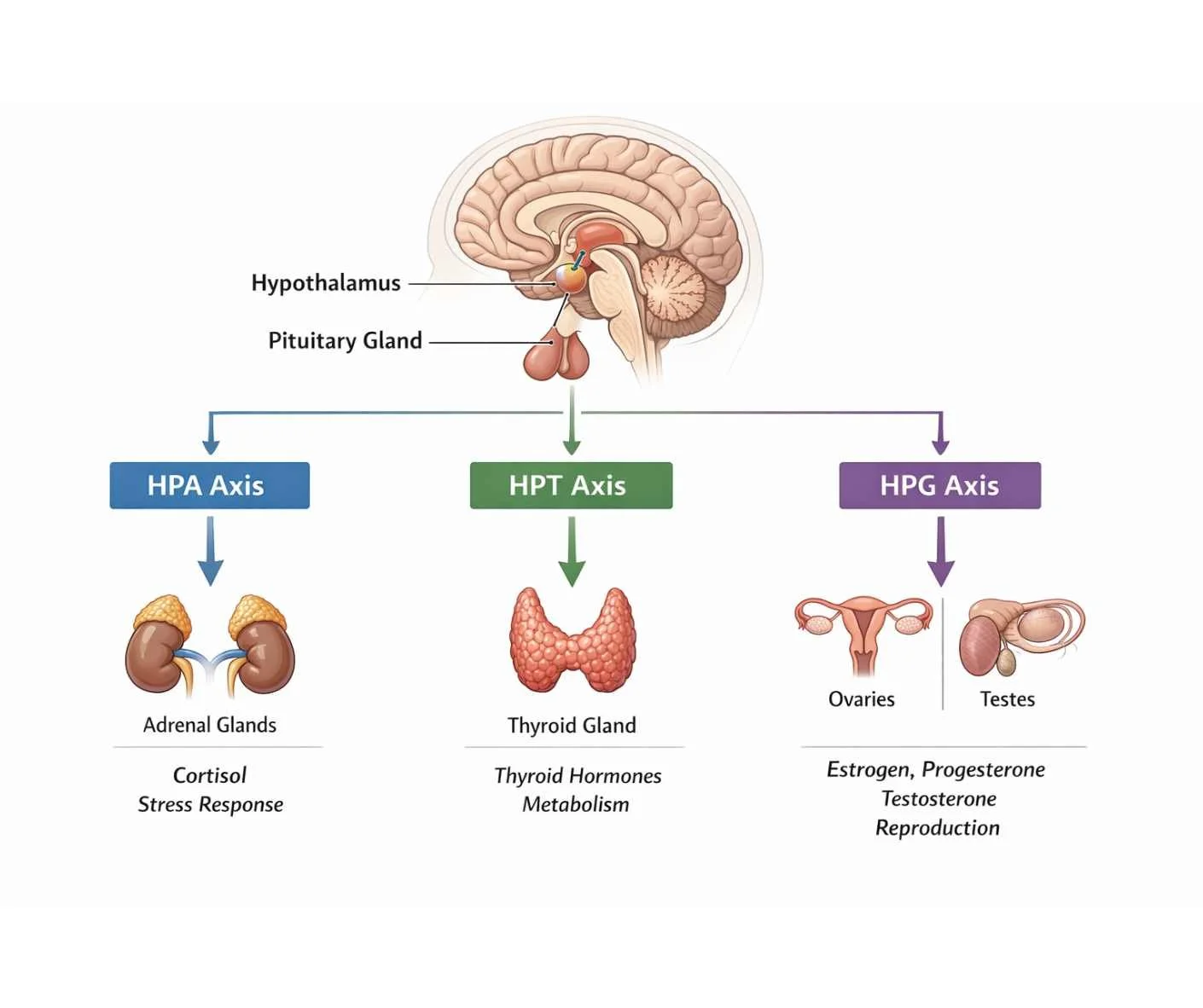
The hypothalamus and pituitary sit at the center of hormone regulation, linking the nervous system with the endocrine system. The hypothalamus receives constant input about stress, sleep, circadian timing, energy availability, inflammation, temperature, reproductive status, and autonomic activity, then adjusts signaling through several endocrine pathways. (7)
These include the:
HPA axis, which regulates cortisol and the stress response
HPT axis, which regulates thyroid signaling and metabolic activity
HPG axis, which regulates ovulation, ovarian and testicular hormone production, fertility, and reproductive function
A change in one pathway can affect the others. Cortisol can suppress reproductive signaling, thyroid dysfunction can disrupt ovulation and metabolism, insulin can increase ovarian androgen production, and inflammatory signals can alter hypothalamic and pituitary function. Hormone symptoms often overlap because these systems are physiologically connected. (7-9)
The Hypothalamus Connects the Nervous and Endocrine Systems
The hypothalamus receives information from the autonomic nervous system, immune system, metabolic pathways, circadian centers, and sensory input. It then signals the pituitary, which helps regulate adrenal, thyroid, ovarian, and testicular function.
Oxytocin is produced primarily in the paraventricular and supraoptic nuclei of the hypothalamus. Some is released into the bloodstream through the posterior pituitary, while some acts directly within the brain through pathways involved in stress regulation, autonomic function, social behavior, reproduction, appetite, and energy balance. (3)
How Chronic Stress Changes Neuroendocrine Signaling
Acute stress is adaptive. It increases energy availability, cardiovascular output, alertness, and the ability to respond quickly to a threat.
Problems develop when stress signaling stays active without enough recovery.
Poor sleep, psychological stress, blood sugar instability, inflammation, infection, under-fueling, excessive training, and environmental exposures can all alter signaling across the HPA, HPT, and HPG axes. (7-9)
Over time, this can affect:
cortisol rhythm and stress reactivity
ovulation and luteal progesterone production
thyroid signaling and metabolic rate
insulin sensitivity and glucose regulation
libido and reproductive function
sleep and circadian regulation
In some patients, cortisol output is elevated. In others, the diurnal rhythm becomes flatter or the stress response becomes exaggerated or poorly regulated. Reproductive changes can show up as anovulation, irregular cycles, lower luteal progesterone, changes in libido, or altered androgen signaling. (8)
Why Hormone Labs Can Look Normal Despite Persistent Symptoms
A single hormone level gives useful information, but it does not show the full state of neuroendocrine regulation.
Hormone values change with time of day, menstrual-cycle phase, sleep, food intake, stress exposure, medications, metabolic status, and feedback from other endocrine systems. Reference ranges also describe population distributions; they do not necessarily reflect optimal signaling for every patient.
Symptoms can persist even when a serum value falls within range because the problem may involve altered circadian secretion, disrupted feedback signaling, changes in receptor sensitivity, inconsistent ovulation, altered hormone metabolism, or another endocrine pathway affecting the same symptoms.
Oxytocin sits within this broader network, linking hypothalamic, autonomic, stress, reproductive, and metabolic signaling. (3)
Oxytocin, Cortisol, and the HPA Stress Response
Cortisol is released through the hypothalamic–pituitary–adrenal (HPA) axis in response to physical and psychological stress. In the short term, this response is adaptive. Cortisol helps mobilize glucose, maintain blood pressure, increase alertness, and make energy available during a stressor.
Problems develop when the HPA axis is repeatedly activated without adequate recovery. Psychological stress, poor sleep, blood sugar instability, inflammation, environmental exposures, and constant cognitive demand can all increase stress signaling and alter cortisol regulation over time.
Oxytocin and cortisol are closely linked through the HPA axis. Oxytocin can modify hypothalamic and pituitary signaling and, under some conditions, reduce the cortisol response to stress. Human studies are not uniform, however. The effect appears stronger when the stressor produces substantial HPA-axis activation rather than during mild or non-stress conditions. (5)
Higher oxytocin does not simply mean lower cortisol. Endogenous oxytocin and cortisol can rise together during acute stress, and some studies suggest that greater oxytocin release may be associated with stronger initial stress reactivity followed by faster autonomic recovery. (10)
Social connection also affects this physiology. In a controlled human study, men who received both oxytocin and social support had the lowest cortisol response during psychosocial stress. Oxytocin may therefore influence how the nervous system responds to supportive social input rather than acting as a stand-alone cortisol suppressant. (11)
Chronic Stress Can Change Cortisol Rhythm and Recovery
Chronic stress does not always produce continuously elevated cortisol. Cortisol regulation can shift in several directions, including a flattened diurnal rhythm, altered morning output, exaggerated stress reactivity, or slower recovery after a stressor.
These changes can affect sleep, glucose regulation, immune activity, reproductive signaling, and autonomic balance. Persistent HPA-axis activation can also interfere with hypothalamic–pituitary–ovarian signaling, ovulation, and luteal progesterone production.
This is one reason hormone symptoms can worsen during periods of sustained stress even when the problem is not an isolated cortisol abnormality. The same stress signals that alter cortisol can also affect blood sugar control, sleep, appetite, menstrual function, libido, and recovery.
Oxytocin is one part of this stress-regulation system. Its role appears to involve stress reactivity, autonomic recovery, and the physiological response to social and environmental cues, rather than simply lowering cortisol. (5,10,11)
Oxytocin, Insulin, Appetite, and Metabolic Signaling
Oxytocin is involved in appetite regulation, glucose homeostasis, insulin sensitivity, and energy balance. Within the hypothalamus, oxytocin-producing neurons interact with pathways that regulate hunger, satiety, energy expenditure, and the metabolic response to food. (1,12)
Human studies suggest that oxytocin can influence both food intake and glucose handling. In healthy men, intranasal oxytocin has improved glucose tolerance and pancreatic beta-cell responsivity, while other studies have shown reductions in caloric intake and changes in fat oxidation. (6,12)
Metabolic state appears to influence the response. In people with obesity or impaired insulin sensitivity, oxytocin does not consistently produce the same effects seen in healthier subjects. In one study of men with obesity and insulin resistance, a single dose of intranasal oxytocin did not improve glucose tolerance or beta-cell function. A randomized trial in adults with obesity also found no significant reduction in body weight after eight weeks of treatment, despite lower caloric intake during a test meal. (13)
Oxytocin signaling overlaps with insulin, leptin, appetite regulation, adipose tissue metabolism, and autonomic control of energy balance. These pathways help determine hunger, satiety, glucose disposal, fat storage, and energy expenditure. Poor sleep, chronic stress, insulin resistance, and altered appetite signaling can all change the metabolic environment in which oxytocin is acting.
For patients with hormone-related symptoms, this matters because metabolic dysfunction rarely stays confined to glucose regulation. Hyperinsulinemia and insulin resistance can influence ovarian androgen production, SHBG, ovulation, appetite, body composition, and inflammatory signaling. Oxytocin sits within that larger network rather than functioning as an isolated metabolic hormone.
Its role in metabolism is therefore most useful as part of the broader picture connecting the brain, nervous system, appetite regulation, insulin signaling, and reproductive physiology. (1,6,12,13)
Oxytocin and Sex Hormones: A Bidirectional Relationship
Oxytocin interacts with estrogen, progesterone, and testosterone, and the relationship runs in both directions. Sex hormones can influence oxytocin release and receptor activity, while oxytocin participates in neural and reproductive pathways affected by those same hormones. (4)
Estrogen has one of the clearest connections with the oxytocin system. Estradiol can increase oxytocin-receptor expression and alter oxytocin signaling in the brain and reproductive tissues. Progesterone and testosterone also affect oxytocin activity, although the response varies by tissue, sex, life stage, and hormonal environment. (4)
Oxytocin Across the Menstrual Cycle
Oxytocin levels change across the menstrual cycle rather than remaining static. A systematic review and meta-analysis found that endogenous oxytocin concentrations generally rise from the early follicular phase toward ovulation and decline during the luteal phase. These changes occur alongside shifts in estradiol and progesterone, reinforcing the close relationship between oxytocin and reproductive hormone signaling. (14)
An isolated oxytocin level, however, cannot be used to assess menstrual health. Results vary with specimen type, assay method, timing, and other physiological factors, making oxytocin much harder to interpret clinically than standard reproductive hormone testing. (15)
Oxytocin, Sexual Function, and Reproductive Physiology
Oxytocin also participates in sexual arousal, orgasm, reproductive behavior, uterine activity, and other aspects of sexual function in both women and men. Its effects are shaped by the hormonal environment and the neural pathways involved. (4,16)
Changes in estrogen, progesterone, and testosterone can therefore alter how the oxytocin system functions. This becomes especially relevant during periods of major hormonal change, including the menstrual cycle, postpartum period, perimenopause, and menopause.
Oxytocin is not acting separately from reproductive hormones. It is part of the same neuroendocrine network linking sexual function, reproductive physiology, stress regulation, and nervous system signaling.
Why Symptoms Can Persist Despite Bioidentical Hormone Therapy
Bioidentical hormone replacement therapy (BHRT) with estrogen, progesterone, and testosterone can be helpful when hormone deficiency, perimenopause, menopause, or another hormone-related condition is part of the clinical picture. But restoring hormone levels does not automatically correct every factor affecting how those hormones are produced, metabolized, signaled, or used at the tissue level.
Persistent symptoms can still reflect chronic stress physiology, insulin resistance, disrupted sleep, inflammation, altered autonomic regulation, thyroid dysfunction, nutrient deficiencies, impaired ovulation, changes in hormone metabolism, or other neuroendocrine contributors.
Oxytocin belongs in this broader picture because it interacts with many of the same neural and endocrine pathways. Estrogen, progesterone, and testosterone can alter oxytocin release and receptor activity, while stress and autonomic signaling can change the neuroendocrine environment in which those hormones are functioning. (4,14)
This becomes especially relevant during perimenopause and menopause, when ovarian hormone production becomes more variable and eventually declines. Changes in estrogen and progesterone often occur alongside shifts in sleep, stress reactivity, body composition, insulin sensitivity, autonomic function, and metabolic health. Oxytocin signaling is also being studied as part of these midlife neuroendocrine changes, although the human evidence is still developing. (17)
A patient can have hormone levels that look appropriate on treatment and still feel unwell because the symptoms are being driven by more than estrogen, progesterone, or testosterone alone. Bioidentical hormone therapy may be an important part of care, but the best results usually come from addressing the metabolic, inflammatory, nervous system, thyroid, and neuroendocrine factors contributing to the same symptom pattern.
How to Increase Oxytocin Naturally and Support Hormone Balance
There is no single trick for “boosting” oxytocin. Its release is shaped by the same things that influence the nervous system more broadly: touch, connection, sleep, stress load, metabolism, movement, and the hormonal environment.
Touch, Social Connection, and Natural Oxytocin Release
Affectionate touch, massage, supportive relationships, and meaningful social interaction are among the better-studied ways oxytocin can increase naturally. Human studies show increases in endogenous oxytocin in some settings, especially with touch and massage, although the response varies from person to person. (18,19)
Context matters. Touch that feels safe and welcome is not physiologically equivalent to touch that feels uncomfortable, forced, or emotionally disconnected. Trust, familiarity, prior experience, and the quality of the interaction all influence the response. (19)
This is one reason nervous system regulation cannot be reduced to “relax more.” The body responds to whether it actually perceives safety and recovery, not just whether a calming activity has been added to the schedule.
Oxytocin, Sleep, and Stress Recovery
Poor sleep changes much more than energy levels. It increases sympathetic activity, alters HPA-axis signaling, disrupts appetite regulation, and places additional strain on glucose control and metabolic function.
Oxytocin interacts with many of these same pathways, and emerging research links oxytocin signaling with sleep, circadian regulation, and recovery from stress. (20)
Regular sleep timing, adequate sleep duration, and enough recovery between periods of physical or psychological stress can make a meaningful difference in how the nervous and endocrine systems regulate.
Oxytocin, Blood Sugar, and Metabolic Health
Blood sugar swings and insulin resistance create another layer of physiological stress. When glucose regulation is unstable, appetite signaling, energy availability, reproductive function, and stress physiology can all be affected.
Adequate protein and overall energy intake, resistance training, appropriate carbohydrate intake, regular meals when needed, and avoiding chronic under-fueling can help create a more stable metabolic environment for hypothalamic and reproductive signaling.
For someone dealing with insulin resistance, irregular ovulation, appetite dysregulation, or changing body composition, improving metabolic health is usually more important than trying to target oxytocin directly.
Acupuncture, Oxytocin, and Nervous System Regulation
Acupuncture is relevant here because it affects many of the same pathways involved in stress recovery and autonomic regulation. Research shows effects on brain regions involved in autonomic control, including the hypothalamus, amygdala, insular cortex, and nucleus tractus solitarius. Clinical studies also suggest changes in heart-rate variability and parasympathetic activity, although results vary by condition and treatment protocol. (21,22)
There is also research examining oxytocin and other neuropeptides after acupuncture. The human evidence is not strong enough to say that acupuncture works by simply “raising oxytocin,” but it does appear to influence autonomic balance, stress physiology, pain regulation, and hypothalamic signaling—the same systems that help determine how well the body shifts out of a prolonged stress state and back toward recovery. (23)
→ Acupuncture & Nervous System Regulation
The goal is not to chase a higher oxytocin level. It is to improve the conditions that allow the nervous system, metabolism, sleep, stress response, and reproductive hormones to regulate more effectively.
Why Hormone Imbalance Symptoms Can Persist Even When Labs Look Normal
Hormone imbalance symptoms rarely come from one hormone alone. Fatigue, poor sleep, weight changes, irregular cycles, low libido, anxiety, mood changes, and poor stress tolerance can involve the nervous system, insulin and glucose regulation, thyroid function, reproductive hormones, inflammation, circadian rhythm, and environmental stressors at the same time.
Two people can have nearly identical symptoms for very different reasons. One may be dealing with insulin resistance and disrupted ovulation. Another may have thyroid dysfunction, poor sleep, chronic stress signaling, inflammation, or several of these problems occurring together.
Oxytocin can be part of that picture, especially when stress reactivity, sleep, appetite, autonomic symptoms, sexual function, or reproductive changes are present. But it should not become the explanation for every symptom simply because it interacts with multiple systems.
Why Hormone Tests Can Be Normal When You Still Have Symptoms
A hormone level can fall within the laboratory reference range while important parts of hormone physiology are still disrupted. Ovulation, receptor signaling, hormone metabolism, circadian secretion, insulin sensitivity, thyroid function, inflammation, and autonomic regulation can all influence symptoms without showing up as an obvious abnormality on a basic hormone panel.
The same problem can occur during treatment. Estrogen, progesterone, or testosterone levels may look appropriate on bioidentical hormone therapy while symptoms continue because another part of the physiology has not been addressed.
What Should Be Checked When Hormone Symptoms Persist?
Persistent hormone symptoms warrant a broader look at the mechanisms that can produce the same clinical picture.
Depending on the history and symptoms, evaluation may include:
thyroid function and thyroid antibodies
glucose, insulin, and metabolic markers
ovulation and progesterone production
androgens and SHBG
estrogen metabolism
nutrient status
gut and inflammatory patterns
sleep and circadian disruption
autonomic and stress physiology
environmental exposures
Not every patient needs every test. The evaluation should be guided by the symptom pattern, history, life stage, and the physiology most likely to be involved.
→ Women’s Health & Fertility Support
Oxytocin adds another piece to the picture because it connects stress, autonomic function, metabolism, sexual function, and reproductive signaling. It belongs alongside the rest of the hormone evaluation rather than replacing it.
Frequently Asked Questions About Oxytocin and Hormone Balance
Can Low Oxytocin Cause Hormone Imbalance?
Low oxytocin is not considered a single direct cause of hormone imbalance. Oxytocin interacts with the HPA axis, autonomic nervous system, metabolic pathways, and reproductive hormones, so altered oxytocin signaling may be one part of a larger pattern involving chronic stress, poor sleep, insulin resistance, reproductive dysfunction, or nervous system dysregulation.
How Does Oxytocin Affect Cortisol?
Oxytocin can modify activity within the HPA axis and reduce cortisol responses under some stress conditions. The effect is not universal. Stress intensity, sex, social context, prior experience, and individual physiology all influence the response. Oxytocin appears to affect both stress reactivity and recovery, rather than simply lowering cortisol.
Does Stress Lower Oxytocin?
Chronic stress can alter oxytocin signaling, but the relationship is not as simple as stress always causing low oxytocin. Oxytocin and cortisol can both increase during acute stress, and oxytocin may participate in recovery afterward. Persistent stress can disrupt the broader hypothalamic and autonomic systems in which oxytocin functions.
Does Oxytocin Affect Estrogen and Progesterone?
Yes. Oxytocin interacts with both estrogen and progesterone, and the relationship works in both directions. Estradiol can influence oxytocin release and oxytocin-receptor expression, while progesterone also modifies oxytocin signaling. These interactions change across the menstrual cycle and different reproductive stages.
Does Oxytocin Affect Testosterone?
Oxytocin and testosterone interact within reproductive, sexual, and social signaling pathways. Testosterone can influence the oxytocin system, while oxytocin participates in neural pathways involved in sexual function and reproductive behavior. The relationship depends on sex, hormonal status, tissue, and physiological context.
Does Oxytocin Change During the Menstrual Cycle?
Yes. Research suggests that endogenous oxytocin changes across the menstrual cycle, with concentrations generally increasing from the early follicular phase toward ovulation and declining during the luteal phase. These shifts occur alongside changes in estrogen and progesterone.
What Happens to Oxytocin During Perimenopause and Menopause?
Oxytocin signaling is being studied as part of the neuroendocrine changes that occur during perimenopause and menopause. Declining and fluctuating estrogen and progesterone can affect oxytocin signaling and receptor activity. Oxytocin may also interact with sleep, mood, metabolism, bone, cardiovascular function, and stress regulation during midlife, although human research is still developing.
Does Oxytocin Affect Insulin and Blood Sugar?
Oxytocin participates in glucose regulation, appetite, insulin signaling, and energy balance. Human studies have shown effects on glucose tolerance, pancreatic beta-cell function, food intake, and metabolism, although responses differ with metabolic health. Oxytocin should not be viewed as a treatment for insulin resistance, but it is part of the neuroendocrine network involved in metabolic regulation.
Can Oxytocin Levels Be Tested?
Oxytocin can be measured in blood, saliva, and other biological samples, but testing is difficult to interpret clinically. Oxytocin release is dynamic, laboratory methods vary, and peripheral measurements do not necessarily reflect oxytocin activity within the brain. A single oxytocin result is therefore not a reliable stand-alone test for hormone balance or nervous system regulation.
Can You Increase Oxytocin Naturally?
Touch, massage, supportive social connection, sleep, stress recovery, physical activity, and other positive sensory and social experiences can influence endogenous oxytocin signaling. There is no single method that reliably increases oxytocin in everyone, because the response depends on context, nervous system state, prior experience, metabolic health, and the surrounding hormonal environment.
Does Acupuncture Increase Oxytocin?
Acupuncture has been studied for its effects on oxytocin and other neuropeptides, but the human evidence is not strong enough to say that its benefits come primarily from increasing oxytocin. Its better-established effects involve autonomic regulation, stress physiology, pain modulation, and hypothalamic signaling, which overlap with pathways influenced by oxytocin.
Still Have Questions?
If the topics above reflect ongoing symptoms or unanswered concerns, a brief conversation can help clarify whether a root-cause approach is appropriate.
Resources
Endocrine Reviews - Metabolic Effects of Oxytocin
Journal of Neuroendocrinology - Role of Oxytocin in the Control of Stress and Food Intake
ASN Neuro - Neural Functions of Hypothalamic Oxytocin and Its Regulation
Neuroscience & Biobehavioral Reviews - The Interplay of Oxytocin and Sex Hormones
Psychoneuroendocrinology - A Meta-Analytic Review of the Impact of Intranasal Oxytocin Administration on Cortisol Concentrations During Laboratory Tasks: Moderation by Method and Mental Health
Diabetes - Oxytocin Improves β-Cell Responsivity and Glucose Tolerance in Healthy Men
Journal of Endocrinology - Regulation of TRH Neurons and Energy Homeostasis-Related Signals Under Stress
Frontiers in Global Women’s Health - Chronic Stress and Ovulatory Dysfunction: Implications in Times of COVID-19
Journal of Reproductive Immunology - Stress and the Female Reproductive System
Frontiers in Neuroendocrinology - A Meta-Analytic Review of the Correlation Between Peripheral Oxytocin and Cortisol Concentrations
Biological Psychiatry - Social Support and Oxytocin Interact to Suppress Cortisol and Subjective Responses to Psychosocial Stress
International Journal of Molecular Sciences - The Effects of Oxytocin on Appetite Regulation, Food Intake and Metabolism in Humans
NEJM Evidence - Intranasal Oxytocin for Obesity
Frontiers in Neuroendocrinology - Menstrual Cycle-Related Fluctuations in Oxytocin Concentrations: A Systematic Review and Meta-Analysis
Frontiers in Neuroendocrinology - Demographic, Sampling- and Assay-Related Confounders of Endogenous Oxytocin Concentrations: A Systematic Review and Meta-Analysis
Current Sexual Health Reports - From Parental Behavior to Sexual Function: Recent Advances in Oxytocin Research
Journal of Endocrinology - Oxytocin and Women’s Health in Midlife
Alternative Therapies in Health and Medicine - Massage Increases Oxytocin and Reduces Adrenocorticotropin Hormone in Humans
Psychological Bulletin - Endogenous Oxytocin and Human Social Interactions: A Systematic Review and Meta-Analysis
Frontiers in Neuroscience - A Narrative Review on Oxytocin at the Intersection of Sleep, Stress, and Social Behavior
Frontiers in Neuroscience - The Autonomic Nervous System: A Potential Link to the Efficacy of Acupuncture
Complementary Therapies in Medicine - Acupuncture Increases Parasympathetic Tone, Modulating HRV: Systematic Review and Meta-Analysis
International Review of Neurobiology - Acupuncture Stimulation and Neuroendocrine Regulation