

DMSO for Pain Relief, Inflammation, Detoxification & Injury Recovery
The Role of Topical DMSO in Pain Relief, Inflammation Regulation, and Cellular Regeneration Pathways
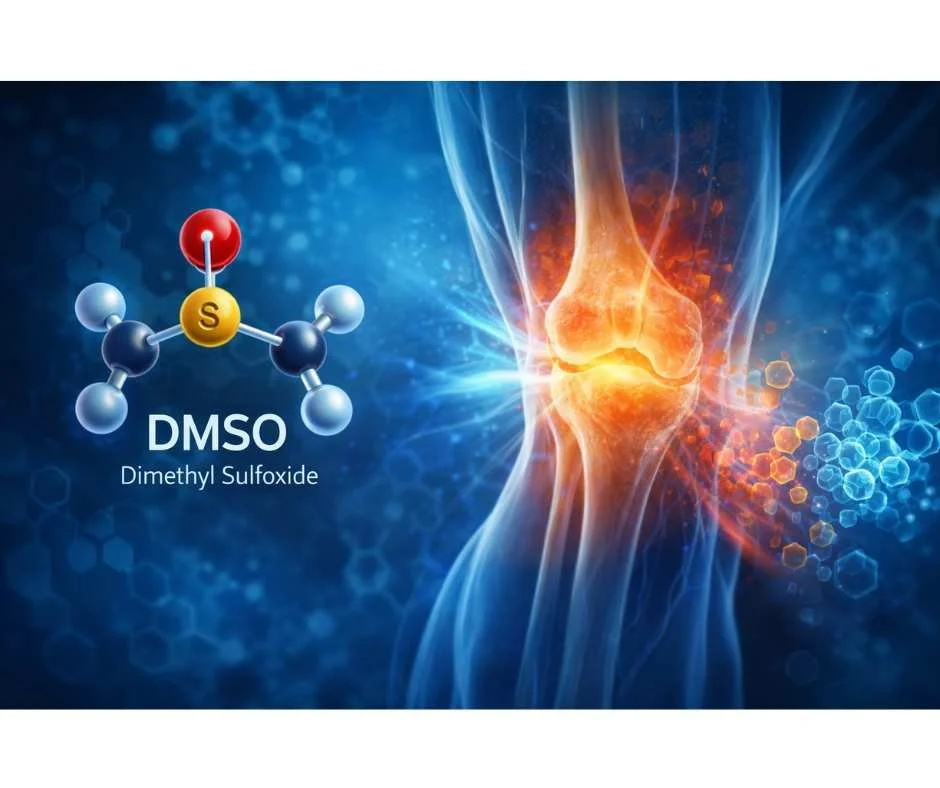
When managing chronic pain, inflammation, and delayed tissue recovery, few compounds have generated as much clinical interest—and misunderstanding—as dimethyl sulfoxide (DMSO). Often mischaracterized online as a fringe or do-it-yourself remedy, DMSO is in fact a well-studied, sulfur-based molecule with more than six decades of published research examining its anti-inflammatory, analgesic, antioxidant, and transdermal carrier properties.
DMSO is uniquely distinguished by its ability to penetrate skin and cellular membranes, modulate inflammatory and nociceptive signaling pathways, reduce oxidative stress, and enhance localized microcirculation. It also functions as a transdermal delivery agent, improving tissue access for compatible therapeutic compounds. These mechanisms position topical DMSO for pain and inflammation not as a symptom-masking intervention, but as a tool that may support cellular repair, circulation, and structured tissue recovery when used under proper clinical guidance (1–3).
At Denver Sports & Holistic Medicine, DMSO is used exclusively in pharmaceutical-grade form and only within structured, individualized care plans. Clinical applications may include musculoskeletal pain, sports and overuse injuries, post-surgical or post-traumatic tissue stress, and select detoxification protocols—always with careful attention to purity, dilution parameters, and safety oversight. This aligns with a systems-based model of care that addresses inflammatory load, tissue integrity, detoxification capacity, and recovery physiology rather than isolated symptom suppression (4,5).
This article reviews what DMSO is, how it works physiologically, its safety considerations, and why it may serve as a valuable adjunct in integrative medicine—particularly in the context of injury recovery, inflammation regulation, and cellular detoxification.
→ Sports Medicine & Injury Recovery
What Is DMSO and What Is It Used For?
DMSO (dimethyl sulfoxide) is a sulfur-based organic compound used clinically for topical pain relief, inflammation support, tissue recovery, and enhanced transdermal delivery of compatible therapeutic compounds. Originally derived from wood pulp, it gained medical attention in the 1960s when researchers identified its unusual ability to penetrate skin and cellular membranes, influencing intracellular transport, oxidative stress pathways, and inflammatory signaling.
Dimethyl sulfoxide is currently FDA-approved for one medical indication—interstitial cystitis, a chronic inflammatory bladder condition. However, it has been studied extensively in peer-reviewed medical literature for its analgesic, anti-inflammatory, antioxidant, and membrane-penetrating properties, leading to decades of use in sports medicine, veterinary care, and integrative clinical settings (1–3).
Its ability to cross biological membranes and alter tissue permeability distinguishes DMSO from conventional topical agents and explains both its therapeutic potential and the need for careful clinical oversight.
Clinical Benefits of DMSO for Pain, Inflammation, and Tissue Repair
1. Topical Pain Relief Through Physiological Modulation
DMSO supports pain reduction by influencing underlying tissue physiology rather than masking symptoms. Proposed mechanisms include:
Modulation of nociceptive nerve signaling
Scavenging of hydroxyl free radicals that contribute to nerve irritation
Improved microcirculation, enhancing oxygen and nutrient delivery to stressed tissues
Common clinical applications include:
Arthritis, bursitis, and tendonitis
Muscle strains and sprains
Back and neck pain
Chronic nerve irritation, including sciatica (3,4)
2. Accelerated Soft-Tissue and Injury Recovery
In sports medicine and rehabilitation contexts, DMSO is used as an adjunct to support inflammation resolution and tissue repair.
Documented clinical effects include:
Reduction of acute swelling and oxidative tissue stress following injury
Softening of scar tissue and adhesions to improve mobility
Enhanced transderal delivery of supportive compounds such as magnesium or MSM
These properties make topical DMSO a structured adjunct in athletic injuries, post-surgical recovery, and chronic soft-tissue conditions that have been slow to resolve (5–6).
3. Anti-Inflammatory and Neuroinflammatory Support
Persistent inflammatory signaling underlies many chronic musculoskeletal and degenerative pain conditions. DMSO may help modulate inflammatory burden by:
Neutralizing hydroxyl radicals
Reducing inflammatory mediators involved in tissue swelling
Limiting secondary oxidative injury in affected tissues
Clinical contexts where localized inflammatory modulation may be relevant include:
Inflammatory joint and fascial conditions
Migraine-associated neuroinflammation
Autoimmune-related inflammatory flares
Chronic musculoskeletal inflammation (7,8)
4. Cellular Detoxification Support Under Clinical Supervision
Because DMSO increases membrane permeability, it has been incorporated into carefully supervised detoxification strategies. By facilitating cellular exchange, it may assist with mobilization of certain compounds from tissues, including:
Heavy metals
Mold-derived mycotoxins
Industrial and environmental chemical residues
Due to its carrier properties, pharmaceutical-grade purity and strict clinical controls are essential to prevent unintended transport of contaminants (1).
→ Detoxification & Environmental Medicine
5. Transdermal Delivery of Therapeutic Compounds
One of DMSO’s most well-documented properties is its function as a transdermal carrier, allowing compatible substances to bypass digestive metabolism and reach localized tissues more efficiently.
Common clinician-approved pairings may include:
Magnesium — neuromuscular relaxation and cellular signaling
MSM — connective tissue and joint support
CBD — localized inflammatory modulation
When properly formulated and monitored, this carrier effect allows DMSO to serve as a foundational component of custom topical preparations designed for localized tissue support (5,9).
How DMSO Is Used at Denver Sports & Holistic Medicine
At Denver Sports & Holistic Medicine, topical DMSO is not used as a standalone remedy or generalized over-the-counter application. It is incorporated selectively into individualized, clinician-guided treatment plans when its pharmacologic properties align with a patient’s tissue presentation, inflammatory status, injury pattern, and overall therapeutic goals.
DMSO is considered only when there is a clear clinical rationale and when membrane permeability, localized circulation support, or transdermal delivery may enhance outcomes within a broader care framework.
Clinical applications may include:
Targeted topical support for musculoskeletal pain involving joints, muscles, ligaments, and fascial tissue, particularly in cases of localized inflammation, mechanical strain, or post-injury irritation
Custom compounded topical formulations designed to enhance delivery of compatible agents such as magnesium or MSM when deeper tissue penetration is clinically indicated
Adjunctive detoxification support in patients with documented mold exposure, heavy metal burden, or environmental toxicant accumulation, used conservatively within structured detox protocols
Sports and overuse injury recovery, where modulation of inflammation, support of tissue mobility, and limitation of excessive scar formation are therapeutic priorities
Carefully supervised support for localized neuroinflammatory patterns contributing to chronic pain or functional limitation
All DMSO preparations are pharmaceutical grade, appropriately diluted according to tissue sensitivity and clinical indication, and applied within defined safety parameters. Products are selected based on purity verification and formulation compatibility.
This controlled, systems-based approach allows DMSO to function as a supportive therapeutic tool within integrative care rather than as an unsupervised or generalized intervention.
DMSO Safety, Side Effects, and Clinical Guidelines
When used appropriately and under qualified clinical supervision, topical DMSO is generally well tolerated. However, its defining characteristic—the ability to transport substances across skin and cellular membranes—is also its primary safety consideration.
Because DMSO increases membrane permeability, it will carry with it any substance present on the skin at the time of application. Improper handling, low-quality formulations, or contact with environmental contaminants can result in unintended transport of undesirable compounds into deeper tissues or systemic circulation.
For this reason, pharmaceutical-grade DMSO is essential. At Denver Sports & Holistic Medicine, formulations are sourced from reputable suppliers, packaged in glass to prevent chemical leaching, and supported by third-party laboratory verification to confirm purity and absence of contaminants.
Common and Expected Effects
Some temporary effects are considered normal and dose-dependent, including:
A garlic-like taste or odor on the breath
Mild warmth or tingling at the application site
Transient skin redness
These effects typically resolve with concentration adjustment or reduced frequency of application.
Key Safety Principles for Topical DMSO
Avoid products containing perfumes, dyes, preservatives, or unidentified additives, as these may be transported into circulation
Dilute appropriately based on tissue sensitivity and therapeutic indication (commonly within a 5–70% range depending on context)
Apply only to clean, dry skin free of lotions, cosmetics, or environmental residues
Avoid application to compromised, infected, or contaminated skin unless under direct clinical supervision
Avoid use during pregnancy or breastfeeding due to insufficient safety data
Consult a qualified healthcare provider before combining DMSO with prescription medications or other topical agents
When Caution Is Warranted
Individuals taking anticoagulants, managing complex medical conditions, or undergoing active cancer treatment should seek individualized medical guidance prior to use.
These safeguards allow DMSO to function as a controlled therapeutic adjunct rather than an unsupervised remedy, minimizing risk while preserving clinical benefit (3,5,10).
Integrative Care Pathway for Pain, Inflammation, and Tissue Recovery
Chronic pain, persistent inflammation, and delayed tissue recovery rarely stem from a single isolated variable. In many cases, mechanical stress, inflammatory signaling, oxidative burden, impaired detoxification, and nervous system dysregulation interact to sustain symptoms.
A personalized, integrative approach evaluates these interconnected drivers rather than focusing solely on localized pain. This systems-based model addresses inflammation regulation, tissue repair capacity, detoxification load, metabolic resilience, and autonomic balance together—supporting recovery at both the cellular and structural levels.
→ Functional & Integrative Medicine
You may request a free 15-minute consultation with Dr. Martina Sturm to review your health concerns and outline appropriate next steps within a root-cause, systems-based framework.
Frequently Asked Questions About DMSO (Dimethyl Sulfoxide)
What is DMSO used for?
DMSO (dimethyl sulfoxide) is most commonly used topically for pain relief, inflammation support, and soft-tissue recovery. In clinical settings, it may also be used as a transdermal carrier to enhance delivery of compatible therapeutic compounds. It is FDA-approved for interstitial cystitis but is used off-label under medical supervision for musculoskeletal and inflammatory conditions.
Does DMSO really work for pain?
Research suggests that topical DMSO may help reduce pain by modulating inflammatory signaling, scavenging free radicals, and improving local circulation. Its effectiveness depends on concentration, formulation purity, and appropriate clinical use. It is typically used as an adjunct within a broader treatment strategy rather than as a standalone therapy.
Is DMSO safe to use?
When pharmaceutical-grade DMSO is used appropriately and under clinical guidance, it is generally well tolerated. Because it increases membrane permeability, safety depends on proper dilution, clean application, and avoidance of contaminants. Individuals with complex medical conditions should consult a qualified healthcare provider before use.
What are the side effects of topical DMSO?
Common side effects may include a temporary garlic-like odor or taste, mild warmth or tingling at the application site, and transient skin redness. These effects are usually dose-dependent and resolve with adjustment of concentration or frequency. Significant irritation is uncommon when properly diluted.
Can DMSO help with inflammation?
DMSO has demonstrated anti-inflammatory and antioxidant properties in laboratory and clinical research. It may help reduce localized inflammation by limiting oxidative stress and modulating inflammatory mediators, particularly in soft-tissue and joint conditions.
Can DMSO be used for injury recovery?
Topical DMSO is sometimes used as an adjunct in acute and chronic soft-tissue injuries to help support inflammation resolution and tissue mobility. Best outcomes are seen when it is integrated with structured rehabilitation, mobility work, and appropriate recovery protocols.
Does DMSO help with detoxification?
Because DMSO increases membrane permeability, it has been incorporated into carefully supervised detoxification protocols. However, its carrier properties require pharmaceutical-grade purity and clinical oversight to avoid unintended transport of environmental contaminants.
Is DMSO legal in the United States?
Yes. DMSO is FDA-approved for interstitial cystitis and may be used off-label under medical supervision. Over-the-counter products are available, but quality and purity vary significantly.
How should topical DMSO be applied safely?
Safe use requires pharmaceutical-grade DMSO, appropriate dilution based on tissue sensitivity, and application to clean, dry skin free of lotions or residues. It should not be applied to contaminated or compromised skin unless under direct clinical supervision.
Who should avoid using DMSO?
DMSO should be avoided during pregnancy or breastfeeding due to limited safety data. Individuals taking anticoagulants, undergoing cancer treatment, or managing complex medical conditions should seek individualized medical guidance prior to use.
Further Reading on DMSO
To dive deeper into the therapeutic science and practical applications of DMSO, the following resources provide valuable insight—from real-world clinical use to historical context and safety considerations.
A Midwestern Doctor — “DMSO Transforms the Treatment of Infectious Diseases”
This article explores DMSO’s potent antimicrobial and antiviral properties, highlighting its ability to penetrate biofilms and improve delivery of therapeutic agents in chronic infections. It presents compelling clinical observations where DMSO enhanced outcomes in difficult-to-treat microbial and inflammatory conditions.
🔗 Read the article on Substack
A Midwestern Doctor — “DMSO Is a Miraculous Therapy for Chronic Pain and Musculoskeletal Injuries”
A comprehensive review of DMSO’s regenerative and pain-relieving effects on connective tissue, muscles, and nerves. The author discusses its long-standing use in sports and integrative medicine, its role in reducing oxidative stress, and its ability to restore tissue flexibility after trauma or surgery.
🔗 Read the article on Substack
A Midwestern Doctor — “Therapeutic DMSO Combinations Revolutionize Medicine”
This piece outlines synergistic uses of DMSO—how it can be safely paired with natural compounds, minerals, and pharmaceuticals to enhance absorption and efficacy. It also emphasizes formulation safety, carrier selection, and the importance of using glass packaging to prevent contamination.
🔗 Read the article on Substack
McGill Office for Science & Society — “DMSO Is Not a Cure-All: But the FDA’s Panic Over It Birthed a Myth”
A historical perspective on DMSO’s controversial journey through the medical system. While the author maintains a skeptical lens, it provides useful context on how regulatory pressure and pharmaceutical interests shaped public perception of DMSO—offering readers a broader view of why such a promising molecule remains underused in conventional medicine.
🔗 Read the article on McGill OSS
Still Have Questions?
If the topics above reflect ongoing symptoms or unanswered concerns, a brief conversation can help clarify whether a root-cause approach is appropriate.
Resources
Journal of Pharmaceutical Sciences – Pharmacology of dimethyl sulfoxide
Drugs – Dimethyl sulfoxide (DMSO): a review
Annals of the New York Academy of Sciences – Medical use of dimethyl sulfoxide (DMSO)
Clinical Orthopaedics and Related Research – Dimethyl sulfoxide in musculoskeletal disorders
Advanced Drug Delivery Reviews – Penetration enhancers: mechanisms and applications
Free Radical Biology and Medicine – Evaluation of free radical scavenging activities of antioxidants using a DMSO system
Radiation Research – An alternative mechanism for radioprotection by dimethyl sulfoxide: facilitation of DNA double-strand break repair
CRC Press / Taylor & Francis Group – Dimethyl Sulfoxide (DMSO) in Trauma and Disease (Stanley W. Jacob)
Journal of Inflammation Research – Anti-inflammatory and antioxidant properties of dimethyl sulfoxide
Veterinary and Comparative Orthopaedics and Traumatology – Clinical applications of dimethyl sulfoxide in soft tissue injury
Journal of Alternative and Complementary Medicine – Transdermal delivery enhancement using dimethyl sulfoxide
McGill Office for Science & Society – DMSO is not a cure-all: historical and regulatory perspectives