

Why You Still Have Hypothyroid Symptoms on Levothyroxine
T4-to-T3 Conversion, Absorption, Thyroid Signaling, and Other Reasons Symptoms Can Persist Despite Normal TSH
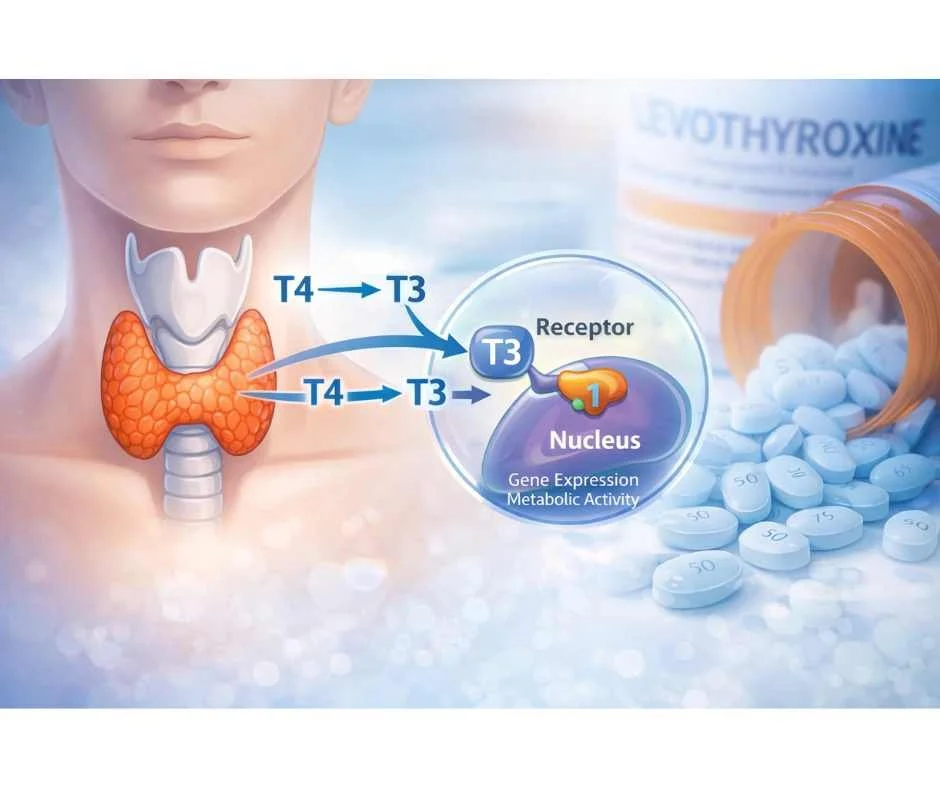
Being diagnosed with hypothyroidism and starting levothyroxine is supposed to make you feel better. Sometimes it does. But plenty of patients still have fatigue, brain fog, stubborn weight gain, cold intolerance, hair thinning, low mood, or poor exercise tolerance even after their TSH is back in range (1).
A normal TSH does not necessarily mean every part of thyroid physiology is functioning optimally.
Levothyroxine replaces T4, but thyroid function depends on far more than supplying one hormone. T4 still has to be absorbed, converted to active T3, transported into tissues, and used appropriately. Iron, selenium, zinc, insulin resistance, chronic stress, inflammation, gut dysfunction, liver function, sleep, mitochondrial function, and other hormones can all influence that process.
Some of those same problems can also produce symptoms that look very similar to hypothyroidism, so adding medication or increasing the dose is not always the right answer.
When symptoms persist, the issue is not only whether TSH is in range, but what may still be interfering with thyroid hormone metabolism and symptom resolution.
Why Do Hypothyroid Symptoms Persist on Levothyroxine?
If symptoms persist despite consistent levothyroxine use, low T4 is unlikely to be the whole explanation.
Hypothyroid symptoms can continue when levothyroxine is not absorbed consistently, T4 is not converting efficiently to active T3, circulating T3 remains relatively low, or metabolic, nutritional, inflammatory, hormonal, or gastrointestinal factors are contributing.
T4-only therapy also changes the normal relationship between T4 and T3. Patients taking levothyroxine often have a higher T4-to-T3 ratio than people with normal thyroid function, and some continue to have relatively low T3 even when TSH is within range (2).
A normal TSH does not rule out impaired absorption, reduced T4-to-T3 conversion, or other metabolic factors that can affect thyroid hormone activity and symptoms.
How Levothyroxine Depends on T4-to-T3 Conversion
Levothyroxine supplies T4, but much of thyroid hormone’s metabolic effect depends on conversion to T3, the active thyroid hormone.
After T4 enters the bloodstream, it is transported into peripheral tissues where deiodinase enzymes regulate how much is converted into active T3. The liver, kidneys, skeletal muscle, and other tissues all contribute to this process.
T3 then binds to thyroid hormone receptors and influences gene expression involved in metabolism, mitochondrial activity, thermogenesis, cardiovascular function, brain function, and energy production.
T4 replacement restores circulating T4, but it does not guarantee optimal T3 production or tissue-level thyroid signaling.
A normal TSH confirms that the pituitary is responding to circulating thyroid hormone. It does not directly measure peripheral T3 availability or thyroid hormone activity in every tissue.
Adequate T4 and a normal TSH therefore do not necessarily tell us whether enough active T3 is being produced and used throughout the body.
Why Normal TSH Does Not Always Explain Persistent Symptoms
TSH reflects how the pituitary is responding to circulating thyroid hormone. It is an important marker, but it does not directly measure thyroid hormone activity in peripheral tissues.
With levothyroxine, T4-only therapy can produce a different T4-to-T3 balance than normal thyroid physiology, and some patients continue to have relatively low T3 even when TSH is within range (2,3).
The pituitary is highly responsive to circulating thyroid hormone, while tissues such as skeletal muscle, liver, brain, and heart regulate thyroid hormone locally through transporters, deiodinase enzymes, and receptor activity (3,4). A normal TSH therefore does not show how much active T3 is available within each tissue or how strongly thyroid hormone signaling is occurring at the cellular level.
Persistent symptoms are not always caused by thyroid dysfunction alone. Iron deficiency, insulin resistance, poor sleep, menopause, inflammation, gut dysfunction, nutrient deficiencies, medication effects, and chronic stress can produce many of the same symptoms.
When symptoms persist, TSH is more informative when interpreted alongside free T4, free T3, reverse T3, thyroid antibodies, and the patient’s actual symptom pattern.
The Most Common Reasons Levothyroxine May Not Fully Resolve Symptoms
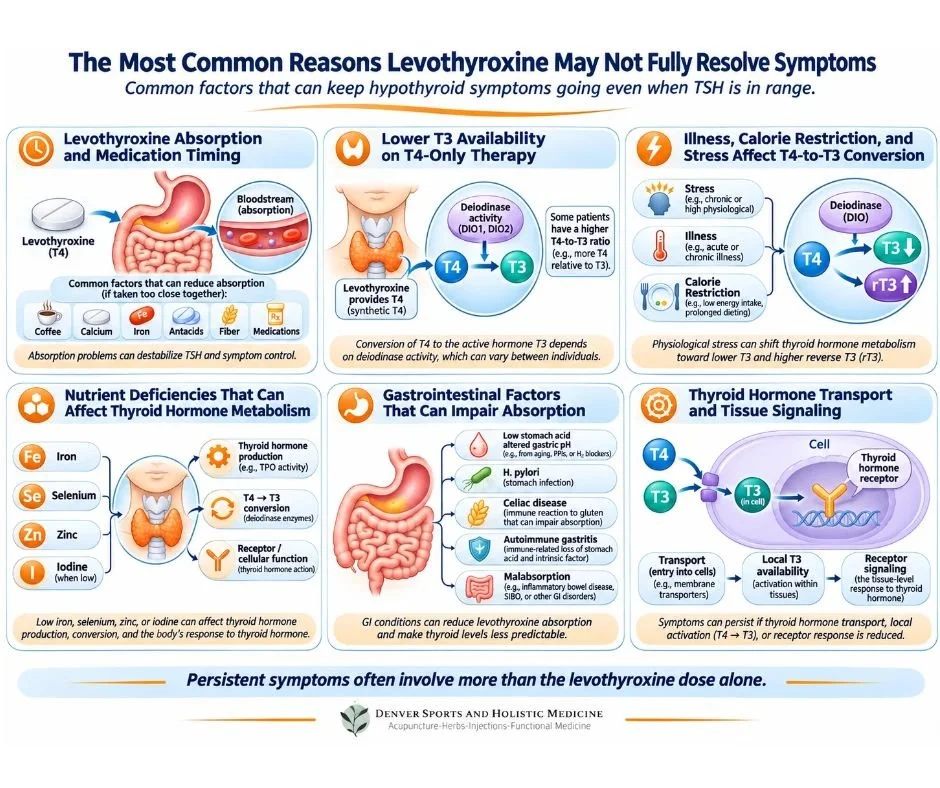
Levothyroxine Absorption and Medication Timing
Levothyroxine only works consistently when it is absorbed consistently. Even when the prescribed dose is appropriate, variable gastrointestinal absorption can alter TSH, free T4, and symptom response.
Food and several common substances can interfere with tablet absorption, particularly when taken too close to the medication. These include coffee, calcium, iron, antacids, fiber supplements, bile-acid sequestrants, and certain medications (5,6).
Gastric and intestinal conditions can also interfere with absorption when they alter stomach acidity, intestinal integrity, or transit time.
If TSH is unstable, symptoms fluctuate, or the levothyroxine dose keeps increasing without a clear reason, absorption and medication timing should be reviewed before assuming more thyroid hormone is needed.
Gut Conditions That Can Affect Levothyroxine Absorption
Levothyroxine absorption depends on normal gastric acidity, intestinal integrity, and gastrointestinal motility. Hypochlorhydria, altered gastric pH, inflammation, impaired motility, and malabsorption can all reduce or destabilize absorption (6,7).
Conditions such as autoimmune gastritis, H. pylori infection, celiac disease, lactose intolerance, gastroparesis, inflammatory bowel disease, and prior bariatric surgery can change levothyroxine requirements and make thyroid levels more difficult to stabilize.
Hashimoto’s thyroiditis also occurs more frequently with other autoimmune conditions, particularly celiac disease and autoimmune gastritis. Both can impair nutrient absorption and contribute to iron and vitamin B12 deficiencies (8), which can worsen fatigue, cognitive symptoms, weakness, and poor exercise tolerance even when thyroid hormone replacement is adequate.
Low stomach acid can compound the problem by reducing iron absorption and, especially in autoimmune or atrophic gastritis, contributing to vitamin B12 deficiency.
Lower T3 Availability on T4-Only Therapy
Levothyroxine provides T4, but much of thyroid hormone’s metabolic activity depends on T3.
In normal thyroid physiology, the thyroid produces both T4 and a smaller amount of T3. Additional T3 is produced in peripheral tissues through deiodinase enzymes. With T4-only therapy, that direct thyroid contribution of T3 is lost, increasing reliance on peripheral conversion of T4 into active T3.
Patients taking levothyroxine commonly have a higher T4-to-T3 ratio than people with normal thyroid function, and some continue to have relatively low circulating T3 even when TSH is within range (2).
Lower T3 does not explain every persistent symptom, but it becomes more relevant when fatigue, cold intolerance, cognitive slowing, poor exercise tolerance, or weight-loss resistance continue despite a TSH within range.
How Illness, Calorie Restriction, and Stress Affect T4-to-T3 Conversion
T4-to-T3 conversion changes in response to illness, inflammation, prolonged calorie restriction, and other forms of physiological stress.
Deiodinase enzymes regulate thyroid hormone activation and inactivation in peripheral tissues. During significant illness or sustained energy restriction, T3 can fall while reverse T3 rises as thyroid hormone metabolism shifts toward lower T3 availability and greater inactivation of T4 (9).
Reverse T3 is therefore more useful as a marker of altered thyroid hormone metabolism than as evidence that it is directly “blocking” T3 receptors.
With T4-only replacement, the thyroid is no longer contributing its normal amount of T3, so the body relies more heavily on peripheral conversion of T4. Levothyroxine-treated patients already tend to have a lower T3-to-T4 ratio than people with intact thyroid function, and a subset has low T3 despite a normal TSH (2).
Repeated dieting, chronic under-eating, significant illness, inflammation, and inadequate recovery can all push thyroid hormone metabolism toward lower T3 availability, even when TSH remains within range.
Nutrient Deficiencies That Can Affect Thyroid Hormone Metabolism
Thyroid hormone production, conversion, transport, and receptor activity depend on adequate nutrient status.
Iodine is required to make T4 and T3. Iron is required for thyroid peroxidase activity, selenium is needed for deiodinase enzymes involved in thyroid hormone activation and inactivation, and zinc contributes to thyroid hormone synthesis, receptor function, and signaling (10–12).
Iodine needs to be interpreted in context. Too little can impair thyroid hormone production, while a sudden increase in iodine intake can temporarily raise TSH as the thyroid adapts to the greater iodine exposure. Human studies have documented transient increases in TSH during iodine supplementation, sometimes without a corresponding fall in T4 or T3 (12,13).
A large iodine load can also trigger the Wolff-Chaikoff effect, a temporary reduction in thyroid hormone synthesis. In most people, the thyroid adapts and hormone production resumes, although this response can be less predictable in people with underlying thyroid disease or autoimmune thyroiditis (14).
Both iodine deficiency and poorly tolerated excess iodine can affect thyroid function, but a temporary rise in TSH after increasing iodine intake does not automatically mean iodine has caused permanent hypothyroidism.
Deficiencies in iodine, iron, selenium, zinc, and other nutrients can also produce symptoms that overlap with hypothyroidism, including fatigue, hair loss, weakness, impaired exercise tolerance, and cognitive changes.
A patient can therefore have adequate thyroid hormone replacement and still feel poorly because of nutrient deficiencies or imbalances. Persistent symptoms do not automatically mean the levothyroxine dose is too low.
Thyroid Hormone Transport and Tissue-Specific Signaling
Normal TSH, free T4, and free T3 levels do not necessarily show how much thyroid hormone is entering individual tissues or how strongly it is signaling inside those cells.
T4 and T3 enter cells through specialized transport proteins. Once inside, deiodinase enzymes regulate local T3 availability, and thyroid hormone receptors determine how that signal influences metabolism, mitochondrial function, energy production, brain function, and cardiovascular activity (3,4).
The brain, liver, skeletal muscle, and heart do not all handle thyroid hormone the same way. Each tissue expresses a different combination of transporters, deiodinase enzymes, and receptor subtypes, so thyroid hormone activity can vary between tissues even when serum levels appear adequate (3,4).
Transport proteins such as MCT8, MCT10, and OATP1C1 help regulate how T4 and T3 enter specific tissues. Severe transporter defects are rare and usually genetic, while more subtle differences in transport, local T3 production, and receptor signaling remain areas of active research.
Persistent symptoms with a normal TSH should not automatically be labeled “cellular thyroid resistance.” That term is often used too broadly. A normal TSH, however, does not prove that thyroid hormone activity is optimal in every tissue.
Serum thyroid levels and tissue-level thyroid activity are related, but they are not identical.
How to Evaluate Persistent Thyroid Symptoms When Standard Labs Look Normal
Routine blood tests cannot directly measure how much T3 is entering skeletal muscle, brain, or other tissues, or how strongly thyroid hormone receptors are responding inside those cells (3,4).
Persistent symptoms can continue even after TSH has normalized on levothyroxine (15). What can be evaluated are the factors that influence levothyroxine absorption, T4-to-T3 conversion, T3 availability, and the metabolic response to thyroid hormone.
A broader thyroid evaluation may include TSH, free T4, free T3, reverse T3, and thyroid antibodies, along with testing for metabolic, nutritional, gastrointestinal, and hormonal factors that can affect thyroid function.
That may include:
Comprehensive iron studies, including ferritin
Selenium and zinc status
Vitamin B12 and other nutrient deficiencies
Fasting glucose, fasting insulin, and hemoglobin A1c
Liver function
Inflammatory markers
Gastrointestinal testing when indicated
Medication and supplement interactions
Sleep quality and sleep apnea
Perimenopause or menopause
Chronic calorie restriction, under-eating, or excessive training
These findings can distinguish poor absorption, low T3 availability, nutrient deficiencies, insulin resistance, hormonal changes, and other causes of persistent symptoms that may not be apparent from TSH alone.
Rare genetic disorders involving thyroid hormone transporters or receptors require specialized testing, but these are very different from the far more common situation of persistent symptoms despite otherwise routine thyroid labs.
→ Thyroid Dysfunction Explained: Why Symptoms Persist Despite Normal Lab Results
Can Levothyroxine Increase Reverse T3?
It can. Reverse T3 is made from T4, and higher T4 availability can increase reverse T3 in some settings (16).
Reverse T3 is an inactive metabolite of T4. T4 can be converted into active T3, or it can be directed toward inactivation pathways that produce reverse T3.
During illness, inflammation, prolonged calorie restriction, or other metabolic stress, thyroid hormone metabolism can shift toward lower T3 availability and greater inactivation. T3 can fall while reverse T3 rises (9).
Selenium is required for deiodinase enzymes involved in thyroid hormone activation and inactivation. Low selenium can impair normal thyroid hormone metabolism, while illness, inflammation, under-eating, and other physiologic stressors can further shift the balance between T3 and reverse T3 (10).
Reverse T3 is best interpreted together with free T4, free T3, TSH, symptoms, nutrient status, and metabolic findings.
A pattern of higher free T4, elevated reverse T3, relatively low T3, and persistent hypothyroid symptoms suggests that increasing T4 alone may not correct the underlying problem.
What Else Can Cause Hypothyroid Symptoms on Levothyroxine?
Not every persistent symptom is coming from thyroid hormone itself. Insulin resistance, chronic stress, poor sleep, and perimenopausal or menopausal hormone changes can produce fatigue, brain fog, weight-loss resistance, poor recovery, and other symptoms that closely resemble hypothyroidism.
Insulin Resistance, Weight-Loss Resistance, and Thyroid Symptoms
Hypothyroidism can reduce energy expenditure, worsen lipid metabolism, and impair insulin sensitivity (17).
Insulin resistance can also cause fatigue, inflammation, weight-loss resistance, poor energy, and changes in body composition even when thyroid hormone levels are adequate. Those symptoms can look very similar to persistent hypothyroidism.
Fasting insulin, glucose, hemoglobin A1c, lipids, and body composition can help determine whether metabolic dysfunction is contributing to the symptom pattern.
Chronic Stress and Thyroid Regulation
Chronic physiologic stress can change thyroid signaling through the hypothalamic-pituitary-thyroid axis, alter deiodinase activity, disrupt sleep, and affect glucose regulation and energy availability.
Cortisol does not simply “shut down” the thyroid, but prolonged stress can alter TSH regulation and peripheral thyroid hormone metabolism, contributing to lower T3 availability and a higher reverse T3 pattern in some settings (18).
A patient with low T3, poor sleep, low stress tolerance, and inadequate recovery may be dealing with more than a thyroid hormone problem alone.
Sleep, Perimenopause, and Menopause Can Mimic Hypothyroidism
Poor sleep can alter hypothalamic-pituitary-thyroid signaling and contribute to fatigue, brain fog, insulin resistance, poor recovery, and weight gain. A 2026 systematic review and meta-analysis found measurable changes in TSH and free T3 with sleep deprivation (19).
Perimenopause and menopause can produce many of the same symptoms patients associate with hypothyroidism. Fatigue, disrupted sleep, brain fog, mood changes, weight gain, changes in body composition, and temperature dysregulation can all occur during the menopausal transition (20).
A woman can have adequately treated hypothyroidism and still struggle with fatigue, brain fog, poor sleep, weight-loss resistance, or temperature intolerance because menopausal hormone changes or sleep disruption are contributing separately.
When persistent symptoms are being driven by nutrient deficiencies, impaired absorption, insulin resistance, chronic under-eating, poor sleep, or hormonal changes, increasing levothyroxine alone will not correct those problems.
→ Advanced Functional Lab Testing
Can You Stop Taking Levothyroxine?
For some patients, yes. Whether levothyroxine can be discontinued depends on why it was started, how much thyroid function remains, and whether the factors that contributed to the original thyroid dysfunction have changed.
A prescription for levothyroxine does not always mean the thyroid has permanently lost the ability to produce enough hormone. Some patients were started on medication for subclinical hypothyroidism, a mildly elevated TSH, or a temporary period of thyroid dysfunction without clear evidence of permanent thyroid failure.
A 2026 systematic review and meta-analysis found that 37% of patients remained euthyroid after thyroid hormone was discontinued under medical supervision. About 41% of patients originally treated for subclinical hypothyroidism remained euthyroid, compared with 11% of those who had overt hypothyroidism (21).
Someone with significant Hashimoto’s-related thyroid destruction, prior thyroidectomy, radioactive iodine treatment, or another established cause of permanent thyroid failure is very different from someone who was placed on a low dose after a mildly elevated TSH and stayed on it for years without the diagnosis ever being reassessed.
Higher pretreatment TSH, positive thyroid antibodies, and abnormal thyroid ultrasound findings were associated with a greater likelihood of needing thyroid hormone restarted after withdrawal (21).
Nutrient deficiencies, iodine status, chronic calorie restriction, gastrointestinal dysfunction, inflammation, insulin resistance, and other metabolic or hormonal problems can all influence thyroid function. If those factors were present when levothyroxine was started and were never addressed, it is worth asking whether the thyroid itself was the only problem.
Reviewing the original TSH and free T4, thyroid antibodies, current dose, thyroid history, nutritional status, metabolic health, and any evidence of structural thyroid damage gives a clearer picture of whether continued replacement is necessary.
When thyroid function can be maintained without replacement, reducing or eventually discontinuing levothyroxine can be a reasonable goal rather than assuming lifelong medication is always necessary. Any dose reduction should be coordinated with the prescribing clinician and followed with thyroid hormone monitoring.
Is Desiccated Thyroid Better Than Levothyroxine?
For some patients, desiccated thyroid extract (DTE) can work better than levothyroxine, particularly when symptoms persist with relatively low T3 despite adequate T4 replacement. Sometimes referred to as natural desiccated thyroid, DTE contains both T4 and T3, while levothyroxine supplies T4 alone.
Clinical trials have not shown DTE to be superior for every patient. However, in a randomized crossover trial comparing levothyroxine, DTE, and combination T4/T3 therapy, the patients who were most symptomatic on levothyroxine preferred and responded better to treatments containing T3, including DTE (22).
An earlier randomized trial found similar overall symptom and neurocognitive scores between DTE and levothyroxine, but 48.6% of patients preferred DTE, compared with 18.6% who preferred levothyroxine. Patients also lost a modest amount of weight while taking DTE (23).
The hormone profile is different as well. T3 tends to run higher and T4 lower with desiccated thyroid because porcine thyroid contains proportionally more T3 than the human thyroid normally secretes. For a patient who continues to have low T3, fatigue, cold intolerance, poor exercise tolerance, or weight-loss resistance on T4 alone, that difference can be meaningful.
Over-the-counter thyroid glandular supplements can also have physiologic effects. Studies have found measurable T3 and T4 in some products, including amounts high enough to affect thyroid function and laboratory results (24,25). Because some glandular products contain biologically active thyroid hormone, they can have real physiologic effects, although their hormone content is less predictable than prescription DTE.
For patients who still require thyroid hormone replacement but do not feel well on levothyroxine alone, desiccated thyroid or combination T4/T3 therapy can provide another option rather than simply continuing to increase T4. Nutrient status, gut function, insulin resistance, calorie intake, sleep, and hormonal changes still need to be addressed because changing the thyroid medication will not correct those underlying problems.
Not Sure What Is Driving Your Symptoms?
Take the Root-Cause Health Assessment to identify patterns involving thyroid function, metabolism, digestion, hormones, inflammation, sleep, stress, and nutrient status.
→ Take the Root-Cause Health Assessment
Still Having Hypothyroid Symptoms on Levothyroxine?
If fatigue, brain fog, weight-loss resistance, cold intolerance, hair loss, or other symptoms continue despite levothyroxine or a normal TSH, a more comprehensive evaluation can help determine what else may be contributing.
Frequently Asked Questions About Levothyroxine and Persistent Hypothyroid Symptoms
Why do I still have hypothyroid symptoms if my TSH is normal?
TSH tells us how the pituitary is responding to thyroid hormone, but it does not show the full picture of T4-to-T3 conversion, tissue-level thyroid activity, or the other problems that can produce the same symptoms. Low T3, iron deficiency, insulin resistance, poor sleep, gut dysfunction, menopause, inflammation, and other metabolic issues can all contribute even when TSH is normal.
Can levothyroxine cause low T3?
Levothyroxine does not directly cause low T3 in every patient, but T4-only therapy can leave some patients with relatively higher T4 and lower T3. Without the thyroid’s normal contribution of T3, the body relies more heavily on peripheral conversion of T4 into active T3.
Can levothyroxine increase reverse T3?
It can. Reverse T3 is made from T4, and higher T4 availability can increase reverse T3 in some settings. Illness, inflammation, prolonged calorie restriction, and other physiologic stressors can shift thyroid hormone metabolism toward lower T3 and higher reverse T3. Reverse T3 makes the most sense when viewed together with free T4, free T3, TSH, and symptoms.
Should free T3 be tested if I take levothyroxine?
Yes, especially when symptoms persist despite a normal TSH. Free T3 provides additional information about the amount of unbound, active T3 circulating in the blood and can be particularly informative when free T4 is adequate or high but fatigue, cold intolerance, brain fog, poor exercise tolerance, or weight-loss resistance continue.
Can nutrient deficiencies cause hypothyroid symptoms even when TSH is normal?
Yes. Iron, iodine, selenium, zinc, vitamin B12, and other nutrients are involved in thyroid hormone production, conversion, and tissue function. Deficiencies can also cause fatigue, hair loss, cold intolerance, weakness, brain fog, and poor exercise tolerance even when TSH is normal.
Can gut problems interfere with levothyroxine absorption?
Yes. Celiac disease, autoimmune gastritis, H. pylori, hypochlorhydria, inflammatory bowel disease, bariatric surgery, and other forms of malabsorption can reduce or destabilize levothyroxine absorption. Coffee, calcium, iron, antacids, and some medications can also interfere when taken too close to the medication.
Can you stop taking levothyroxine?
Some patients can. It depends on why levothyroxine was started and how much thyroid function remains. Patients treated for mild or subclinical hypothyroidism are more likely to remain euthyroid after discontinuation than patients with permanent thyroid damage, prior thyroidectomy, radioactive iodine treatment, or more advanced Hashimoto’s thyroiditis. Dose reduction should be coordinated with the prescribing clinician and followed with thyroid hormone monitoring.
Is desiccated thyroid better than levothyroxine?
For some patients, it can be. Desiccated thyroid contains both T4 and T3, while levothyroxine provides T4 alone. In a randomized crossover trial, the patients who were most symptomatic on levothyroxine preferred and responded better to T3-containing treatment, including desiccated thyroid.
Can thyroid glandular supplements work?
Some thyroid glandular supplements contain measurable amounts of active T3 and T4, so they can affect thyroid physiology and laboratory results. The main drawback is that hormone content can be much less predictable than prescription desiccated thyroid.
What labs should be checked if hypothyroid symptoms continue on levothyroxine?
TSH alone is not enough when symptoms persist. I would look at free T4, free T3, thyroid antibodies, and sometimes reverse T3, then check for other problems that commonly overlap with hypothyroidism, including iron studies with ferritin, vitamin B12 deficiency, selenium or zinc deficiency, insulin resistance, blood sugar dysregulation, liver dysfunction, and gastrointestinal or hormonal issues.
Still Have Questions About Persistent Hypothyroid Symptoms?
If you are still dealing with fatigue, brain fog, weight-loss resistance, cold intolerance, hair loss, or other symptoms despite levothyroxine or a normal TSH, a brief conversation can help determine whether a more comprehensive evaluation is appropriate.
Resources
Clinical Endocrinology - The Enigma of Persistent Symptoms in Hypothyroid Patients Treated With Levothyroxine: A Narrative Review
The Journal of Clinical Endocrinology & Metabolism - Is a Normal TSH Synonymous With “Euthyroidism” in Levothyroxine Monotherapy?
Endocrine Reviews - Thyroid Hormone Transporters
Endocrine Reviews - Paradigms of Dynamic Control of Thyroid Hormone Signaling
Pharmaceuticals - Levothyroxine Interactions with Food and Dietary Supplements—A Systematic Review
Clinical Therapeutics - Factors Affecting Gastrointestinal Absorption of Levothyroxine: A Review
Frontiers in Endocrinology - L-T4 Therapy in Enteric Malabsorptive Disorders
Frontiers in Endocrinology - Hashimoto’s Thyroiditis and Autoimmune Gastritis
European Journal of Endocrinology - Thyroid Axis Adaptations to Moderate Short-Term Energy Restriction in Healthy, Young Women
International Journal of Molecular Sciences - Selenium, Iodine and Iron—Essential Trace Elements for Thyroid Hormone Synthesis and Metabolism
International Journal for Vitamin and Nutrition Research - The Role of Zinc in Thyroid Hormones Metabolism
Metabolism - The Effect of Small Increases in Dietary Iodine on Thyroid Function in Euthyroid Subjects
The Journal of Clinical Endocrinology & Metabolism - Thyroid Hormone Synthesis and Secretion in Humans After 80 Milligrams of Iodine for 15 Days and Subsequent Withdrawal
Endocrine Reviews - Risks of Iodine Excess
Endocrine Practice - Real Practice Assessment of Persistent Symptoms After Initiation of Levothyroxine
Thyroid - TSH-Lowering Levothyroxine Therapy Is Associated with Higher rT3 and Stable fT3 Levels in Euthyroid Patients with Papillary Thyroid Microcarcinoma During Active Surveillance
Frontiers in Endocrinology - Clinical and Metabolic Links Between Hypothyroidism and Metabolic Syndrome: A Review
Endocrine Reviews - Stress and Thyroid Function—From Bench to Bedside
Journal of Endocrinological Investigation - Sleep Deprivation as a Modulator of Thyroid Function: A Systematic Review and Meta-Analysis
Maturitas - EMAS Position Statement: Thyroid Disease and Menopause
Thyroid - Clinical Outcomes after Deprescribing Thyroid Hormone Therapy: An Updated Systematic Review and Meta-Analysis
The Journal of Clinical Endocrinology & Metabolism - Comparative Effectiveness of Levothyroxine, Desiccated Thyroid Extract, and Levothyroxine + Liothyronine in Hypothyroidism
The Journal of Clinical Endocrinology & Metabolism - Desiccated Thyroid Extract Compared With Levothyroxine in the Treatment of Hypothyroidism: A Randomized, Double-Blind, Crossover Study
Thyroid - Thyroxine and Triiodothyronine Content in Commercially Available Thyroid Health Supplements
Drug Testing and Analysis - Determination of Thyroid Hormones in Dietary Supplements Using Liquid Chromatography-Tandem Mass Spectrometry