

Smoking Cessation: Why Quitting Is So Difficult—and How to Restore Balance at the Root Level
A Functional Medicine Approach to Nicotine Addiction, Brain Chemistry, Detoxification, and Nervous System Regulation
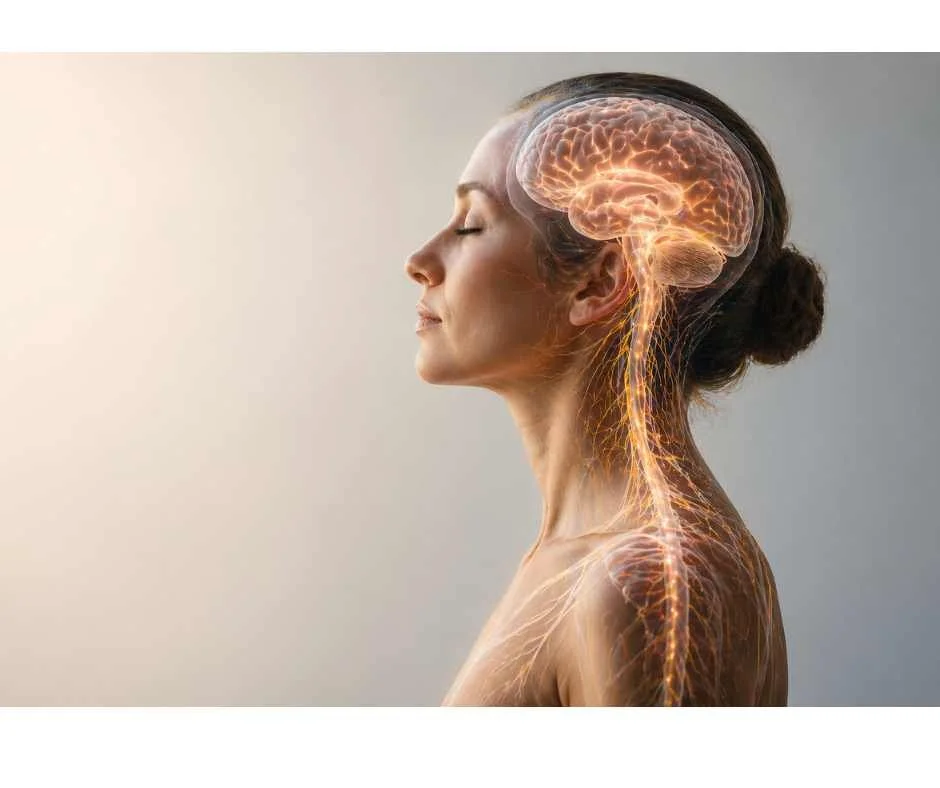
Smoking cessation is often framed as a matter of willpower—but that framing misses the underlying biology driving nicotine dependence. Nicotine directly alters brain chemistry, reshapes reward pathways, and influences stress physiology, creating a pattern of use that becomes physiologically reinforced over time. When someone attempts to quit, the body is not simply breaking a habit—it is recalibrating neurotransmitters, detoxification pathways, and nervous system regulation.
This is why quitting smoking can feel disproportionately difficult, even for highly motivated people. Cravings, irritability, fatigue, anxiety, and cognitive changes are not random—they reflect real, measurable shifts in dopamine signaling, cortisol balance, and metabolic function. Without addressing these underlying mechanisms, many people cycle through repeated attempts, often interpreting relapse as a lack of discipline rather than a mismatch between biology and support.
Many people searching for how to quit smoking naturally are experiencing underlying changes in brain chemistry, stress regulation, and metabolic function—rather than simply a lack of willpower.
A systems-based, root-cause approach reframes smoking cessation entirely. Instead of focusing only on behavior, it examines how nicotine has interacted with the brain, liver, and nervous system—and what those systems need in order to restore balance. When these physiological drivers are supported, the process of quitting becomes more stable, predictable, and sustainable.
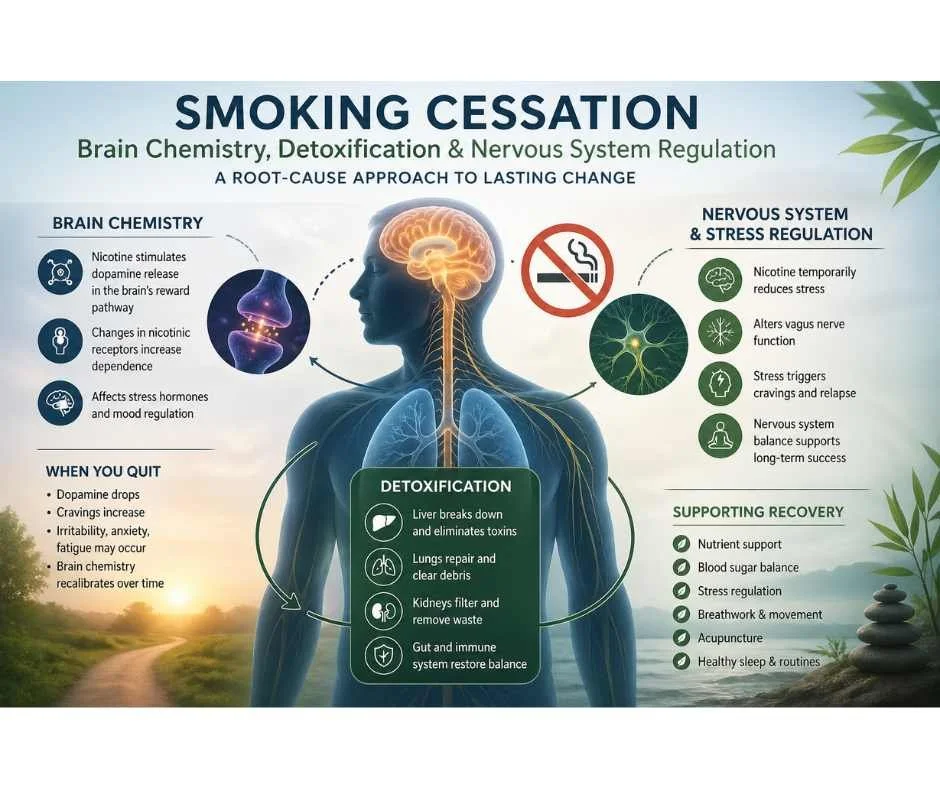
Why Is Quitting Smoking So Difficult?
Quitting smoking is difficult because nicotine changes dopamine signaling, stress hormone balance, and nervous system regulation. When nicotine is removed, the brain must recalibrate these systems, leading to cravings, irritability, and fatigue. Supporting these biological changes improves long-term success.
Why Is Nicotine So Addictive? The Brain Chemistry Behind Smoking
Nicotine addiction is often reduced to a behavioral pattern, but this framing overlooks the biological mechanisms that make smoking both reinforcing and difficult to stop. Nicotine acts directly on the brain’s neurochemistry, creating measurable changes in receptor activity, neurotransmitter release, and stress regulation (1,2). Over time, these changes shift smoking from a choice into a physiologically driven loop.
How Nicotine Affects Dopamine and the Brain’s Reward System
Nicotine rapidly increases dopamine release in the brain’s reward centers, particularly within the mesolimbic pathway (1,3). This creates a short-term sense of focus, calm, or relief. With repeated exposure, the brain adapts by reducing its baseline dopamine sensitivity.
As a result:
Natural rewards become less satisfying
Cravings for nicotine intensify
Motivation and mood become dependent on stimulation
This is not a lack of discipline—it is a form of neuroadaptation (3).
How Nicotine Changes Brain Receptors Over Time
Nicotine binds to nicotinic acetylcholine receptors, which play a role in attention, memory, and cognitive processing (2,4). Over time, these receptors become upregulated—meaning the brain produces more of them in response to repeated nicotine exposure.
This leads to:
Increased reliance on nicotine for focus and clarity
Heightened withdrawal symptoms when nicotine is removed
A persistent cycle of stimulation followed by depletion
How Nicotine Affects Stress Hormones and the Nervous System
Nicotine also interacts with the hypothalamic-pituitary-adrenal (HPA) axis, influencing cortisol and stress signaling (5). Many people experience smoking as calming, but this effect is often a temporary stabilization of an already dysregulated stress response.
Over time:
Baseline stress levels may increase
The body becomes conditioned to use nicotine for regulation
Stress becomes a primary trigger for continued use and relapse
Why Smoking Is Not Just a Habit but a Physiological Dependence
While behavioral habits—such as smoking after meals or during stress—play a role, they are layered on top of deeper physiological drivers. Without addressing the underlying neurochemical and stress-related changes, behavioral strategies alone often fall short.
This distinction is critical. Smoking cessation is not simply about breaking a routine—it is about restoring balance in systems that have adapted to chronic nicotine exposure (1,3,5).
This is why many people trying to quit smoking naturally struggle when underlying brain chemistry is not addressed.
What Happens in Your Brain When You Quit Smoking?
When nicotine is removed, the brain does not simply “reset.” It enters a period of recalibration as neurotransmitters, receptors, and signaling pathways adapt to the absence of constant stimulation. This transition is what drives many of the symptoms associated with withdrawal—and why early cessation can feel both physically and mentally destabilizing (1,2).
Why Dopamine Drops When You Quit Smoking
Nicotine artificially elevates dopamine levels. When it is withdrawn, dopamine activity drops below baseline before the brain has time to restore its natural balance (1,3).
This temporary deficit can lead to:
Reduced motivation and drive
Low mood or emotional flatness
Increased cravings for stimulation (nicotine, sugar, caffeine)
Over time, dopamine signaling begins to normalize—but this process is gradual and varies based on duration of smoking and overall metabolic health (3).
How Your Brain Receptors Reset After Quitting Nicotine
Chronic nicotine exposure leads to an increase in nicotinic acetylcholine receptors. When nicotine is removed, these receptors are left unbound, contributing to withdrawal symptoms such as irritability, restlessness, and difficulty concentrating (2,4).
The brain must then:
Downregulate excess receptors
Restore normal receptor sensitivity
Rebalance neurotransmitter signaling
This adaptation process can take weeks to months depending on individual physiology (4).
Why Stress and Cortisol Increase After Quitting Smoking
Nicotine influences the hypothalamic-pituitary-adrenal (HPA) axis. During cessation, the body may experience fluctuations in cortisol and stress signaling, particularly in the early stages (5).
This can present as:
Heightened anxiety or tension
Sleep disruption
Increased reactivity to stress
Without nicotine acting as a compensatory regulator, underlying stress dysregulation becomes more apparent.
Why You May Feel Anxious, Foggy, or Irritable After Quitting
Changes in neurotransmitter balance and receptor activity affect cognitive performance and emotional regulation. Many people report difficulty focusing, increased irritability, or a sense of mental fog in the early phase of quitting (1,3).
These symptoms reflect:
Temporary disruption in neural signaling
Reduced cholinergic and dopaminergic activity
Ongoing recalibration of brain function
Are These Brain Changes Permanent? What to Expect During Recovery
While these changes can feel intense, they are part of a dynamic adaptation process rather than permanent dysfunction. The brain is actively working to restore equilibrium in the absence of nicotine (1,5).
Understanding this process is critical. Withdrawal symptoms are not a sign that quitting is failing—they are evidence that the brain is undergoing necessary physiological change.
These changes help explain why quitting smoking can feel mentally and emotionally difficult even when motivation is high.
Why Nicotine Withdrawal Feels So Intense
Withdrawal is not a single process—it reflects the simultaneous disruption of multiple physiological systems that had adapted to regular nicotine exposure. When nicotine is removed, the brain, endocrine system, and metabolic pathways must recalibrate in parallel. This overlap is what makes symptoms feel disproportionately intense (6,7).
How Nicotine Withdrawal Affects Brain Chemicals
Nicotine influences several key neurotransmitters, including dopamine, GABA, glutamate, and serotonin. During withdrawal, these systems fall out of balance before they can re-stabilize (6,8).
This can lead to:
Irritability and mood swings
Anxiety or restlessness
Difficulty concentrating
Heightened sensitivity to stress
Dopamine levels decline, while excitatory signaling (such as glutamate activity) may remain elevated, contributing to a sense of internal agitation (8).
Why Blood Sugar Crashes Increase Nicotine Cravings
Nicotine affects insulin sensitivity and glucose metabolism. When it is removed, blood sugar regulation can become less stable, particularly in the early phase of cessation (9).
This may present as:
Sudden cravings (often for sugar or refined carbohydrates)
Energy crashes or fatigue
Increased appetite
These metabolic shifts are often misinterpreted as “lack of control,” when they are in fact part of a broader physiological adjustment.
Why Stress Feels Worse During Nicotine Withdrawal
Nicotine modulates the stress response. During withdrawal, cortisol levels may fluctuate as the body attempts to re-establish baseline regulation (7,10).
This can contribute to:
Heightened emotional reactivity
Sleep disturbances
Increased perception of stress
Without nicotine acting as a compensatory input, underlying stress dysregulation becomes more visible.
How Inflammation and Oxidative Stress Affect Withdrawal
Chronic smoking increases oxidative stress and inflammatory burden. When smoking stops, the body begins repair processes that can temporarily amplify symptoms (11).
This may include:
Fatigue
Headaches
Generalized discomfort
At the same time, antioxidant systems and detoxification pathways are being upregulated to process accumulated toxins.
Why Multiple Systems Make Withdrawal Feel Overwhelming
What makes withdrawal particularly challenging is not any single mechanism, but the convergence of all of them:
Neurotransmitter recalibration
Hormonal fluctuation
Metabolic instability
Inflammatory signaling
These processes occur simultaneously, creating a compounded physiological load. Without targeted support, this overlap increases the likelihood of relapse (6,10).
Understanding withdrawal through this lens shifts the perspective entirely. Symptoms are not random—they reflect coordinated biological changes as the body adapts to the absence of nicotine.
Detoxification After Smoking: What Your Body Is Actually Doing
When smoking stops, the body does not simply “clear nicotine.” It initiates a coordinated detoxification and repair process involving the liver, lungs, kidneys, and immune system. Tobacco smoke contains thousands of chemical compounds, many of which require enzymatic detoxification and can accumulate in tissues over time. This process unfolds over time and can temporarily intensify symptoms as stored toxins are mobilized and eliminated (12,13).
Understanding this phase is critical. Many people interpret these symptoms as a setback, when they are often a sign that the body is actively restoring balance.
How Your Liver Detoxifies Toxins After Quitting Smoking
Cigarette smoke contains thousands of compounds, including polycyclic aromatic hydrocarbons, volatile organic compounds, and heavy metals. These substances are processed primarily through liver detoxification pathways (12,14).
Phase I detoxification (cytochrome P450 activity) transforms toxins into intermediate metabolites
Phase II detoxification conjugates these compounds for safe elimination
During smoking cessation:
Detox pathways may become more active
Intermediate metabolites can temporarily increase
Nutrient demand (glutathione, sulfur compounds, B vitamins) rises
If these pathways are not well-supported, individuals may experience fatigue, headaches, or increased sensitivity during this transition (14).
How Your Lungs Heal After You Quit Smoking
The lungs begin repairing almost immediately after smoking stops. One of the key processes is the regeneration of cilia—microscopic hair-like structures that help clear mucus and debris from the airways (15).
As cilia function improves:
Mucus clearance increases
Coughing may temporarily worsen
Breathing efficiency gradually improves
This phase is often misinterpreted as getting “sicker,” when it is actually a sign of recovery.
What Toxins and Heavy Metals Are Released After Quitting Smoking
Cigarette smoke is a significant source of toxic metals such as cadmium, arsenic, and lead. These compounds can accumulate in tissues over time and may begin to mobilize during cessation (13,16).
This can contribute to:
Fatigue
Brain fog
General malaise
The body must process and eliminate these compounds through hepatic, renal, and biliary pathways.
How Your Body Repairs Oxidative Damage After Smoking
Smoking increases oxidative stress and depletes antioxidant defenses. When smoking stops, the body shifts toward repair—upregulating antioxidant systems and initiating tissue recovery (11,17).
This transition may involve:
Temporary increases in oxidative signaling
Activation of immune and repair pathways
Increased demand for nutrients that support redox balance
Why You May Feel Worse Before You Feel Better After Quitting
As detoxification and repair processes accelerate, symptoms can temporarily intensify. This is not a failure of cessation—it reflects increased physiological activity as the body clears accumulated toxins and restores normal function (12,17).
Supporting detoxification capacity during this phase can help:
Reduce symptom severity
Improve energy and recovery
Stabilize the transition away from nicotine
→ Detoxification & Environmental Medicine
How Smoking Affects the Nervous System and Stress Response
Smoking is often perceived as a habit that relieves stress, but in many cases it functions as a form of nervous system regulation. Nicotine influences autonomic balance, temporarily shifting the body toward a more regulated state—particularly in people with underlying sympathetic dominance or chronic stress dysregulation (18,19). This helps explain why smoking is often used unconsciously as a stress-regulation tool.
When nicotine is removed, this compensatory mechanism disappears, and the underlying imbalance in the nervous system becomes more apparent. This is a key reason why stress is one of the most common triggers for relapse.
Why Smoking Feels Like It Reduces Stress
Nicotine has complex effects on the autonomic nervous system. While it can stimulate certain pathways, many people experience a perceived calming effect due to its impact on neurotransmitters and stress signaling (18).
Over time, this creates a pattern:
Stress increases → nicotine is used → temporary relief occurs
The brain associates nicotine with regulation
Dependence forms around this feedback loop
This is not simply behavioral—it is a conditioned physiological response.
How Breathing and the Vagus Nerve Influence Smoking Behavior
Smoking also alters breathing patterns. The act of inhaling and exhaling smoke can mimic slow, controlled breathing, which influences vagal tone and parasympathetic activation (19,20).
This contributes to:
A temporary sense of calm
Reduced perceived stress
Reinforcement of the smoking behavior
When smoking stops, this regulatory input is removed, and breathing patterns may become more shallow or dysregulated unless consciously retrained.
Why Stress Triggers Smoking Relapse
Without nicotine, individuals may experience:
Increased stress reactivity
Reduced resilience to triggers
Difficulty downregulating after stress
This is not a failure of coping—it reflects an unmasked imbalance in autonomic regulation. If this layer is not addressed, even strong initial progress can be disrupted by stress-driven relapse (18,21).
How to Restore Nervous System Balance After Quitting Smoking
Long-term smoking cessation requires restoring the body’s ability to regulate itself without external input. This involves:
Supporting parasympathetic activation
Improving stress resilience
Re-establishing stable breathing patterns
Reducing baseline sympathetic overactivation
When the nervous system becomes more stable, the perceived need for nicotine as a regulatory tool decreases significantly.
Can Acupuncture Help With Smoking Cessation? A Nervous System Approach
Acupuncture can support smoking cessation by influencing autonomic balance and modulating stress-related signaling pathways. Research suggests acupuncture may influence regulation of the hypothalamic-pituitary-adrenal (HPA) axis, improve parasympathetic activation, and reduce perceived stress—all of which are relevant during nicotine withdrawal (24,25).
From a physiological perspective, this may help:
Reduce stress-triggered cravings
Improve emotional regulation during withdrawal
Support sleep and recovery
Enhance overall nervous system stability
Rather than acting as a standalone solution, acupuncture can be used as part of a broader systems-based approach to support the body during the transition away from nicotine.
→ Acupuncture & Nervous System Regulation
A Root-Cause Approach to Smoking Cessation
A sustainable approach to smoking cessation goes beyond removing nicotine—it addresses the physiological systems that have adapted to its presence. When brain chemistry, metabolic stability, detoxification pathways, and nervous system regulation are supported together, the process of quitting becomes more stable and less dependent on willpower alone (22,23).
This framework shifts the focus from short-term suppression of cravings to long-term restoration of balance.
How to Support Dopamine and Brain Chemistry When Quitting Smoking
Nicotine alters dopamine signaling over time. Supporting the brain’s ability to restore natural dopamine production and receptor sensitivity is a key component of recovery (22).
This includes:
Stabilizing dopamine activity
Supporting GABA balance to reduce overstimulation
Reducing glutamate-driven excitability
As these systems normalize, cravings often decrease in both intensity and frequency.
How to Stabilize Blood Sugar to Reduce Cravings
Blood sugar instability can amplify cravings, irritability, and fatigue during smoking cessation. Stabilizing glucose levels supports both brain function and mood regulation (9,23).
Key considerations include:
Consistent protein intake
Balanced meals to reduce glucose spikes and crashes
Avoiding reliance on sugar or stimulants as substitutes
This reduces one of the most common drivers of relapse.
How to Support Detoxification After Quitting Smoking
As the body clears accumulated toxins from smoking, detoxification pathways may require additional support to function efficiently (12,14).
This involves:
Supporting Phase I and Phase II liver detoxification
Ensuring adequate nutrient availability for conjugation pathways
Promoting elimination through digestion, hydration, and movement
When detox pathways are functioning well, symptom severity during cessation is often reduced.
How to Reduce Stress and Support the Nervous System During Withdrawal
Because nicotine often functions as a regulatory input for the nervous system, restoring internal regulation is essential for long-term success (18,21).
This includes:
Supporting parasympathetic activation
Improving stress resilience
Addressing underlying patterns of dysregulation
As nervous system stability improves, reliance on nicotine for stress relief decreases.
How to Break Smoking Habits Without Relying on Willpower Alone
Behavioral strategies remain important—but they are most effective when layered on top of stable physiology. When brain chemistry, metabolism, and stress systems are supported, behavioral change becomes more sustainable and less effort-driven.
This creates:
Greater consistency in progress
Reduced intensity of cravings
Lower likelihood of relapse
Why a Root-Cause Approach Leads to Long-Term Success
Smoking cessation is not simply about stopping a behavior—it reflects the need to restore underlying physiological systems. When these systems are supported, smoking cessation becomes less about resisting cravings and more about restoring a state where cravings no longer dominate behavior.
→ Functional & Integrative Medicine
How Long Does It Take to Quit Smoking? A Biological Timeline
Nicotine withdrawal and recovery follow a biological timeline, but the exact pace varies depending on factors such as duration of smoking, metabolic health, and nervous system regulation. Understanding this process helps set realistic expectations and reduces the likelihood of relapse during more difficult phases (1,6).
Many people search for a nicotine withdrawal timeline, but recovery varies based on physiology, duration of smoking, and overall metabolic health.
What Happens in the First 24 Hours After Quitting Smoking
Nicotine levels begin to drop rapidly, and the body starts clearing carbon monoxide from the bloodstream. Early withdrawal symptoms may begin, including mild cravings and shifts in mood.
What to Expect in the First Week of Nicotine Withdrawal
Withdrawal symptoms typically intensify during this phase as dopamine levels decline and receptor activity begins to adjust. Cravings, irritability, anxiety, and sleep disruption are common.
How the Brain Recovers in the First Month
Neurotransmitter systems begin to stabilize, and receptor density starts to normalize. While symptoms may still be present, many people notice improved energy, focus, and emotional regulation compared to the first week.
Long-Term Recovery: 3 Months and Beyond
Dopamine signaling, stress response, and metabolic stability continue to improve over time. Cravings often decrease significantly, and the risk of relapse becomes more closely tied to behavioral and environmental triggers rather than physiological dependence.
What Are the Most Common Nicotine Withdrawal Symptoms?
The most common nicotine withdrawal symptoms include:
Cravings
Irritability
Anxiety
Fatigue
Brain fog
Sleep disruption
Increased appetite
These symptoms reflect changes in neurotransmitters, stress hormones, and metabolic regulation as the body adjusts to the absence of nicotine.
A Systems-Based Approach to Smoking Cessation in Denver
At Denver Sports and Holistic Medicine, smoking cessation is approached through a systems-based lens that recognizes the role of stress physiology, habit loops, and nervous system regulation in addiction patterns.
Acupuncture may be combined with broader support strategies when appropriate to improve resilience and long-term outcomes. This approach is particularly relevant for those seeking smoking cessation support in Denver within a physiology-based, systems-oriented framework.
You may request a free 15-minute consultation with Dr. Martina Sturm to review your health concerns and outline appropriate next steps within a root-cause, systems-based framework.
Frequently Asked Questions About Smoking Cessation
Why is nicotine so addictive?
Nicotine is addictive because it rapidly stimulates dopamine release in the brain’s reward system while also affecting acetylcholine receptors involved in attention and cognition. Over time, the brain adapts to this stimulation, making normal dopamine signaling less effective without nicotine and increasing dependence.
How long does nicotine withdrawal last?
Nicotine withdrawal typically begins within hours of stopping and peaks within the first few days. However, brain chemistry, receptor activity, and stress regulation can take weeks to months to fully normalize, which is why cravings and mood changes may persist beyond the initial phase.
What are the most common nicotine withdrawal symptoms?
Common nicotine withdrawal symptoms include irritability, anxiety, cravings, fatigue, difficulty concentrating, sleep disturbances, and increased appetite. These symptoms reflect changes in neurotransmitters, stress hormones, and metabolic regulation as the body adjusts to the absence of nicotine.
Does detox help after quitting smoking?
The body naturally detoxifies after smoking cessation through the liver, lungs, kidneys, and digestive system. Supporting these pathways may help reduce symptom severity and improve recovery, but detoxification is an ongoing physiological process rather than a short-term intervention.
Why is it so hard to quit smoking even when you want to?
Quitting smoking is difficult because nicotine alters dopamine signaling, stress hormone balance, and nervous system regulation. When nicotine is removed, the brain must recalibrate these systems, which can lead to cravings, irritability, and fatigue even when motivation is strong.
Why do people relapse after quitting smoking?
Relapse often occurs when underlying physiological drivers—such as stress dysregulation, dopamine imbalance, or blood sugar instability—are not addressed. Behavioral strategies alone may not be sufficient if these systems remain out of balance, especially during periods of increased stress.
Still Have Questions?
If the topics above reflect ongoing symptoms or unanswered concerns, a brief conversation can help clarify whether a root-cause approach is appropriate.
Resources
New England Journal of Medicine – Nicotine Addiction
Journal of Pharmacology and Experimental Therapeutics – Nicotine and the Brain: Nicotinic Acetylcholine Receptors and Neuroadaptation
Nature Reviews Neuroscience – The Neurobiology of Nicotine Dependence
Cold Spring Harbor Perspectives in Medicine – Nicotinic Acetylcholine Receptors in Addiction
Endocrine Reviews – Nicotine, Stress, and the HPA Axis
American Journal of Psychiatry – Neurobiology of Nicotine Withdrawal
Psychoneuroendocrinology – Nicotine Withdrawal and Stress Hormone Regulation
Neuropharmacology – Glutamate and GABA in Nicotine Dependence
Diabetes Care – Nicotine, Insulin Resistance, and Glucose Metabolism
Journal of Clinical Endocrinology & Metabolism – Cortisol and Nicotine Interaction
Free Radical Biology and Medicine – Oxidative Stress and Smoking
Toxicology Letters – Detoxification Pathways and Tobacco Smoke Exposure
Environmental Health Perspectives – Heavy Metals in Tobacco Smoke
Journal of Hepatology – Phase I and Phase II Detoxification Mechanisms
American Journal of Respiratory and Critical Care Medicine – Lung Repair After Smoking Cessation
International Journal of Environmental Research and Public Health – Cadmium and Arsenic Exposure from Smoking
Antioxidants & Redox Signaling – Oxidative Stress Recovery After Smoking
Neuroscience & Biobehavioral Reviews – Nicotine and the Autonomic Nervous System
Frontiers in Physiology – Vagus Nerve and Breathing Regulation
Journal of Applied Physiology – Respiratory Patterns and Nervous System Regulation
Addiction Biology – Stress-Induced Relapse Mechanisms
Molecular Psychiatry – Dopamine Recovery After Addiction
Nutrients – Nutrition and Neurotransmitter Function
Journal of Alternative and Complementary Medicine – Acupuncture for Smoking Cessation: Mechanisms and Outcomes
Neuroscience Letters – Effects of Acupuncture on the HPA Axis and Stress Regulation