

The Candida-Parasite-Heavy Metal Connection: How Hidden Infections and Toxins Weaken Your Health
A Functional Medicine Framework for Uncovering Biofilms, Detox Blockages, and Chronic Inflammation Driving Fatigue, Brain Fog, and Persistent Symptoms
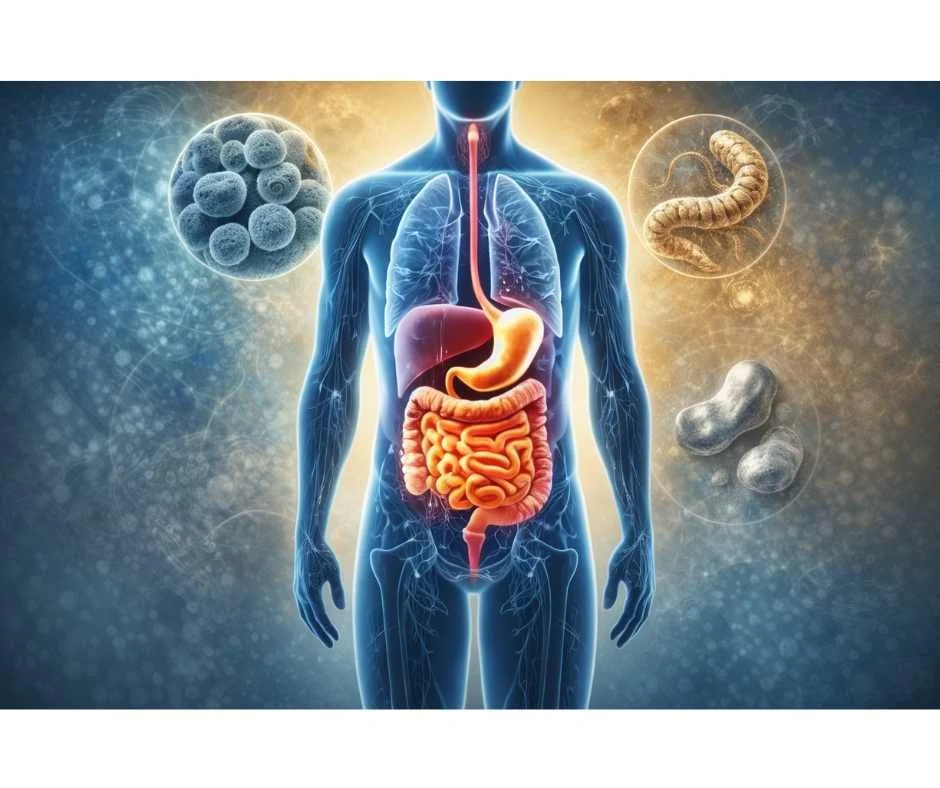
Chronic fatigue, brain fog, digestive distress, stubborn inflammation, and unexplained immune symptoms are often dismissed as stress, aging, or isolated gut issues. Yet for many individuals, these symptoms persist despite clean eating, probiotics, supplements, and even targeted antimicrobial protocols. When progress stalls, it is often because the underlying drivers are not acting in isolation—but as part of a deeper, interconnected system (1).
Within functional medicine, a powerful and frequently overlooked triad is commonly present at the root of chronic illness: Candida overgrowth, parasitic infections, and heavy metal toxicity. These factors rarely exist independently. Instead, they interact through immune suppression, biofilm formation, gut barrier disruption, and impaired detoxification capacity—creating a self-reinforcing cycle that perpetuates inflammation, toxicity, and metabolic stress (2,3).
Candida species have been shown to bind and sequester heavy metals such as mercury, temporarily reducing acute toxicity but promoting persistent fungal overgrowth and immune dysregulation (4). Parasites can harbor metals and microbial toxins, evade immune surveillance, and further compromise gut and immune function (5). Heavy metals, in turn, impair white blood cell activity, disrupt mitochondrial energy production, and weaken the body’s ability to regulate microbial balance and detoxify effectively (6,7).
When these processes occur simultaneously, the result is an internal environment where infections persist, detoxification pathways become overwhelmed, and symptoms become chronic, diffuse, and resistant to standard treatment approaches (8,9).
Understanding how Candida, parasites, and heavy metals interact as a systems-level problem, rather than isolated diagnoses, is a critical step toward restoring gut integrity, immune balance, and long-term physiological resilience. In the sections that follow, we will examine how this toxic triad functions biologically, why conventional approaches often fail to resolve it, and how a functional medicine framework addresses the root causes driving chronic symptoms (10).
Candida, Parasites, and Heavy Metals: A Dangerous Trio
Candida overgrowth, parasitic infections, and heavy metal toxicity rarely occur in isolation in individuals with chronic or treatment-resistant symptoms. Each disrupts foundational regulatory systems—including gut barrier integrity, immune signaling, mitochondrial energy production, and detoxification capacity—but when present together, they create a self-reinforcing biological environment that is far more resistant to recovery than any single factor alone (2,3).
Heavy Metals as the Foundational Disruptor
From a systems perspective, heavy metals such as mercury, lead, aluminum, and cadmium impair immune surveillance and weaken the body’s ability to regulate microbial balance. These metals interfere with white blood cell function, disrupt cellular energy production, and damage intestinal tight junctions, increasing gut permeability and vulnerability to opportunistic organisms (4,5).
Microbial Exploitation of a Compromised Internal Terrain
Candida species and parasitic organisms readily exploit this altered internal environment. Candida can bind and sequester heavy metals within its cellular structure and biofilms, reducing acute metal toxicity while simultaneously promoting fungal persistence, immune dysregulation, and chronic inflammation (6).
Parasites further compound this burden by harboring metals and microbial toxins, evading immune detection, and diverting nutrients required for immune competence and detoxification processes (7).
Biofilms and the Self-Reinforcing Toxic Loop
As these organisms establish long-term residence, biofilm formation becomes a critical survival strategy. Biofilms function as physical and biochemical barriers that shield Candida and parasites from immune attack and therapeutic intervention while trapping heavy metals within their matrix (8,9).
This creates a closed-loop system in which toxins promote infection, infection perpetuates toxicity, and detoxification pathways remain chronically overwhelmed.
Why Isolated Treatments Often Fail
When this triad is present, isolated interventions—such as antifungals without detox support, chelation without gut stabilization, or parasite protocols without immune regulation—often result in partial improvement followed by relapse. Sustainable healing requires recognizing and addressing microbial overgrowth, toxic burden, and immune dysfunction as an integrated system rather than treating each factor independently.
How Candida, Parasites, and Heavy Metals Work Together to Disrupt Your Health
When Candida overgrowth, parasitic infections, and heavy metal toxicity coexist, they drive a cascade of downstream physiological effects that extend well beyond the gut. Their interaction alters immune signaling, damages barrier integrity, impairs detoxification pathways, and increases systemic inflammatory load—explaining why symptoms become widespread, persistent, and difficult to resolve when these factors are addressed independently (10).
Candida Overgrowth: Protector Turned Problem
Candida has a unique and often misunderstood role in the body. Certain Candida species can bind to toxic heavy metals such as mercury, temporarily reducing their immediate bioavailability and limiting acute toxicity. However, this protective mechanism comes at a significant cost (5).
When Candida overgrowth becomes chronic, it contributes to systemic inflammation, immune suppression, gut barrier disruption, and persistent illness. Instead of facilitating detoxification, Candida sequestration of metals promotes fungal persistence and prolongs toxic burden.
Weakened Immune Function: The Perfect Storm for Infection
Candida and parasites both suppress immune defenses through toxin production and immune-evasion strategies. At the same time, heavy metals impair white blood cell activity, disrupt immune signaling pathways, and reduce the body’s ability to mount an effective defense against infection (6,7).
As immune surveillance weakens, opportunistic organisms are able to persist, multiply, and evade clearance. This creates an internal environment where reinfection and chronic immune activation become the norm rather than the exception.
Biofilms: The Invisible Fortress
Candida, parasites, and heavy metals commonly coexist within biofilms—protective microbial matrices that shield pathogens from immune attack and therapeutic interventions. These biofilms act as a physical and biochemical barrier, making infections more resistant to treatment (8,9).
Heavy metals become trapped within the biofilm structure, further stabilizing microbial communities and perpetuating toxicity. As a result, both infection and toxic load persist despite targeted interventions (11).
Toxin Overload: How These Invaders Poison the Body
Candida produces toxic byproducts such as acetaldehyde, parasites generate metabolic waste that burdens detoxification organs, and heavy metals add their own neurotoxic and immunotoxic effects. Together, these exposures overwhelm the liver, gut, lymphatic system, and cellular detox pathways (12).
This cumulative toxic burden commonly manifests as fatigue, brain fog, joint and muscle pain, headaches, skin conditions, and heightened chemical sensitivity (13).
The Heavy Price of Chronic Candida Overgrowth
While Candida may initially serve as a temporary metal-binding mechanism, long-standing overgrowth has wide-ranging consequences for systemic health (14).
Chronic Candida activity contributes to increased intestinal permeability, allowing toxins and immune-reactive particles to enter circulation and promoting autoimmune activation. This process has been associated with conditions such as Hashimoto’s thyroiditis, rheumatoid arthritis, and lupus.
Neurotoxic metabolites produced by Candida impair cognitive function and neurotransmitter balance, contributing to anxiety, depression, and mood instability. Hormonal metabolism is also disrupted, worsening estrogen dominance, adrenal stress, and thyroid dysfunction.
Over time, persistent immune activation and mitochondrial stress contribute to chronic fatigue, widespread pain syndromes, and fibromyalgia-like presentations (15).
Signs You May Have Candida, Parasite, and Heavy Metal Overload
Because Candida overgrowth, parasitic infections, and heavy metal toxicity affect multiple regulatory systems at once, symptoms are often widespread, nonspecific, and resistant to isolated treatments. Many individuals experience a pattern of recurring or seemingly unrelated issues that do not fully resolve with standard gut, hormone, or detox protocols (16).
Common signs associated with this combined burden may include:
Persistent digestive disturbances such as bloating, gas, constipation, diarrhea, or alternating bowel patterns
Chronic fatigue and brain fog that do not improve with rest, sleep optimization, or stimulant support
Strong sugar or carbohydrate cravings, often paired with difficulty losing weight despite dietary changes
Recurrent or unexplained skin issues including rashes, eczema, acne, or fungal infections
Joint and muscle pain without a clear structural or inflammatory diagnosis
Anxiety, mood instability, irritability, or depressive symptoms that fluctuate with stress or illness
Heightened sensitivity to chemicals, fragrances, mold, or heavy metals, often accompanied by headaches or neurological symptoms
Importantly, these symptoms are rarely caused by a single factor. When Candida, parasites, and heavy metals coexist, they can amplify one another’s effects—making symptoms more persistent, more diffuse, and harder to trace to a single root cause without comprehensive evaluation (17).
A Holistic, Systems-Based Approach to Healing
When Candida overgrowth, parasitic infections, and heavy metal toxicity coexist, successful recovery requires more than targeting a single organism or running an isolated detox. Because these factors interact across the gut, immune system, nervous system, and detoxification pathways, treatment must be sequenced, individualized, and system-wide (18).
A functional medicine approach focuses first on restoring the body’s capacity to regulate, eliminate, and defend—rather than aggressively “killing” pathogens in an already overwhelmed system. This reduces symptom flares, minimizes detox reactions, and supports sustainable healing (18).
Step 1: Reduce Microbial and Toxic Burden Safely
Rather than addressing Candida, parasites, or heavy metals in isolation, functional care prioritizes reducing overall burden in a way the body can tolerate. This often involves gentle antimicrobial and detox support introduced gradually, with careful attention to gut integrity and immune resilience.
Aggressive or poorly timed interventions can worsen inflammation, provoke strong die-off reactions, or drive toxins deeper into tissues—a pattern commonly seen when detoxification capacity is exceeded. A systems-based strategy minimizes these risks by supporting elimination pathways alongside microbial reduction.
Step 2: Support Detoxification Pathways
Detoxification depends on coordinated function of the liver, gut, kidneys, lymphatic system, and cellular antioxidant systems. When these pathways are under-resourced or impaired, toxins released from microbes and tissues cannot be cleared efficiently.
Supporting detoxification capacity before and during treatment helps prevent symptom escalation and improves treatment tolerance. This phase is especially important for individuals with chemical sensitivity, neurological symptoms, or prior failed detox attempts.
→ Detoxification & Environmental Medicine
Step 3: Restore Gut Barrier Integrity and Microbial Balance
Long-standing Candida and parasitic activity commonly disrupts the gut lining and beneficial microbial populations. Restoring gut barrier integrity helps reduce immune activation, improve nutrient absorption, and prevent reinfection.
This phase focuses on rebuilding resilience rather than elimination alone—supporting a microbiome environment that naturally resists overgrowth and promotes long-term stability.
→ Gut Health & Digestive Restoration
Step 4: Regulate Immune and Nervous System Function
Chronic infections and toxic exposure place sustained stress on both the immune and nervous systems. Without addressing this regulatory imbalance, symptoms may recur even after microbial and toxic burden is reduced.
Functional medicine integrates immune modulation and nervous system support to improve stress tolerance, inflammatory control, and overall adaptability—key factors in long-term recovery.
→ Acupuncture & Nervous System Regulation
Detox With Your Fork: How Diet Supports Microbial Balance and Detox Capacity
Diet plays a foundational—but supportive—role in addressing Candida overgrowth, parasitic burden, and heavy metal toxicity. Food choices influence gut microbial balance, immune signaling, blood sugar regulation, and the efficiency of detoxification pathways. When dietary inputs continue to fuel inflammation or microbial growth, even well-designed clinical interventions struggle to produce lasting results.
In a systems-based framework, nutrition is not used as a stand-alone cure. Instead, it helps reduce microbial fuel sources, stabilize inflammatory signaling, and supply the nutrients required for detoxification and immune resilience—creating an internal environment that allows deeper healing strategies to work more effectively.
Dietary Patterns That Reduce Microbial Fuel and Support Detox Capacity
Foods that stabilize blood sugar and minimize excess fermentable substrates help reduce the conditions that favor Candida and parasitic persistence. Emphasizing non-starchy vegetables, adequate protein, and healthy fats supports satiety, hormone regulation, and immune stability without overstimulating microbial growth.
Sulfur-containing vegetables and phytonutrient-rich plant foods provide raw materials for detoxification pathways while supporting gut barrier integrity. Adequate dietary fiber also plays a critical role by promoting regular elimination, which is essential for clearing microbial waste products and bound toxins.
Clean, well-sourced protein supports detox enzymes, immune cell turnover, and tissue repair. Choosing foods with lower toxic burden helps prevent adding new stressors to an already overloaded system.
Dietary Factors That Can Prolong Microbial Overgrowth or Toxic Stress
Highly refined carbohydrates, added sugars, and alcohol are among the most common dietary factors that fuel Candida overgrowth and biofilm formation. These inputs can destabilize blood sugar, increase inflammatory signaling, and undermine microbial balance.
Ultra-processed foods and poor-quality fats may further impair gut barrier integrity and detoxification capacity, while inconsistent eating patterns can increase stress hormone output—indirectly weakening immune regulation and detox efficiency.
The goal is not perfection or long-term restriction, but strategic reduction of dietary inputs that perpetuate microbial and toxic stress during active healing phases.
Diet as Terrain Preparation, Not Detox in Isolation
Nutrition alone rarely resolves complex microbial and toxic burden. However, it creates the biological foundation that allows antimicrobial, detoxification, and nervous system–regulating therapies to be better tolerated and more effective.
For individuals with mold-related illness or significant mycotoxin exposure, dietary considerations often require additional specificity beyond what is outlined here. In those cases, a mold-focused nutrition strategy may be appropriate as part of a broader recovery plan.
Used correctly, diet supports resilience, reduces symptom volatility, and improves the body’s capacity to adapt—rather than forcing detoxification before the system is ready.
Break the Cycle: Addressing Candida, Parasites, and Heavy Metal Toxicity at the Root
Chronic fatigue, brain fog, digestive dysfunction, immune instability, and chemical sensitivity are rarely caused by a single factor. When Candida overgrowth, parasitic burden, and heavy metal toxicity interact, they create a layered physiological stress that conventional, symptom-focused approaches often fail to resolve.
Breaking this cycle requires more than isolated treatments. Sustainable improvement depends on understanding how microbial overgrowth, toxic load, immune regulation, and detoxification capacity influence one another—and sequencing care accordingly. Addressing one layer without supporting the others frequently leads to incomplete results or symptom recurrence.
A functional medicine approach prioritizes safety, timing, and individual tolerance. By stabilizing the gut, supporting detoxification pathways, regulating immune and nervous system responses, and reducing microbial burden in a coordinated way, the body is given the opportunity to restore balance rather than remain in a state of chronic compensation.
If you’ve tried multiple approaches without lasting relief, identifying and addressing these hidden contributors can be a turning point. With the right framework and guidance, you can move beyond symptom management and toward meaningful, long-term recovery.
You may request a free 15-minute consultation with Dr. Martina Sturm to review your health concerns and outline appropriate next steps within a root-cause, systems-based framework.
Frequently Asked Questions About Candida, Parasites, and Heavy Metal Toxicity
Can Candida, parasites, and heavy metals really be connected?
Yes. Candida, parasites, and heavy metals often coexist and reinforce one another. Heavy metals impair immune function and gut integrity, creating conditions that allow Candida and parasites to persist. In turn, these organisms can bind, store, or shield toxins through biofilms, making both infection and toxicity harder to resolve when addressed separately.
Why do my symptoms feel so widespread and inconsistent?
Because this combination affects multiple regulatory systems at once, symptoms often span digestion, energy, mood, hormones, immunity, and neurological function. Rather than one isolated issue, the body is responding to layered stress across interconnected systems.
Why don’t standard lab tests always find parasites or Candida?
Many parasites do not stay confined to the gut and may not be detectable on routine stool testing. Candida can also exist beyond the digestive tract or within biofilms. In these cases, symptoms, exposure history, immune patterns, and response to treatment are often as important as direct detection.
What is a detox or die-off reaction, and why does it happen?
Detox or die-off reactions can occur when microbes are reduced faster than the body can safely eliminate the toxins they release. This can temporarily worsen symptoms such as fatigue, headaches, brain fog, or flu-like feelings. Proper sequencing and detox support help minimize these reactions.
Is it safe to treat Candida, parasites, and heavy metals at the same time?
It can be safe when done carefully and in the right order. A systems-based approach focuses first on stabilizing detox pathways, gut integrity, and immune regulation before aggressively reducing microbial or toxic burden.
Can diet alone fix Candida, parasites, or heavy metal toxicity?
Diet is an important foundation, but it is rarely sufficient on its own. Nutrition helps reduce microbial fuel and support detox capacity, but deeper healing often requires addressing gut function, immune balance, detox pathways, and nervous system regulation together.
How long does recovery usually take?
Timelines vary depending on the level of toxic burden, immune resilience, gut health, and prior treatment history. Some people notice improvement within weeks, while more complex cases may require several months of carefully sequenced care.
What is the first step if I suspect this is affecting me?
The first step is identifying patterns in symptoms and exposures, then approaching care in a structured, system-wide way rather than focusing on a single diagnosis or protocol.
Resources
Clinical Microbiology Reviews – Diagnostic Challenges of Intestinal Parasitic Infections
World Health Organization (WHO) – Bench Aids for the Diagnosis of Intestinal Parasites
Centers for Disease Control and Prevention (CDC) – Parasites: Diagnosis and Laboratory Testing
PubMed – Candida Biofilms: Clinical Significance and Therapeutic Challenges
PMC (National Institutes of Health) – Metal Resistance in Candida Biofilms and Implications for Chronic Infection
ScienceDirect – Heavy Metals in Microbial Biofilms: Environmental Persistence and Toxicity
PMC (National Institutes of Health) – Acetaldehyde Toxicity, Oxidative Stress, and Cellular Damage in Candida Overgrowth
PubMed – Heavy Metal Toxicity: Effects on the Liver, Nervous System, and Immune Function
Frontiers in Immunology – Candida albicans, Intestinal Permeability, and Immune Dysregulation
Journal of Autoimmunity – Fungal Dysbiosis, Gut Barrier Dysfunction, and Autoimmune Disease Associations
Clinical Microbiology Reviews – Systemic Effects of Chronic Fungal and Parasitic Infections
Frontiers in Neuroscience – Neuroinflammation, Toxic Load, and Cognitive Symptoms in Chronic Illness
American Journal of Tropical Medicine and Hygiene – Tissue Migration and Immune Evasion in Human Parasitic Infections
Parasitology Research – Intermittent Parasite Shedding and False-Negative Stool Tests
Nutrition Reviews – Diet, Gut Microbiota, and Immune Regulation
Frontiers in Microbiology – Dietary Modulation of Microbial Growth and Biofilm Formation
Functional Medicine Research – Systems Biology Approaches to Complex Chronic Disease
Integrative Medicine: A Clinician’s Journal – Sequencing Detoxification, Immune Regulation, and Microbial Reduction Safely