

Candida, Parasites, and Heavy Metal Toxicity: The Connection Behind Chronic Symptoms
How Candida, Parasites, Biofilms, and Heavy Metals Can Disrupt Gut Health, Immunity, and Detoxification
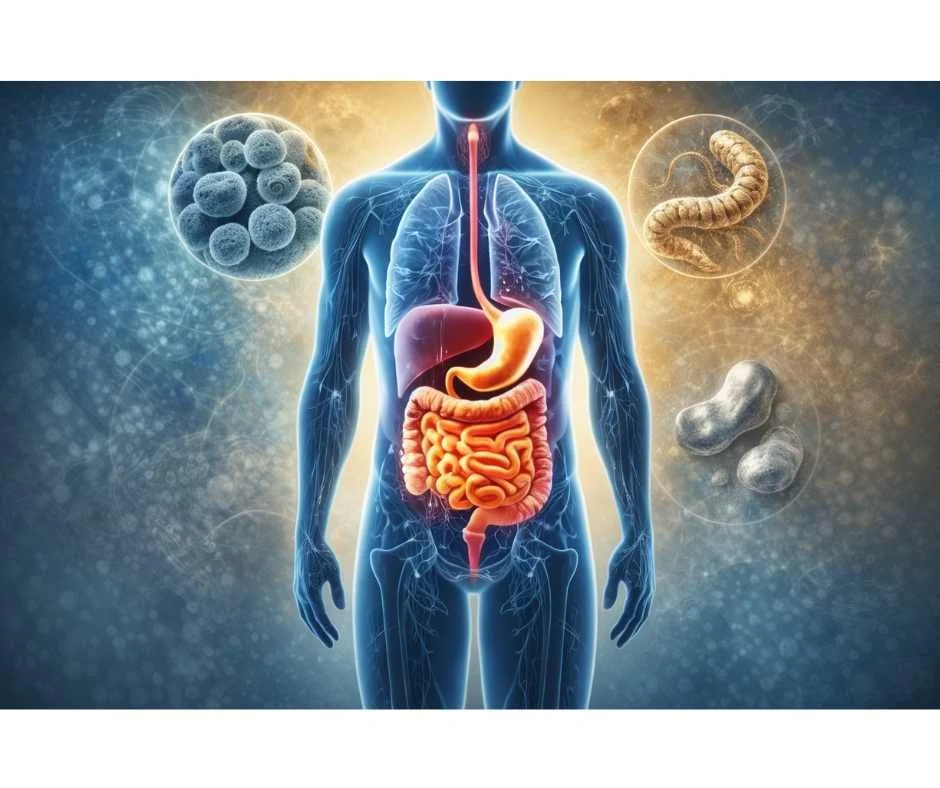
Chronic fatigue, brain fog, digestive problems, persistent inflammation, chemical sensitivity, and unexplained immune symptoms are often treated as separate issues. In more complex cases, the same symptoms may keep returning despite dietary changes, probiotics, supplements, or repeated antimicrobial treatment because several underlying problems are present at the same time.
Those underlying problems can include dysbiosis, mold or mycotoxin exposure, Lyme and other chronic infections, endocrine or metabolic dysfunction, environmental toxicants, and impaired gut or immune function. Another possibility that is still frequently overlooked is parasitic infection—especially when symptoms are chronic, diffuse, or do not resemble an acute gastrointestinal illness.
Parasites are often treated as an unlikely diagnosis in the United States and other developed countries because they are still associated primarily with international travel, poor sanitation, or tropical regions. In reality, exposure can occur through everyday food and water, raw or undercooked fish and meat, fresh produce, imported foods, and contact with animals or pets that may carry parasites without obvious signs of infection (1). Most exposures are not something a person sees or recognizes at the time. Unlike food poisoning, there is often no obvious event that tells someone exactly when or where the exposure occurred. Parasitic infections can therefore remain unrecognized for long periods, particularly when neither the patient nor the clinician considers them early in the evaluation (1).
Testing adds another problem. Sensitivity varies by organism and method, some parasites are shed intermittently, and a single negative stool sample does not necessarily exclude infection (2). Symptoms can also extend well beyond diarrhea or abdominal pain and may involve fatigue, nutrient depletion, sleep disturbance, neurologic symptoms, inflammatory changes, skin symptoms, mood changes, and other multisystem effects.
Candida overgrowth, parasitic infections, and heavy metal toxicity can also occur together. Candida, parasites, and toxic-metal exposure can each place significant stress on the gut, immune system, and cellular metabolism while making one another more difficult to clear. Candida can form persistent biofilms and bind certain metals within those biofilms (3,4). Parasites can evade immune surveillance, alter the intestinal environment, compete for nutrients, and, in some species, accumulate metals (5). Heavy metals can interfere with immune-cell function, mitochondrial energy production, intestinal-barrier integrity, and microbial balance (6,7).
Treating only Candida, only a parasite, or only toxic-metal exposure does not always lead to lasting improvement when several of these factors are active at the same time.
What Is the Connection Between Candida, Parasites, and Heavy Metals?
Candida, parasites, and heavy metals can become closely connected when each begins affecting the body's ability to control infection, inflammation, gut function, and detoxification. Heavy-metal exposure can weaken immune and cellular function, while Candida and parasites add further stress through biofilm formation, immune evasion, nutrient depletion, and disruption of the intestinal environment. When these factors overlap, symptoms are more likely to persist or recur if only one part of the problem has been treated.
Symptoms of Candida, Parasites, and Heavy Metal Toxicity
Candida overgrowth, parasitic infections, and heavy metal toxicity can produce symptoms that overlap considerably. Fatigue, brain fog, bloating, altered bowel movements, headaches, skin problems, inflammatory symptoms, mood changes, and poor tolerance to certain foods or environmental exposures can occur with more than one of these problems.
Some patients also experience strong sugar or carbohydrate cravings, changes in appetite, unexplained weight changes, recurrent fungal symptoms, sleep disruption, or symptoms that seem to fluctuate without an obvious trigger. None of these symptoms identifies a single cause on its own, but the pattern becomes more meaningful when several occur together or continue despite treatment.
Symptoms That Can Raise Suspicion for Parasites
Parasites do not always cause dramatic diarrhea or an obvious gastrointestinal infection, and they are not always confined to the intestines. Depending on the organism, parasites or their larval stages can migrate into tissues or affect the liver, lungs, muscles, nervous system, skin, blood, or other organs. Symptoms can therefore be intermittent, multisystem, and very different from the classic picture of an intestinal infection.
Many patients with chronic parasite-related symptoms have already been dismissed—or even medically gaslit—because their symptoms were considered too vague, attributed to stress or anxiety, or discounted after limited testing came back negative. Recurrent anal itching, unusual abdominal sensations, disrupted sleep, cravings, mood changes, nutrient deficiencies, and other patterns deserve to be heard and evaluated rather than written off simply because they do not fit the classic picture of an acute parasitic infection.
In functional and integrative care, these observations are considered alongside exposure history, symptom timing, gastrointestinal function, nutritional changes, testing limitations, and the rest of the clinical picture.
Clues that can raise suspicion include:
Anal itching, particularly at night. This is especially characteristic of pinworm because female worms migrate to the perianal area at night to deposit eggs (8).
Restless or disrupted sleep, particularly when it occurs alongside nighttime itching or abdominal symptoms (8).
Unusual sensations of movement, fluttering, or activity in the abdomen. Patients sometimes describe this very specifically even when routine gastrointestinal testing has been unrevealing.
Changes in appetite or unusual food cravings. Some patients notice cravings that are distinctly different from their usual eating patterns. Strong sugar or carbohydrate cravings can also occur with Candida overgrowth and broader gut dysbiosis, so the overall pattern matters.
Mood changes, irritability, anxiety, or changes in emotional regulation. Parasitic infections can influence nutritional status, inflammatory signaling, the gut microbiome, and in some infections the gut–brain and immune–brain pathways, all of which can affect cognition, sleep, and mood (9).
Jaw clenching or teeth grinding during sleep. This is a pattern reported in clinical practice and may be worth considering when it occurs alongside other parasite-associated symptoms.
Unexplained nutrient deficiencies, particularly iron or other micronutrient abnormalities that persist despite adequate intake or supplementation. Parasites can impair digestion and absorption, compete for nutrients, or contribute to intestinal losses depending on the organism.
Recurring abdominal pain, nausea, bloating, constipation, diarrhea, or alternating bowel patterns without a consistent dietary explanation.
Vaginal or vulvar irritation, which can occur when pinworms migrate from the perianal region into the genital tract (8).
Persistent symptoms despite negative parasite testing. Intermittent shedding and differences in test sensitivity mean that negative testing does not always exclude infection (2).
Some patients also describe increased abdominal activity, itching, sleep disruption, cravings, mood changes, or other symptoms around the full moon. This pattern is frequently reported in functional and integrative practice but has received little meaningful study in conventional parasitology. A recurring symptom pattern should not be dismissed simply because conventional research has not fully investigated it. When those changes appear alongside other signs suggestive of parasitic infection, they deserve to be documented and considered as part of the broader clinical picture.
Why Can Parasite Testing Miss Chronic Infection?
Parasite testing depends heavily on the organism, where it is in the body, the stage of infection, the sample collected, and the method the laboratory uses. A stool test can only detect what is actually being shed into the stool and what that specific test is designed to identify.
Traditional stool microscopy requires the laboratory to actually see an organism, cyst, egg, or larva. Because some parasites are shed intermittently, a single sample can be negative even when infection is present (2). Testing samples collected on different days can improve detection.
Antigen testing looks for specific parasite proteins, while PCR looks for parasite DNA. These methods can improve detection for certain organisms, but panels vary widely and no single test includes every parasite. A negative result may simply mean that the organisms included on that panel were not detected in that particular sample.
Not all parasites remain confined to the intestines. Depending on the organism and stage of infection, parasites or their larval forms can migrate through or reside in the liver, lungs, muscles, blood, skin, nervous system, or other tissues. In those cases, stool testing may provide little or no useful information, and diagnosis may require blood testing, serology, imaging, or organism-specific testing.
Pinworm is a simple example of why the correct test matters. Its eggs are deposited around the anus rather than consistently shed into the stool, so a perianal tape test is generally more useful than a standard stool sample (8).
Low parasite burden, recent antimicrobial or antiparasitic treatment, specimen timing, and laboratory technique can also influence what is detected. When the history and symptom pattern continue to raise concern, one negative stool test should not automatically end the investigation.
How Parasites, Candida, and Heavy Metals Can Reinforce One Another
Parasites can do much more than irritate the digestive tract. Depending on the organism, they can alter the intestinal environment, evade immune surveillance, compete for nutrients, affect the gut microbiome, and keep the immune system in a state of ongoing activation. Those changes can make it easier for other problems, including Candida overgrowth and toxic-metal burden, to become harder to resolve.
How Parasites Disrupt the Gut and Immune System
Many parasites survive by interfering with the normal immune response rather than triggering a short-lived infection that is quickly cleared. They can alter mucosal immunity, affect mucus production, disrupt the intestinal barrier, and change the signaling between the gut microbiome and immune system.
Over time, this can create a gut environment that is less stable and more vulnerable to dysbiosis, inflammation, and opportunistic overgrowth. It can also make treatment less straightforward because the problem is no longer limited to the presence of the parasite itself.
How Parasites Contribute to Nutrient Depletion and Mitochondrial Stress
Parasites can compete for nutrients, impair absorption, increase intestinal losses, or raise nutritional demands through ongoing immune activation. Iron, B vitamins, protein, and other micronutrients can become depleted depending on the organism and the severity or duration of infection.
That matters because immune function, tissue repair, detoxification, and mitochondrial energy production all depend on adequate nutrient status. When deficiencies persist, fatigue, weakness, brain fog, poor recovery, and reduced tolerance to treatment can become part of the larger clinical picture.
How Parasites, Candida, and Heavy Metals Can Reinforce One Another
Parasites can affect far more than digestion. Depending on the organism, they can alter the intestinal lining, interfere with immune signaling, compete for nutrients, and disrupt the gut microbiome. Those changes can make Candida overgrowth easier to sustain and can reduce the body’s ability to handle toxic-metal exposure effectively (9,10).
How Parasites Disrupt the Gut and Immune System
Many parasites persist by modifying the host immune response rather than being quickly eliminated. They can affect mucosal immunity, mucus production, intestinal permeability, and communication between the gut microbiome and the immune system (9).
As those changes accumulate, dysbiosis and inflammation can become more persistent. Candida and other opportunistic organisms may then be harder to control, while the immune system remains occupied with an infection that has not been fully cleared.
How Parasites Contribute to Nutrient Depletion and Mitochondrial Stress
Parasites can compete for nutrients, impair absorption, increase intestinal losses, and raise nutritional demands through chronic immune activation. Depending on the organism, iron, B vitamins, protein, and other micronutrients can become depleted (10).
Those deficiencies can affect energy production, immune function, tissue repair, and detoxification. Fatigue, weakness, brain fog, poor recovery, and reduced tolerance to treatment may follow when nutrient depletion continues over time.
How Parasites Can Shift the Gut Environment in Favor of Candida Overgrowth
Parasitic infections can change the gut in ways that make Candida harder to control. Altered mucus production, intestinal-barrier disruption, changes in microbial balance, and persistent immune activation can all affect how well the body keeps Candida in its normal commensal state (9).
Nutrient depletion can add to the problem. When iron, B vitamins, protein, and other nutrients are being lost, poorly absorbed, or used more rapidly during chronic infection, immune defenses and tissue repair can suffer (10). That can leave the intestinal lining more vulnerable and reduce the body’s ability to keep opportunistic organisms in check.
Candida can then add its own burden through biofilm formation and ongoing immune stimulation (3). Instead of two separate problems, the parasite and fungal overgrowth can begin to sustain the same pattern of dysbiosis, barrier dysfunction, and recurrent symptoms.
How Candida Biofilms Can Add Another Layer of Persistence
Candida can form biofilms that help it adhere to tissue, resist immune clearance, and become less responsive to antifungal treatment (3). These biofilms are made up of fungal cells embedded within a protective extracellular matrix, which can make persistent overgrowth much harder to clear than free-floating Candida alone.
Biofilms can also bind and sequester certain metals within that matrix (4). In a patient who already has toxic-metal exposure, this creates another way fungal overgrowth and metal burden can overlap rather than behaving as completely separate problems.
When parasitic infection is present at the same time, the gut may already be dealing with inflammation, altered microbial balance, nutrient depletion, and impaired barrier function. Candida biofilms can add another layer of persistence, making the overall pattern more resistant to treatment and more likely to recur if the underlying gut and immune dysfunction are not addressed.
How Heavy Metal Burden Can Make Parasite and Candida Problems Harder to Resolve
Heavy metals can interfere with immune-cell function, mitochondrial energy production, antioxidant defenses, and the integrity of the intestinal barrier (6,7). When those systems are already under strain from parasitic infection or Candida overgrowth, toxic-metal exposure can make the overall picture more difficult to clear.
Heavy-metal exposure can also interact directly with both parasites and Candida. Some parasitic species are capable of accumulating substantial concentrations of metals, while Candida biofilms can bind and sequester certain metals within their extracellular matrix (4,5). In patients where all three are present, the relationship is not limited to shared inflammation or immune stress—the organisms themselves may also be interacting with the toxic burden.
Candida can become more persistent in a metal-stressed environment, particularly when immune defenses, gut integrity, and microbial balance are already compromised. At the same time, parasites may be contributing to nutrient depletion and immune dysregulation.
The result can be a tightly connected pattern in which infection, fungal overgrowth, and toxic-metal burden make one another harder to resolve. This overlap is one reason treatment can stall when only the parasite, only the Candida, or only the toxic-metal burden is addressed.
Why Treatment Order Matters With Parasites, Candida, and Heavy Metals
When parasites, Candida overgrowth, and heavy-metal burden are present together, treating everything aggressively at once can be difficult for the body to tolerate. Each intervention can increase metabolic demand, inflammatory signaling, microbial debris, or mobilization of compounds that still need to be processed and eliminated.
Bowel function, hydration, nutrient status, liver and kidney function, gut-barrier integrity, and overall treatment tolerance all influence what can be addressed safely and effectively. Constipation, poor nutrient absorption, significant inflammation, or impaired elimination can make an otherwise appropriate protocol much harder to tolerate.
Parasites often need to be addressed directly rather than assuming that gut repair or Candida treatment will remove them. At the same time, significant fungal overgrowth, biofilms, or toxic-metal burden may influence how well treatment works and how easily symptoms return.
The order therefore depends on what is driving the greatest burden, how well the patient is eliminating, and how much physiologic stress they can tolerate at one time. In more complex cases, treatment may need to move in stages rather than trying to eradicate organisms and mobilize toxic metals simultaneously.
How Functional Medicine Treats Parasites, Candida, and Heavy Metal Toxicity
When parasites, Candida overgrowth, and heavy metal toxicity overlap, treatment usually needs to be individualized around the dominant problems rather than applied as a fixed protocol. The order can change depending on bowel function, nutrient depletion, inflammatory load, the severity and location of infection, prior treatment history, toxic exposures, and how well the patient tolerates intervention.
Parasite treatment generally needs to be direct when infection is identified or strongly suspected. Depending on the organism, burden, location, and clinical presentation, care may include herbal, nutraceutical, or prescription antiparasitic treatment. Constipation, poor digestion, impaired absorption, and nutrient deficiencies often need attention at the same time because they can interfere with recovery.
Candida overgrowth is addressed when fungal burden is clearly contributing to the picture, particularly when biofilms, recurrent fungal symptoms, or significant dysbiosis are present. Treatment may include antifungal strategies, biofilm support, microbiome restoration, and dietary changes rather than focusing on eradication alone.
Heavy metal detoxification requires different timing. Ongoing exposure should be identified first, and more active metal-removal strategies are generally better tolerated once bowel function, nutritional status, liver and kidney function, and overall physiologic reserve are adequate.
→ Detoxification & Environmental Medicine
Gut repair, microbial balance, immune regulation, mitochondrial support, and nutrient repletion are woven throughout treatment rather than saved for the end. The goal is to reduce the factors that are allowing parasites, Candida overgrowth, and toxic-metal burden to persist while improving the patient's ability to tolerate and respond to treatment.
What Should You Eat When Addressing Parasites, Candida, or Heavy Metal Toxicity?
Nutrition is an important part of treatment, but food alone will not eradicate a parasitic infection, resolve significant Candida overgrowth, or remove heavy metals from the body. The diet should support immune function, tissue repair, regular elimination, stable blood sugar, and the nutrient demands created by chronic infection and detoxification (10,11).
Adequate protein becomes especially important when infection has contributed to poor intake, impaired absorption, or nutrient depletion. Amino acids are needed for immune-cell turnover, antioxidant production, liver detoxification pathways, and repair of the intestinal lining (10).
Refined carbohydrates and added sugars can drive large glucose and insulin swings and may also make Candida overgrowth more difficult to control. Strong sugar or carbohydrate cravings are common in patients with fungal overgrowth and dysbiosis and are also reported with parasitic infections. Cravings are useful clinical information, particularly when they appear alongside digestive symptoms, appetite changes, sleep disruption, or other signs of infection.
Fiber and plant foods can support bowel regularity and microbial diversity, but the amount and type need to match the condition of the gut (11). Significant bloating, impaired motility, intestinal inflammation, or dysbiosis can make some fibers difficult to tolerate until the underlying problem improves. A rigid high-fiber or restrictive “cleanse” diet is not automatically appropriate simply because Candida or parasites are suspected.
Food and water are also potential sources of continued parasite and toxicant exposure. Clean water, properly washed produce, appropriate handling and cooking of meat and fish, and attention to the source and quality of foods help reduce additional exposure while treatment is underway (1,7). At the same time, overly restrictive diets can worsen protein, mineral, and micronutrient deficiencies in patients who are already depleted (10).
Nutrition should support treatment by maintaining adequate protein and micronutrient intake, promoting regular elimination, and reducing additional dietary or environmental exposures that can complicate recovery.
Breaking the Cycle of Parasites, Candida, and Heavy Metal Toxicity
Parasites, Candida overgrowth, and heavy metal toxicity can overlap in patients with chronic digestive, immune, neurologic, and inflammatory symptoms. When they affect the same patient, they can place added stress on gut function, immune regulation, nutrient status, and cellular energy while making one another harder to clear.
Parasites deserve particular attention because they are still frequently overlooked in the United States, symptoms can extend well beyond the digestive tract, and routine testing does not detect every infection. When parasite-related symptoms occur alongside recurrent Candida, nutrient depletion, biofilm formation, or toxic-metal exposure, looking at the interaction between these problems can reveal why symptoms persist despite treatment.
Long-term improvement depends on identifying which factors are actually present, addressing the greatest burden first, reducing ongoing exposures, and restoring the gut, nutrient status, immune function, and metabolic capacity affected along the way.
Frequently Asked Questions About Parasites, Candida, and Heavy Metal Toxicity
Can parasites cause chronic symptoms even without severe digestive problems?
Yes. Parasites do not always cause dramatic diarrhea or acute gastrointestinal illness. Depending on the organism, symptoms may include fatigue, brain fog, sleep disruption, itching, nutrient deficiencies, mood changes, skin symptoms, abdominal discomfort, altered bowel movements, or other multisystem complaints. Some parasites also migrate beyond the intestines, which can produce symptoms that do not initially appear gastrointestinal.
Can parasites live in places other than the intestines?
Yes. Some parasites remain primarily in the gastrointestinal tract, while others can migrate through or reside in the liver, lungs, blood, lymphatic system, muscles, skin, nervous system, eyes, or other tissues. Certain parasites also move through different tissues during different stages of their life cycle. This is one reason parasitic infection can produce symptoms outside the digestive system and why stool testing alone does not detect every infection.
Can you get parasites without traveling outside the United States?
Yes. International travel is only one possible source of exposure. Parasites can also be acquired through food or water, raw or undercooked fish and meat, fresh produce, imported foods, and contact with animals or pets. Exposure is often invisible, and many people never know exactly when or where it occurred.
Can parasite testing be negative even when an infection is present?
Yes. Some parasites are shed intermittently, so they may not be present in every stool sample. Testing methods also differ in what they detect, and no single stool panel includes every parasite. Depending on the organism and where it is located in the body, evaluation may require repeated stool samples, microscopy, antigen testing, PCR, blood testing, serology, imaging, or organism-specific testing.
What symptoms can raise suspicion for parasites?
Possible clues include nighttime anal itching, unusual sensations of movement or fluttering in the abdomen, disturbed sleep, changes in appetite or unusual cravings, unexplained nutrient deficiencies, recurring abdominal pain or bloating, altered bowel movements, mood changes, skin symptoms, vaginal or vulvar irritation, and persistent symptoms despite negative testing. Jaw clenching or teeth grinding and symptom changes around the full moon are also patterns reported in functional and integrative practice, particularly when they occur alongside other parasite-associated symptoms.
Can parasites and Candida occur at the same time?
Yes. Parasitic infection can alter the gut microbiome, intestinal barrier, nutrient status, and immune response in ways that may make Candida overgrowth more difficult to control. Candida can then add further immune stress and biofilm formation. When both are present, the gut environment may remain dysregulated even if only one organism is being treated.
What is the connection between parasites and heavy metals?
Some parasite species can accumulate metals, while heavy-metal exposure can interfere with immune function, mitochondrial energy production, antioxidant defenses, and intestinal-barrier integrity. Candida biofilms can also bind certain metals. When parasites, Candida, and heavy-metal burden occur together, they can place stress on many of the same systems and make one another more difficult to clear.
Why do parasite or Candida symptoms sometimes return after treatment?
Symptoms can return when more than one factor is contributing to the pr
Still Have Questions?
If the topics above reflect ongoing symptoms or unanswered concerns, a brief conversation can help clarify whether a root-cause approach is appropriate.
Resources
Centers for Disease Control and Prevention - What Causes Parasitic Diseases
PLOS Neglected Tropical Diseases - Disentangling the Effects of Intermittent Faecal Shedding and Imperfect Test Sensitivity on the Microscopy-Based Detection of Gut Parasites in Stool Samples
FEMS Microbiology Reviews - Role of the Extracellular Matrix in Candida Biofilm Antifungal Resistance
FEMS Microbiology Ecology - Metal Resistance in Candida Biofilms
Parasitology - Accumulation of Heavy Metals by Intestinal Helminths in Fish: An Overview and Perspective
Metabolites - Unravelling Mechanisms of Oxinflammation Induced by Heavy Metals
Science of the Total Environment - Gut Microbiota: A Target for Heavy Metal Toxicity and a Probiotic Protective Strategy
Current Pediatric Reviews - Pinworm (Enterobius Vermicularis) Infestation: An Updated Review
Journal of Neuroinflammation - From Parasite-Induced Immune Activation to Neuroinflammation and Behavioral Dysfunction: Convergent Mechanisms Across Protozoa and Helminths: A Review
Medical Journal of Malaysia - Intestinal Parasitic Infections and Micronutrient Deficiency: A Review
International Journal of Molecular Sciences - A Comprehensive Review of the Triangular Relationship Among Diet–Gut Microbiota–Inflammation