

Why Weight Loss Becomes Resistant in Hypothyroidism
Metabolic Adaptations That Slow Fat Loss Despite Diet and Exercise
For many people with hypothyroidism, weight gain is not the most frustrating issue—weight loss resistance is. Calories are reduced, exercise is consistent, and lifestyle changes are made, yet the scale refuses to move. In some cases, weight gain continues despite doing “everything right.”
This pattern is not a failure of discipline or effort. It reflects a fundamental shift in how the body regulates energy when thyroid signaling is impaired (1).
Thyroid hormones play a central role in determining how efficiently cells generate energy, how readily fat is mobilized, and how the body adapts to caloric restriction (2). When thyroid function is disrupted, the body may enter a metabolically protective state—one designed to conserve energy rather than release it. In this state, traditional weight loss strategies often become ineffective or even counterproductive (3).
This helps explain why hypothyroidism is so commonly associated with stubborn weight, slowed fat loss, and rapid metabolic adaptation. The issue is not simply “burning fewer calories,” but a coordinated physiological response involving metabolism, hormonal signaling, and stress regulation that actively resists weight loss (4).
Understanding why weight loss becomes resistant in hypothyroidism requires shifting the focus away from diet plans and exercise prescriptions and toward the biological mechanisms that govern metabolic output.
How Hypothyroidism Alters Metabolic Rate and Energy Expenditure
Basal metabolic rate (BMR) reflects the amount of energy the body uses at rest to maintain essential functions such as breathing, circulation, and cellular repair. Thyroid hormones are one of the primary regulators of BMR, influencing how much energy cells produce even in the absence of physical activity (5).
When thyroid hormone activity is reduced, metabolic rate declines—not as a temporary slowdown, but as a coordinated physiological adjustment.
Reduced Cellular Energy Production
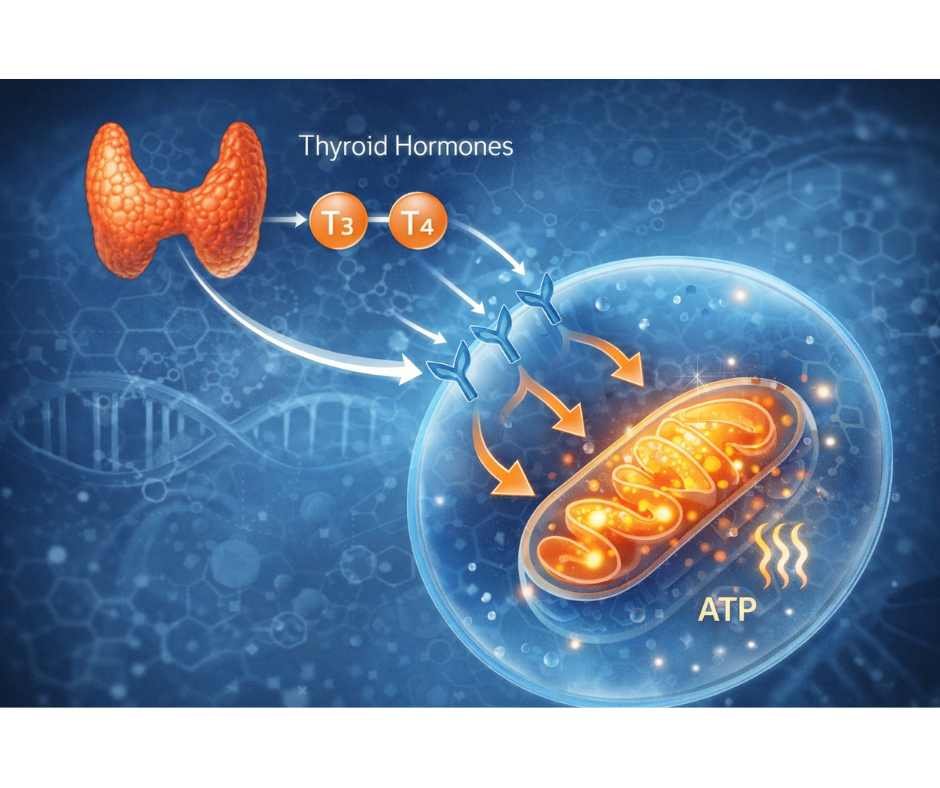
At the cellular level, thyroid hormones regulate mitochondrial activity, which determines how efficiently nutrients are converted into usable energy. In hypothyroidism, reduced thyroid signaling leads to:
Decreased mitochondrial energy output
Lower resting energy expenditure
Reduced heat production (thermogenesis)
These changes lower daily calorie requirements, meaning the body burns fewer calories at baseline than expected for body size or activity level (6). As a result, calorie intake that might support weight maintenance in a euthyroid state can promote weight gain—or prevent weight loss—when thyroid signaling is impaired.
Adaptive Energy Conservation
Importantly, the metabolic slowdown seen in hypothyroidism is not simply a defect; it is an adaptive response. When thyroid hormone signaling is low, the body interprets this state as one of reduced energy availability and shifts toward conservation (7).
This adaptive response may include:
Slower turnover of fat stores
Reduced spontaneous physical activity
Greater efficiency in energy utilization
From a survival standpoint, this conserves fuel. From a weight loss perspective, it creates resistance.
Why Exercise Alone Often Fails to Correct the Slowdown
Physical activity can increase energy expenditure transiently, but it does not fully override thyroid-mediated metabolic regulation. In hypothyroidism, the body often compensates for increased activity by:
Reducing resting energy expenditure further
Increasing hunger signals
Lowering non-exercise activity levels
This compensation helps explain why individuals with hypothyroidism may exercise consistently yet see minimal changes in weight or body composition (8). In this context, weight loss resistance reflects metabolic adaptation, not lack of effort.
Adaptive Thermogenesis and Resistance to Calorie Restriction
Adaptive thermogenesis refers to the body’s ability to adjust energy expenditure in response to perceived energy scarcity. In hypothyroidism, this response is often exaggerated, making calorie restriction far less effective than expected (9).
Rather than responding to reduced calorie intake with steady fat loss, the body may actively suppress energy output to protect against further weight loss.
How the Body Interprets Caloric Deficit in Hypothyroidism
When calorie intake decreases, the body relies heavily on thyroid hormone signaling to assess whether reduced energy availability represents a manageable adjustment or a physiological threat. In a well-regulated thyroid state, this signaling helps distinguish intentional calorie reduction from true energy scarcity.
With impaired thyroid signaling, however, this assessment becomes skewed. Calorie restriction is more likely to be interpreted as a stressor, signaling potential energy instability rather than a controlled metabolic intervention (10).
In response, the body initiates protective adaptations designed to conserve fuel, which may include:
Further suppression of resting metabolic rate
Reductions in thermogenesis beyond what calorie reduction alone would predict
Increased efficiency in energy utilization
These adjustments narrow the metabolic margin needed to access stored fat. As fewer calories are burned at rest, even modest deficits may no longer translate into fat loss.
In this context, weight loss resistance reflects a regulatory shift toward energy preservation rather than an inadequate calorie deficit.
Why Dieting Often Backfires
In hypothyroidism, aggressive or repeated calorie restriction can intensify adaptive thermogenesis—the body’s built-in response to perceived energy threat. Rather than promoting continued fat loss, this response shifts metabolism toward protection and conservation.
As restriction persists, the body may respond by:
Slowing metabolic rate despite further calorie reduction
Increasing fatigue and cold sensitivity as heat production declines
Amplifying hunger signals and food preoccupation
These changes reflect a coordinated hormonal and metabolic adjustment designed to preserve energy, not a failure of willpower or compliance.
Over time, repeated cycles of restriction reinforce this conservation pattern, making subsequent weight loss attempts progressively more difficult and increasing the likelihood of weight regain once restriction eases (11).
This helps explain a common and frustrating experience among individuals with hypothyroidism: the harder they diet, the more resistant their metabolism becomes to further weight loss.
Metabolic Protection Versus Fat Loss
From a physiological perspective, adaptive thermogenesis is protective. It prevents excessive energy loss during times of perceived scarcity. However, when thyroid signaling remains impaired, this protection can persist even in environments where energy is abundant (12).
As a result, weight loss resistance becomes a stable metabolic pattern rather than a temporary response to dieting.
Mitochondrial Efficiency, Fat Oxidation, and Thyroid Signaling
Weight loss depends not only on calorie balance, but on how effectively cells convert stored fuel into usable energy. This process occurs primarily within the mitochondria—the cellular structures responsible for energy production. Thyroid hormones play a central role in regulating mitochondrial number, activity, and efficiency, thereby influencing how readily the body can access and utilize stored fat for fuel (13).
When thyroid signaling is intact, mitochondria respond flexibly to energy demands, increasing fat oxidation during periods of increased activity or reduced intake. This adaptability supports efficient energy use and metabolic balance.
When thyroid signaling is impaired, however, mitochondrial efficiency declines. Energy production becomes less responsive, fat oxidation slows, and cells shift toward conserving fuel rather than releasing it. As a result, fat stores may remain relatively inaccessible even when calorie intake is reduced or physical activity increases.
This mitochondrial-level inefficiency helps explain why weight loss resistance in hypothyroidism persists despite consistent effort. The limitation is not simply how much energy is consumed or expended, but whether the cellular machinery required to burn fat is functioning optimally.
Thyroid Hormones and Mitochondrial Output
Thyroid hormones influence both the number and activity of mitochondria, as well as the enzymes involved in energy production. Adequate thyroid signaling supports:
Efficient conversion of fatty acids into energy
Balanced use of fat versus carbohydrate fuel
Heat production associated with metabolic activity
In hypothyroidism, reduced thyroid hormone activity leads to diminished mitochondrial output, meaning fewer calories are burned even when energy demands increase (14).
Impaired Fat Oxidation in Hypothyroidism
Fat oxidation refers to the body’s ability to mobilize stored fat and convert it into usable energy. This process depends on coordinated hormonal signaling, mitochondrial function, and enzyme activity—systems that are strongly influenced by thyroid hormones.
In hypothyroidism, fat oxidation is often impaired due to several overlapping mechanisms, including:
Reduced activation of metabolic pathways responsible for fat breakdown
Slower transport of fatty acids into mitochondria, where fat is converted into energy
A systemic shift toward energy conservation rather than fuel release
Together, these changes limit the body’s ability to access fat stores efficiently. Even when calorie intake is reduced or physical activity increases, fat may remain preferentially stored rather than oxidized for energy (15).
This impairment helps explain why individuals with hypothyroidism often experience minimal changes in body composition despite sustained efforts. The issue is not a lack of effort, but a reduced capacity at the cellular level to utilize fat as a fuel source.
Preference for Energy Conservation Over Energy Release
When mitochondrial efficiency is reduced, the body tends to favor fuel storage over fuel release. This shift reflects an underlying metabolic signal that energy availability is limited or unreliable, prompting the body to prioritize preservation rather than expenditure (16).
In hypothyroidism, impaired thyroid signaling reinforces this conservation bias. Cells become less responsive to signals that normally promote fat mobilization, and energy-producing pathways are downregulated in favor of maintaining baseline function. As a result, stored fuel is protected rather than accessed, even when external conditions would otherwise support fat loss.
In this state, increasing exercise intensity or further reducing calories does not reliably improve outcomes. Instead, the body may respond by:
Increasing fatigue and reducing exercise tolerance
Slowing recovery between workouts
Further reinforcing metabolic resistance
These responses are not signs of inadequate effort. They reflect a protective adaptation designed to prevent energy depletion when cellular energy production is constrained.
Weight loss resistance in hypothyroidism is therefore not simply a matter of “burning more calories,” but of restoring the metabolic conditions required for efficient energy production and fuel release. Until those conditions improve, the body will continue to favor conservation over fat loss.
Insulin Sensitivity, Glucose Handling, and Thyroid-Related Weight Gain
Thyroid hormones play an important role in regulating how the body processes glucose and responds to insulin. They influence glucose uptake into cells, insulin signaling efficiency, and how readily energy is directed toward use versus storage. When thyroid signaling is impaired, insulin sensitivity often declines, altering how fuel is handled at the tissue level (17).
This shift does not always manifest as overt diabetes or abnormal blood sugar readings. More commonly, it presents as subtle metabolic inefficiency, in which insulin levels remain higher for longer periods and glucose is preferentially directed toward storage rather than immediate energy use.
Under these conditions, the metabolic environment increasingly favors fat accumulation while simultaneously suppressing fat mobilization. Even modest impairments in insulin sensitivity can therefore contribute to weight gain and make fat loss more resistant—particularly when combined with reduced metabolic rate and impaired mitochondrial function.
In hypothyroidism, this insulin-related shift becomes another layer of metabolic resistance, reinforcing energy conservation and making traditional weight loss strategies less effective despite consistent effort.
Thyroid Hormones and Insulin Action
Under normal conditions, thyroid hormones help maintain insulin sensitivity by supporting glucose uptake into cells and promoting efficient use of glucose for energy. This coordination allows circulating glucose to be cleared effectively and directed toward immediate metabolic needs rather than long-term storage.
In hypothyroidism, reduced thyroid hormone activity disrupts this coordination. As a result, several metabolic shifts may occur, including:
Slower glucose uptake by muscle and other insulin-sensitive tissues
Prolonged elevations in circulating insulin as the body attempts to maintain glucose control
Greater diversion of glucose toward fat storage rather than energy production
Together, these changes favor energy storage over energy expenditure, even when calorie intake is controlled or reduced (18). Over time, this pattern can contribute to gradual weight gain and further impair metabolic flexibility, making it increasingly difficult to shift from glucose storage to fat oxidation.
Insulin Resistance as a Barrier to Fat Loss
Insulin is a storage-promoting hormone that signals the body to move energy into cells and store excess fuel for later use. When insulin levels remain elevated—whether due to insulin resistance or impaired glucose handling—the body becomes less capable of releasing stored fat for energy.
In hypothyroidism, this creates a metabolic environment in which:
Fat breakdown is actively suppressed
Energy is preferentially directed toward storage rather than use
Weight loss becomes increasingly difficult despite consistent effort
Because insulin inhibits fat mobilization, even modest elevations can block access to stored fat. This helps explain why individuals with hypothyroidism may struggle to lose weight despite reducing calories or increasing physical activity (19).
The Vicious Cycle of Metabolic Slowdown and Insulin Dysregulation
As insulin sensitivity declines, metabolic flexibility—the body’s ability to switch efficiently between burning carbohydrates and fat—also deteriorates. When this flexibility is lost, the body becomes increasingly dependent on glucose while remaining resistant to fat oxidation.
In hypothyroidism, reduced thyroid signaling compounds this problem by lowering baseline energy expenditure and impairing mitochondrial responsiveness. As a result, insulin dysregulation and metabolic slowdown begin to reinforce one another (20).
Over time, this creates a self-sustaining cycle in which impaired thyroid signaling promotes insulin resistance, and insulin resistance further suppresses fat mobilization. Breaking this cycle requires restoring metabolic conditions that support both thyroid function and insulin sensitivity, rather than relying solely on calorie reduction or increased activity.
Cortisol, Stress Signaling, and Thyroid-Mediated Weight Retention
Thyroid hormones do not regulate metabolism in isolation. They interact closely with stress signaling—particularly cortisol—to determine whether energy is mobilized or conserved. In hypothyroidism, this interaction often shifts in a way that favors weight retention rather than fat loss (21).
Cortisol is a survival hormone. When perceived stress is high, cortisol signals the body to preserve energy availability and maintain blood glucose, even at the expense of metabolic efficiency. This response is protective in the short term, but when stress signaling becomes chronic, it can override thyroid-driven metabolic processes.
In hypothyroidism, impaired thyroid signaling reduces the body’s capacity to counterbalance cortisol’s effects. As a result, stress signaling more easily suppresses energy expenditure, reinforces fuel storage, and limits fat mobilization—creating a metabolic environment that resists weight loss despite sustained effort.
How Stress Hormones Interfere With Thyroid-Driven Metabolism
Under chronic stress, cortisol levels may remain elevated or become poorly regulated. Cortisol directly interferes with thyroid-driven metabolism by altering how thyroid hormones are activated, received by cells, and translated into energy production.
Specifically, cortisol can disrupt thyroid function by:
Reducing conversion of thyroid hormone into its active form
Decreasing cellular responsiveness to thyroid signaling
Promoting blood sugar instability that reinforces fat storage
These effects shift the body toward energy conservation and fuel preservation, even when circulating thyroid hormone levels appear adequate on standard blood tests (22).
In this context, weight loss resistance reflects a stress-adapted metabolic state—one in which protective hormonal signaling overrides thyroid-driven energy expenditure—rather than simply a “slow thyroid.”
Cortisol’s Direct Effects on Fat Storage
Elevated or dysregulated cortisol affects not only how much fat is stored, but where fat is preferentially deposited and how readily it can be mobilized for energy. Chronic stress signaling shifts metabolism toward fuel preservation, particularly when thyroid signaling is already impaired.
Under sustained cortisol influence, the body tends to favor:
Increased fat deposition, particularly in the abdominal region
Reduced fat mobilization during calorie restriction
Greater muscle breakdown relative to fat loss
Cortisol promotes these effects by increasing insulin signaling, suppressing fat oxidation, and encouraging the use of lean tissue as a short-term energy source. While this response is adaptive during acute stress, it becomes metabolically damaging when stress signaling is chronic.
This pattern further lowers resting metabolic rate and reinforces energy conservation, making sustained fat loss increasingly difficult over time (23).
Why “Pushing Harder” Often Backfires
When thyroid signaling is already impaired, adding more stress—through aggressive dieting, excessive exercise, or inadequate recovery—can amplify cortisol-driven metabolic suppression rather than improve fat loss.
In hypothyroidism, the body’s capacity to buffer stress is often reduced. As physical and psychological stress accumulate, cortisol signaling becomes more dominant, shifting the body further away from fat mobilization and toward energy conservation.
Rather than accelerating weight loss, this pattern can:
Increase fatigue and reduce exercise tolerance
Further suppress resting metabolic rate
Reinforce hormonal signals that favor energy storage
Over time, the body adapts to this high-stress state by lowering metabolic output, conserving fuel, and resisting further weight loss. This response is protective from a survival perspective, but counterproductive for metabolic recovery.
In these cases, improving weight outcomes requires more than increasing effort. Addressing stress regulation—by stabilizing recovery, hormonal signaling, and nervous system balance—becomes a prerequisite for restoring metabolic flexibility and allowing fat loss to occur.
→ Hormone & Metabolic Optimization
Why Calorie Restriction Often Worsens Thyroid-Related Weight Loss Resistance
Conventional weight loss advice often emphasizes chronic calorie restriction—an approach that frequently leads to metabolic adaptation and long-term weight regain. In hypothyroidism, this strategy commonly backfires, not because energy balance is irrelevant, but because the body’s regulatory response to restriction is fundamentally altered (24).
Importantly, sustainable weight loss does not require chronic calorie restriction. Repeated or aggressive calorie reduction is one of the primary drivers of metabolic adaptation and long-term weight regain, commonly referred to as the “yo-yo effect”.
When thyroid signaling is impaired, calorie restriction is more likely to trigger protective metabolic responses—such as reduced energy expenditure and increased efficiency—rather than sustained fat loss.
Calorie Restriction Signals Energy Threat, Not Fat Loss
In a euthyroid state—meaning normal, well-regulated thyroid hormone function—moderate calorie reduction can support gradual fat loss without triggering excessive metabolic suppression. In this context, the body can access stored energy while maintaining stable metabolic output.
In hypothyroidism, however, calorie restriction is more likely to be interpreted as an energy threat rather than a controlled intervention. Impaired thyroid signaling alters how the brain and peripheral tissues assess energy availability, shifting the body toward protection rather than expenditure.
Instead of mobilizing stored fat, this signal can lead to:
Further suppression of resting metabolic rate
Increased efficiency in energy utilization
Downregulation of fat-burning pathways
At the same time, hormonal feedback mechanisms may favor energy conservation by reducing thermogenesis, limiting fuel release, and prioritizing survival over weight loss. Rather than accessing stored energy, the body shifts deeper into conservation mode (25).
This response is adaptive from a physiological standpoint, but counterproductive for sustained fat loss. When calorie restriction repeatedly reinforces this threat signal, metabolic resistance becomes more entrenched rather than resolved.
Lean Tissue Loss and Metabolic Consequences
Another unintended effect of calorie restriction in hypothyroidism is a greater proportion of lean tissue loss relative to fat loss. Muscle tissue is metabolically active, meaning it plays a direct role in maintaining resting energy expenditure. When muscle is lost, the body’s baseline energy needs decline.
In hypothyroidism, impaired thyroid signaling reduces the body’s ability to protect lean tissue during periods of energy stress. As a result, calorie restriction is more likely to trigger muscle breakdown as a fuel source rather than efficient mobilization of fat stores.
Over time, this can result in:
Lower baseline calorie needs
Reduced exercise tolerance
Slower recovery and increased fatigue
These changes compound metabolic resistance, making subsequent weight loss attempts progressively more difficult and increasing the likelihood of weight regain once restriction ends (26).
The Role of Hormonal Feedback
Calorie restriction does not affect metabolism through energy intake alone—it also alters hormonal feedback systems that regulate hunger, satiety, and energy expenditure. These feedback loops are designed to protect against energy depletion, but in hypothyroidism they are more likely to become maladaptive rather than supportive of fat loss.
When thyroid signaling is impaired, calorie restriction can skew hormonal feedback toward:
Increased hunger signaling, driven by the body’s perception of energy threat
Reduced satiety, making it harder to feel satisfied even with adequate intake
Heightened stress hormone release, which further suppresses metabolic output
Together, these signals reinforce energy conservation rather than fat mobilization. The body responds not by increasing efficiency of fat loss, but by defending existing energy stores.
This hormonal environment promotes weight regain and discourages sustained fat loss, even in highly disciplined individuals who consistently restrict intake or increase activity (27).
Why “Eating Less” Is Not a Sustainable Solution
In thyroid-related metabolic resistance, difficulty losing weight is not a willpower problem—it reflects a regulatory mismatch between energy intake and the body’s capacity to generate and expend energy. When thyroid signaling is impaired, the systems that govern metabolism respond differently to restriction, prioritizing protection over fat loss.
Further calorie restriction in this context often deepens the very adaptations that slow metabolism, including reduced energy expenditure, increased hormonal conservation signals, and diminished access to stored fat. Rather than correcting the underlying issue, continued restriction reinforces metabolic resistance.
Understanding this distinction is critical. Without addressing thyroid-mediated metabolic signaling and the broader regulatory environment that governs energy use, calorie restriction alone tends to worsen weight loss resistance rather than resolve it (28).
Why Weight Loss Resistance in Hypothyroidism Is a Systems Problem—Not a Single Variable
Weight loss resistance in hypothyroidism does not arise from a single dysfunction. It reflects the cumulative effects of impaired thyroid signaling across multiple regulatory systems that govern how energy is produced, stored, and conserved.
Reduced metabolic rate, impaired mitochondrial efficiency, altered insulin signaling, elevated stress hormones, and exaggerated adaptive responses to calorie restriction do not occur in isolation. They interact continuously, reinforcing one another and stabilizing a metabolic state that favors energy preservation over fat loss.
In this state:
The body burns fewer calories at rest
Stored fat becomes less accessible as a fuel source
Hormonal signals favor conservation and recovery rather than expenditure
Stress and inflammatory inputs override metabolic flexibility
These responses are coordinated and adaptive, not random failures. From a physiological standpoint, the body is responding appropriately to signals that suggest energy availability is limited or unreliable. The problem is not effort—it is that the regulatory environment driving metabolism is misaligned with the goal of fat loss.
This systems-level perspective helps explain why addressing only one variable—such as calories, exercise intensity, or even thyroid hormone levels—often produces limited or temporary results. Until the broader metabolic context is stabilized, weight loss efforts tend to trigger further adaptation rather than resolution.
Understanding hypothyroidism through this lens shifts the focus away from “trying harder” and toward identifying which regulatory systems are constraining metabolic output—and why.
→ Thyroid Health & Hormone Balance
A Systems-Based Approach to Weight Loss in Hypothyroidism
When weight loss is resistant in hypothyroidism, the solution is rarely found in doing more of the same. Sustainable progress depends on identifying and addressing the regulatory factors that shape metabolic output—thyroid signaling, stress physiology, insulin sensitivity, mitochondrial function, and adaptive energy responses.
A systems-based approach focuses on restoring the conditions required for efficient energy production and metabolic flexibility, rather than forcing fat loss through restriction or overexertion. By working upstream, it becomes possible to support metabolism in a way that aligns with physiology instead of fighting against it.
You may request a free 15-minute consultation with Dr. Martina Sturm to review your health concerns and outline appropriate next steps within a root-cause, systems-based framework.
Frequently Asked Questions About Hypothyroidism and Weight Loss
Why can’t I lose weight even though I’m on thyroid medication?
Thyroid medication can normalize blood markers such as TSH or free hormone levels, but this does not always restore effective thyroid hormone signaling at the tissue level. Weight loss remains resistant when cells are unable to receive, convert, or respond appropriately to thyroid hormones. Factors such as chronic stress signaling, impaired conversion to active thyroid hormone, insulin resistance, disrupted sleep, adaptive thermogenesis, and reduced mitochondrial energy production can all suppress fat loss even when laboratory values appear “normal.” In these cases, medication addresses hormone availability but not the broader regulatory environment that governs metabolism.
Can hypothyroidism cause weight gain even if I don’t eat much?
Yes. Hypothyroidism lowers resting energy expenditure and increases metabolic efficiency, meaning the body requires fewer calories to maintain basic function. When energy output declines, intake that appears modest may still exceed what the body is using. At the same time, adaptive conservation responses may further suppress energy expenditure, making weight gain or stalled weight loss possible even without overeating.
Does “eating less” help with hypothyroid weight loss?
Chronic calorie restriction often backfires in hypothyroidism. Impaired thyroid signaling exaggerates adaptive thermogenesis, causing the body to reduce energy expenditure in response to perceived energy threat. As restriction continues, hunger signaling increases, fatigue worsens, and metabolic output declines further. Rather than improving fat loss, repeated restriction tends to reinforce energy conservation and deepen metabolic resistance unless the underlying regulatory constraints are addressed.
What is the best diet for hypothyroidism to lose weight?
There is no single “best” diet for hypothyroidism. Effective nutrition strategies depend on supporting stable blood sugar, minimizing inflammatory burden, and matching intake to an individual’s metabolic capacity and stress load. Diets that rely on chronic restriction, rigid rules, or excessive caloric deficits often worsen metabolic adaptation in hypothyroidism. Sustainable progress comes from personalization, not protocols.
Can hypothyroidism cause belly fat or central weight gain?
It can contribute. Hypothyroidism promotes fat storage through reduced metabolic rate, impaired fat oxidation, and altered insulin sensitivity. When stress signaling is elevated, cortisol-related effects further reinforce central fat deposition by increasing insulin activity and suppressing fat mobilization. This combination favors abdominal weight gain even in the absence of excessive calorie intake.
Does hypothyroidism slow metabolism permanently?
Not necessarily. Hypothyroidism can establish a persistent pattern of metabolic conservation, but this pattern is often reversible when the systems influencing thyroid signaling are stabilized. Improvements in stress regulation, sleep quality, insulin sensitivity, nutrient status, and cellular energy production can restore metabolic flexibility over time. Persistent slowing typically reflects unresolved regulatory stress rather than permanent metabolic damage.
Why do I plateau quickly when I diet with hypothyroidism?
Plateaus are common because the body often responds to calorie restriction by reducing energy expenditure—sometimes beyond what would be predicted by weight loss alone. This adaptive response is amplified when thyroid signaling is impaired, causing the body to interpret restriction as a threat rather than a controlled intervention. As a result, metabolic output declines, fat mobilization slows, and further weight loss becomes increasingly difficult.
Can exercise help with weight loss if I have hypothyroidism?
Exercise can support metabolic health, but it does not fully override thyroid-mediated regulation of energy expenditure. In hypothyroidism, the body may compensate for increased training by lowering non-exercise activity, increasing hunger, or impairing recovery. When training volume or intensity exceeds current metabolic capacity, exercise can increase stress signaling and reinforce conservation rather than improve fat loss.
Can hypothyroidism cause insulin resistance?
It can contribute. Thyroid hormones influence glucose uptake, insulin signaling, and fuel partitioning. When thyroid signaling is impaired, insulin sensitivity may decline, making it harder to mobilize stored fat and increasing the tendency toward energy storage. This can occur even without overt diabetes and often contributes to weight loss resistance by blocking access to fat as a fuel source.
What tests are helpful if I have hypothyroidism and can’t lose weight?
Evaluation often needs to go beyond TSH alone. A more informative assessment may include a full thyroid panel alongside metabolic markers such as insulin, glucose or A1c, lipid patterns, inflammation, and nutrient status. Interpreting these results together helps identify whether weight loss resistance is driven by thyroid signaling, insulin dysregulation, stress physiology, or impaired cellular energy production rather than relying on isolated lab values.
Still Have Questions?
If the topics above reflect ongoing symptoms or unanswered concerns, a brief conversation can help clarify whether a root-cause approach is appropriate.
Resources
Endocrine Reviews – Thyroid Hormone Regulation of Energy Metabolism
Physiological Reviews – Thyroid Hormones and Cellular Metabolic Rate
Obesity Reviews – Metabolic Adaptation to Weight Loss
Journal of Clinical Endocrinology & Metabolism – Thyroid Hormone Action and Metabolic Regulation
American Journal of Physiology – Endocrinology and Metabolism – Thyroid Hormones and Basal Metabolic Rate
Endocrinology – Mitochondrial Dysfunction in Hypothyroidism
Nature Reviews Endocrinology – Adaptive Thermogenesis and Energy Conservation
Medicine & Science in Sports & Exercise – Compensatory Metabolic Responses to Exercise
International Journal of Obesity – Adaptive Thermogenesis in Human Weight Regulation
Journal of Endocrinological Investigation – Thyroid Hormone Signaling and Caloric Restriction
Obesity – Long-Term Metabolic Adaptation to Dieting
Cell Metabolism – Energy Homeostasis and Metabolic Defense Mechanisms
Biochimica et Biophysica Acta – Thyroid Hormones and Mitochondrial Function
Frontiers in Endocrinology – Mitochondrial Bioenergetics in Hypothyroidism
Metabolism – Fat Oxidation Impairment in Thyroid Dysfunction
Trends in Endocrinology & Metabolism – Fuel Partitioning and Energy Conservation
Diabetes Care – Thyroid Function and Insulin Sensitivity
Clinical Endocrinology – Glucose Metabolism in Hypothyroidism
Journal of Obesity & Metabolic Syndrome – Insulin Resistance as a Barrier to Fat Loss
American Journal of Physiology – Endocrinology and Metabolism – Metabolic Flexibility and Weight Regulation
Endocrine Connections – Cortisol–Thyroid Interactions in Metabolic Control
Journal of Clinical Endocrinology & Metabolism – Stress Hormones and Thyroid Hormone Conversion
Psychoneuroendocrinology – Cortisol Effects on Fat Distribution and Muscle Catabolism
American Journal of Clinical Nutrition – Caloric Restriction and Metabolic Adaptation
Physiology & Behavior – Energy Conservation Responses to Dietary Restriction
Journal of Applied Physiology – Lean Mass Loss and Resting Metabolic Rate
Hormones and Behavior – Hormonal Feedback Responses to Energy Deficit
Obesity Reviews – Long-Term Outcomes of Calorie Restriction and Weight Regain